

Tianzhou-10 Cargo Delivery Heads for Tiangong in Earth Orbit! [Long March 7 Y11]
A new spacesuit, fresh chicken wings, fruits and vegetables, as well as more experiments are en route to China's space station following a successful launch.

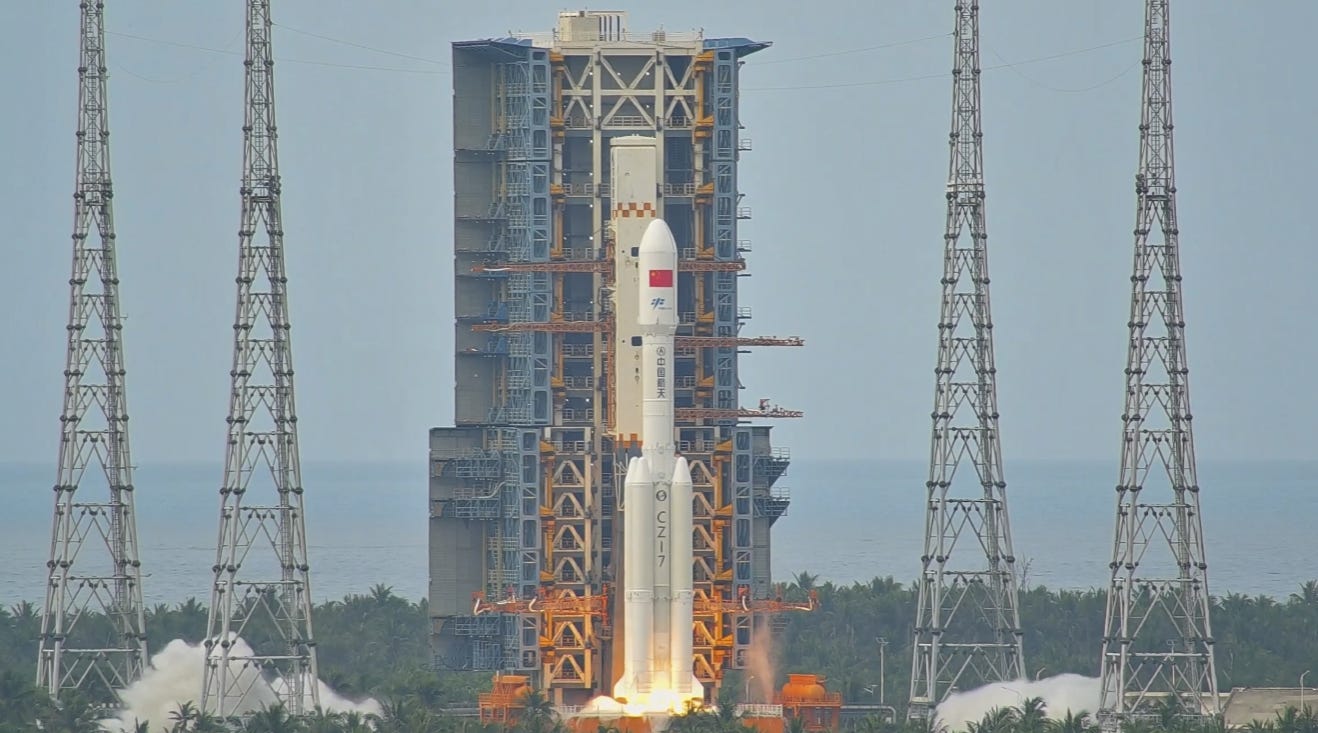
A Long March 7 departed from Launch Complex 201 at the Wenchang Space Launch Site at 08:14 am China Standard Time (00:14 am Universal Coordinated Time)1 on May 11th, carrying the Tianzhou-10 cargo resupply spacecraft into low Earth orbit to head to the Tiangong Space Station for a docking at its aft port.
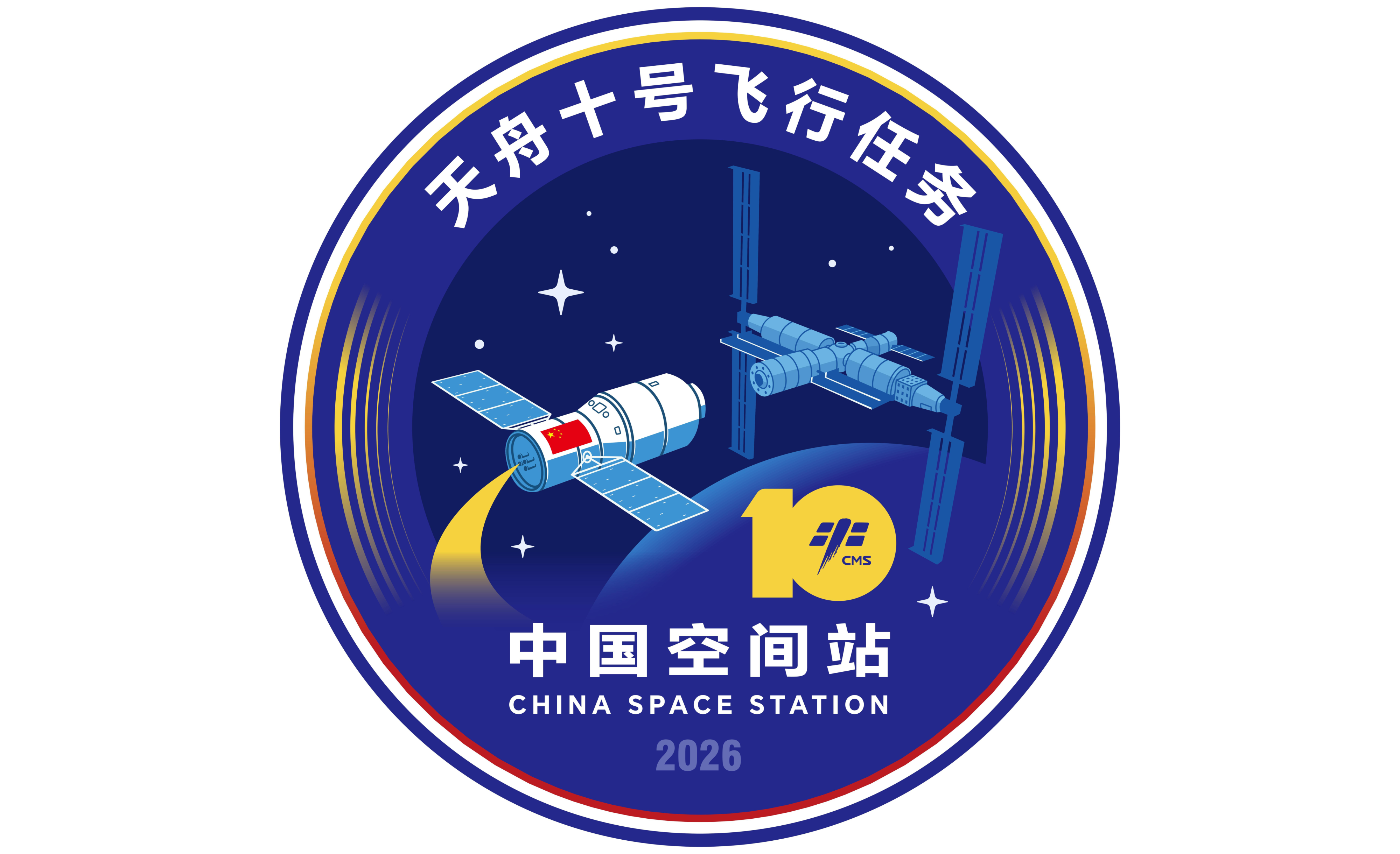
Inside Tianzhou is a total of 6,300 kilograms of cargo, mainly consisting of crew consumables like food, water, and clothing to be used by the Shenzhou-21, Shenzhou-23, and Shenzhou-24 crews2. Foodstuffs being delivered include fresh fruit and vegetables, as well as steaks and chicken wings to be cooked in the station’s famous oven. Those crews will also attend to new experiments, massing about 280 kilograms, for fluid physics and new space technologies, among others.
Additionally, for the replacement of Feitian (飞天航天服) spacesuits, Tianzhou-10 is delivering the third upgraded suit as part of the process. Those suits are identifiable by red, blue, or yellow bands and decor, with the first two carried by Tianzhou-9 and used three times already. Compared to previous suits used, the new ones are more comfortable for the user, while being able to support twenty spacewalks without significant maintenance.
Alongside crew usable items, Tianzhou-10 is bringing about 700 kilograms of propellants3 for Tiangong’s attitude control system, as well as its electric-based orbit maintenance engines. Attitude control system propellants will be directly transferred between spacecraft4, while those for the maintenance engines will be manually transferred via the swapping of bottles.
While docked at the station’s aft port, Tianzhou-10 will act as extra storage space by taikonauts onboard. It is expected that the spacecraft will remain with Tiangong for about twelve months, based on estimated supply consumption.
Tianzhou’s design, weighing 14,000 kilograms, is derived from China’s first space stations, Tiangong-1 and Tiangong-2, and is capable of delivering 7,400 kilograms of cargo to the orbiting laboratory. The total volume of cargo can be up to forty cubic meters, depending on configuration (pressurized, semi-pressurized, and unpressurized). Propelling the spacecraft during orbital maneuvers are four engines generating approximately 200 kilograms of thrust, while two solar panel wings produce electrical power.
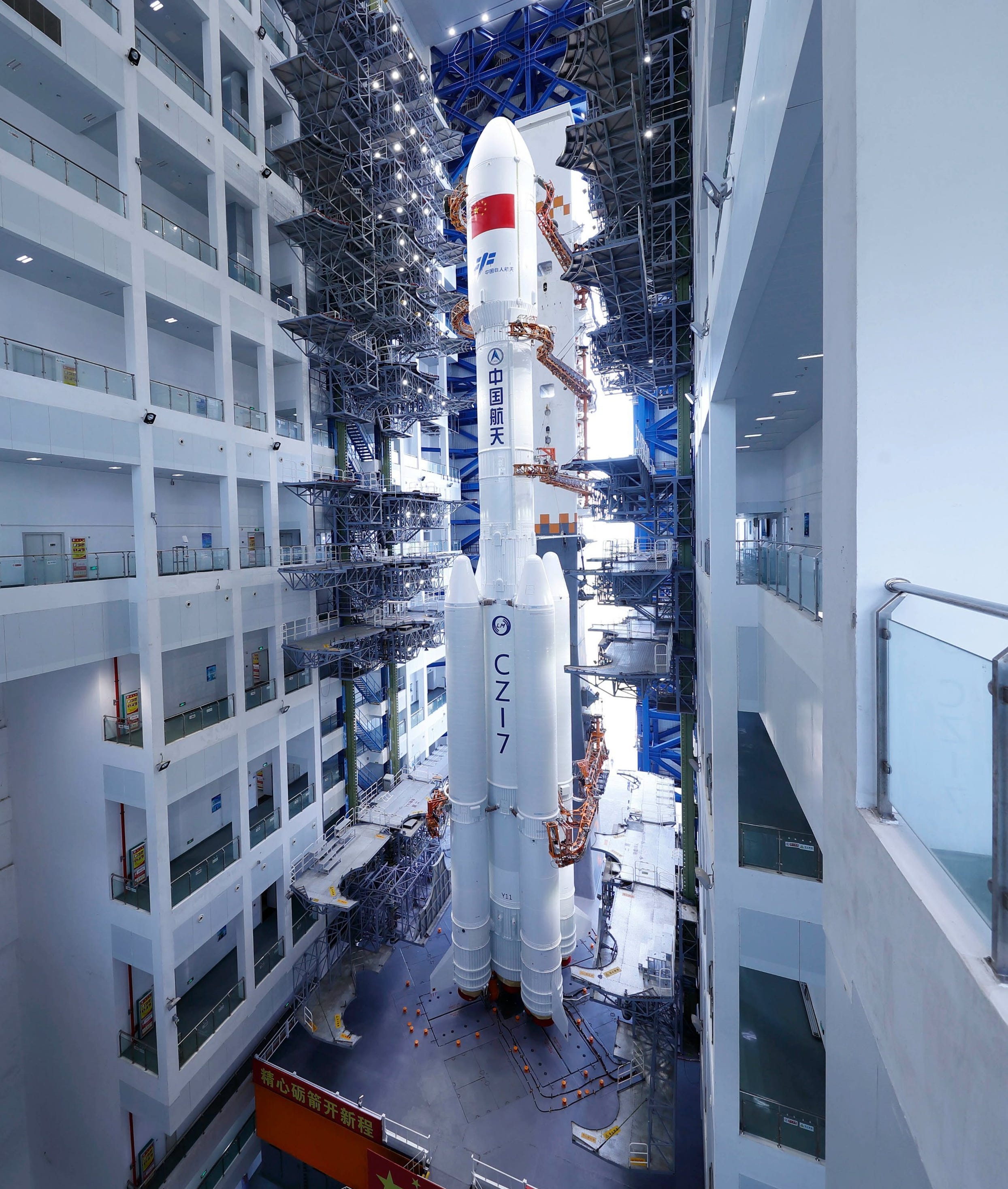
As part of gradual improvements of the Long March 7 series, the stated capabilities of today’s launch vehicle includes a resilience to an engine failure during ascent, which will be detected by systems the millisecond it occurs. The ability to do that is likely thanks to mass reductions and structural optimizations elsewhere.
Quite noticeable with today’s flight, the Long March 7 launch vehicle has had all of its tracking paint removed, in comparison to Tianzhou-9’s. That change has been implemented with the taller Long March 7A for well over a year, thanks to improvements in launch vehicle tracking technology nationally.
Today’s launch was the 11th mission for the Long March 7, the 25th launch of the Long March 7 series (consisting of the Long March 7 and 7A), and the 641st launch of the Long March launch vehicle series. This was also the 27th launch from China in 2026.
Launch livestreams via ThatSpaceDogeGuy and CGTN on YouTube.
Check out the previous Long March 7 series launches
Tianzhou-9 Resupply Mission Blasts Off! [Long March 7 Y10]
![Tianzhou-9 Resupply Mission Blasts Off! [Long March 7 Y10]](https://substackcdn.com/image/fetch/$s_!Tu3C!,w_280,h_280,c_fill,f_webp,q_auto:good,fl_progressive:steep,g_auto/https%3A%2F%2Fsubstack-post-media.s3.amazonaws.com%2Fpublic%2Fimages%2Fee828f23-2ccb-42bb-b361-3b528f183469_2818x1395.jpeg)
From Launch Complex 201 at the Wenchang Space Launch Site, a Long March 7 blasted off at 05:34 am China Standard Time on July 15th (21:34 Universal Coordinated Time on July 14th) heading for low Earth orbit.
China Concludes Global Launches in 2025 With New Shijian Duo [Long March 7A Y7]
![China Concludes Global Launches in 2025 With New Shijian Duo [Long March 7A Y7]](https://substackcdn.com/image/fetch/$s_!RWlT!,w_280,h_280,c_fill,f_webp,q_auto:good,fl_progressive:steep,g_auto/https%3A%2F%2Fsubstack-post-media.s3.amazonaws.com%2Fpublic%2Fimages%2F7e49472c-3117-4edf-8029-3ad11db7d91a_3746x2082.jpeg)
For the final launch in 2025 worldwide, a Long March 7A lifted off from Launch Complex 201 at the Wenchang Space Launch Site on December 31st at 06:40 am China Standard Time (December 30th at 22:40 pm Universal Coordinated Time),…
What is the Long March 7?
This section is for those less familiar with China’s Long March series of launch vehicles.
The Long March 7, developed by the China Academy of Launch Vehicle Technology, is a key part of China’s crewed space efforts and launches at least one Tianzhou spacecraft each year. This vehicle utilizes a two-and-a-half-stage design and is fuelled by rocket-grade kerosene and liquid oxygen in its boosters, first, and second stages.
The payload capacity of the launch vehicle is currently as follows:
14,00 kilograms to Low Earth orbit
The Long March 7’s first stage is equipped with two YF-100 engines that produce 245 tons of thrust using rocket-grade kerosene and liquid oxygen, complemented by four boosters, each with a YF-100 engine generating 122 tons of thrust, resulting in a combined thrust of approximately 733 tons. The second stage is powered by four YF-115 engines, which together generate 72 tons of thrust using the same fuel combination.
On the launchpad, the Long March 7 stands at 53.1 meters tall and weighs 597,000 kilograms when fully fuelled. The first and second-stage have a diameter of 3.35 meters, the four boosters are 2.25 meters in diameter, and the fairing has a diameter of 4.2 meters.
So far the Long March 7 has only flown from the Wenchang Space Launch Site, on the east coast of Hainan province.
Originally set for 08:13 am China Standard Time (00:13 Universal Coordinated Time), but able to launch after a traditional ‘instantaneous’ window used in the West, thanks to upgrades implemented for Tianzhou-9. The delay is said to have been caused by an issue in the commodity supply arms.
The Shenzhou-21 crew has the Shenzhou-22 spacecraft, which launched without crew, following a space debris strike to the Shenzhou-20 spacecraft, with the Shenzhou-20 crew taking the Shenzhou-21 spacecraft home. Tiangong’s next crew will be part of the Shenzhou-23 missions, with the only notable change being the mission number.
Included within the 6,300-kilogram cargo figure by the China Manned Space Agency.
This has been a capability of every Tianzhou spacecraft, and was demonstrated with the single-module Tiangong-2 space station in 2017.