

Upgraded Weather Satellite Lofted Toward Geostationary Orbit [Long March 3B/E Y113]
China has a new spacecraft for Earth and space weather forecasting via 2025’s last Long March 3A series flight.

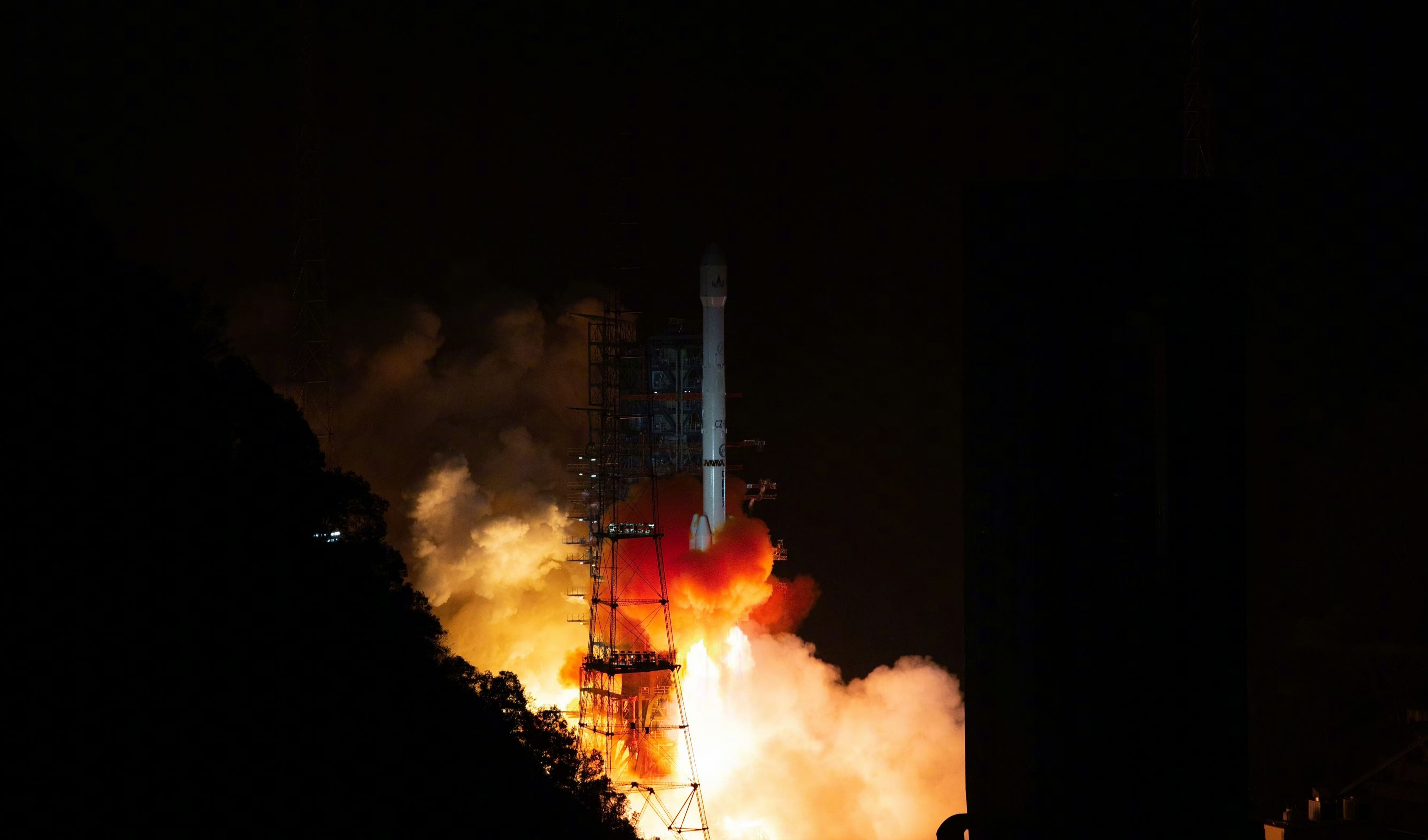
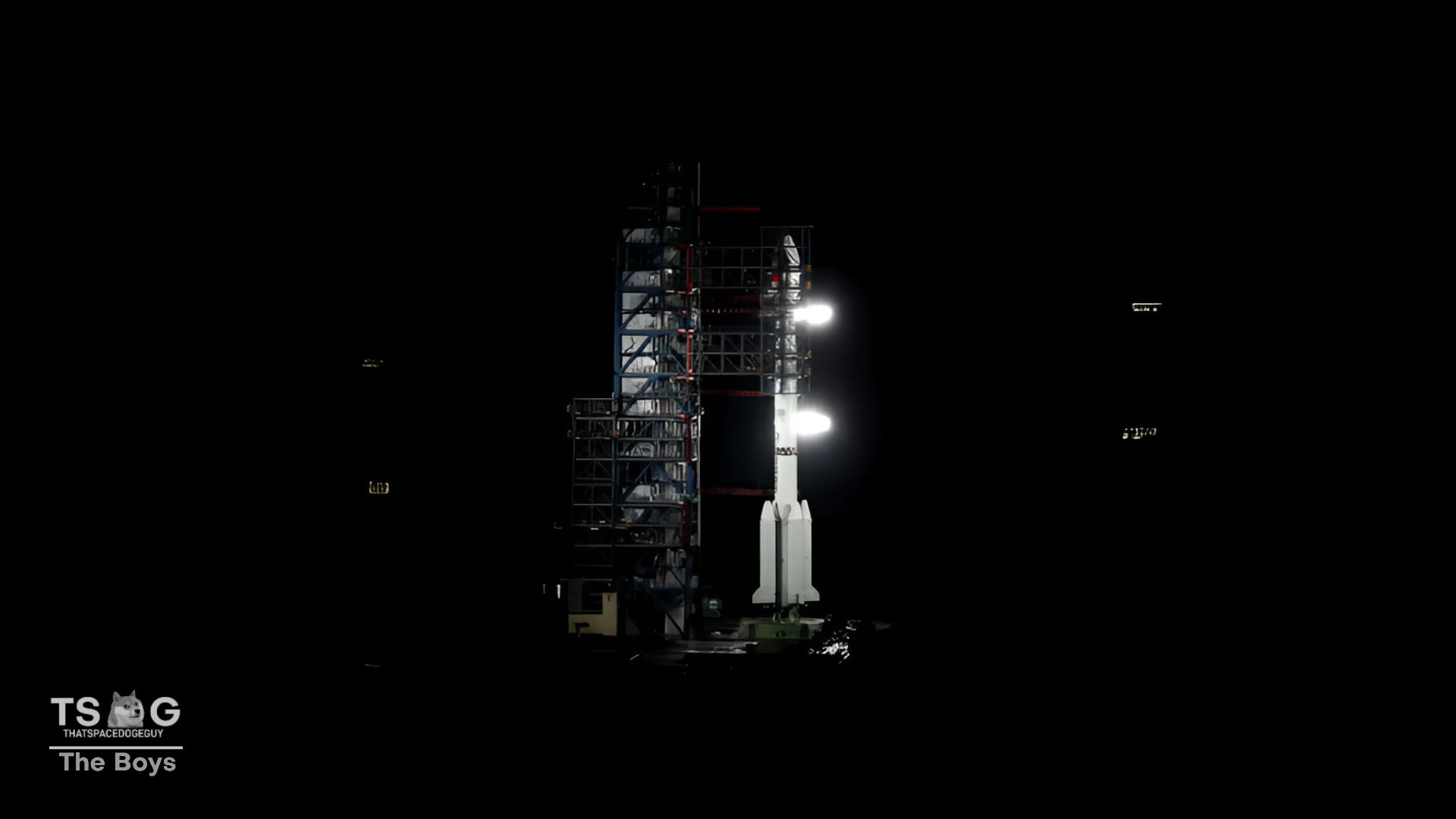
Out of the Xichang Satellite Launch Center off of Launch Complex 2, a Long March 3B/E blasted off at 00:07 am China Standard Time on December 27th (16:07 Universal Coordinated Time on December 26th), heading toward a geostationary transfer orbit carrying a single spacecraft.
Heading for geostationary space today was the 5,300-kilogram Fengyun-4C (风云四号C星) weather satellite, on behalf of China’s National Satellite Meteorological Center (国家卫星气象中心), to replace the nine-year-old Fengyun-4A. Fengyun-4C is planned to be in operation for the next eight years, while residing just above New Guinea. While in operation, the spacecraft will provide weather data from the Earth and the Sun via the following instruments:
AGRI1: an imaging instrument with fourteen spectral bands and minute-level regional scanning capability, producing cloud images in color while monitoring clouds, water vapor, vegetation, aerosols, and snow with enhanced atmospheric layer discrimination.
GIIRS2: a high-spectral infrared interferometer measuring vertical atmospheric temperature and humidity profiles through Michelson interferometry to provide continuous 3D atmospheric observations for weather forecasting.
GHI3: a rapid regional monitoring instrument with a resolution of over 2,000 by 2,000 square kilometers designed specifically for tracking fast-changing extreme weather events like typhoons.
SUVI4: a solar activity monitoring instrument using four ultraviolet channels for high-resolution full-disk solar imaging, capturing flares, coronal mass ejections, and other solar phenomena to support space weather forecasting.
MUSI5: a far-ultraviolet high-spectral ionospheric instrument with 50-kilometer spatial resolution, monitoring airglow radiation to track ionospheric parameters in real-time for space weather, communication, and navigation support.
SXUS6: a high-spectral resolution solar radiation monitor covering X-ray and multiple UV bands to provide solar flare classification and radiation flux data for ionospheric forecasting and solar particle event warnings.
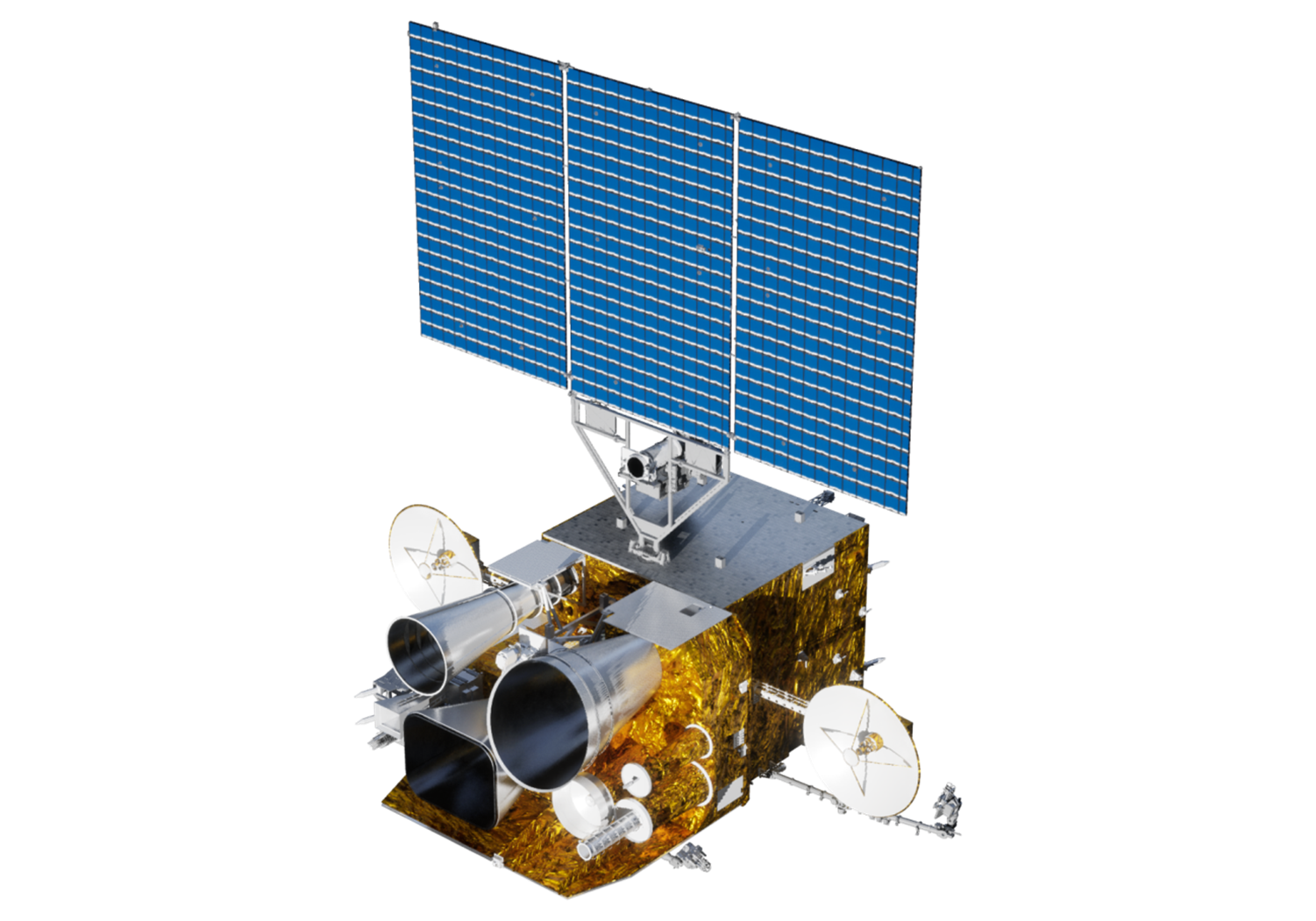
The Shanghai Academy of Spaceflight Technology stated that they developed Fengyun-4C and added that new capabilities are onboard, like small electric hall-effect thrusters, installed on manipulatable arms, for fine orbital adjustments. Improved space-to-ground communications were noted alongside the capability for space-to-space-to-ground7 communications in the near future.
Fengyun-4C is the 3rd satellite in the geostationary Fengyun-4 series, and the 23rd Fengyun spacecraft launched since September 1988. It is also the second launched this year, after the polar orbiting Fengyun-3H.
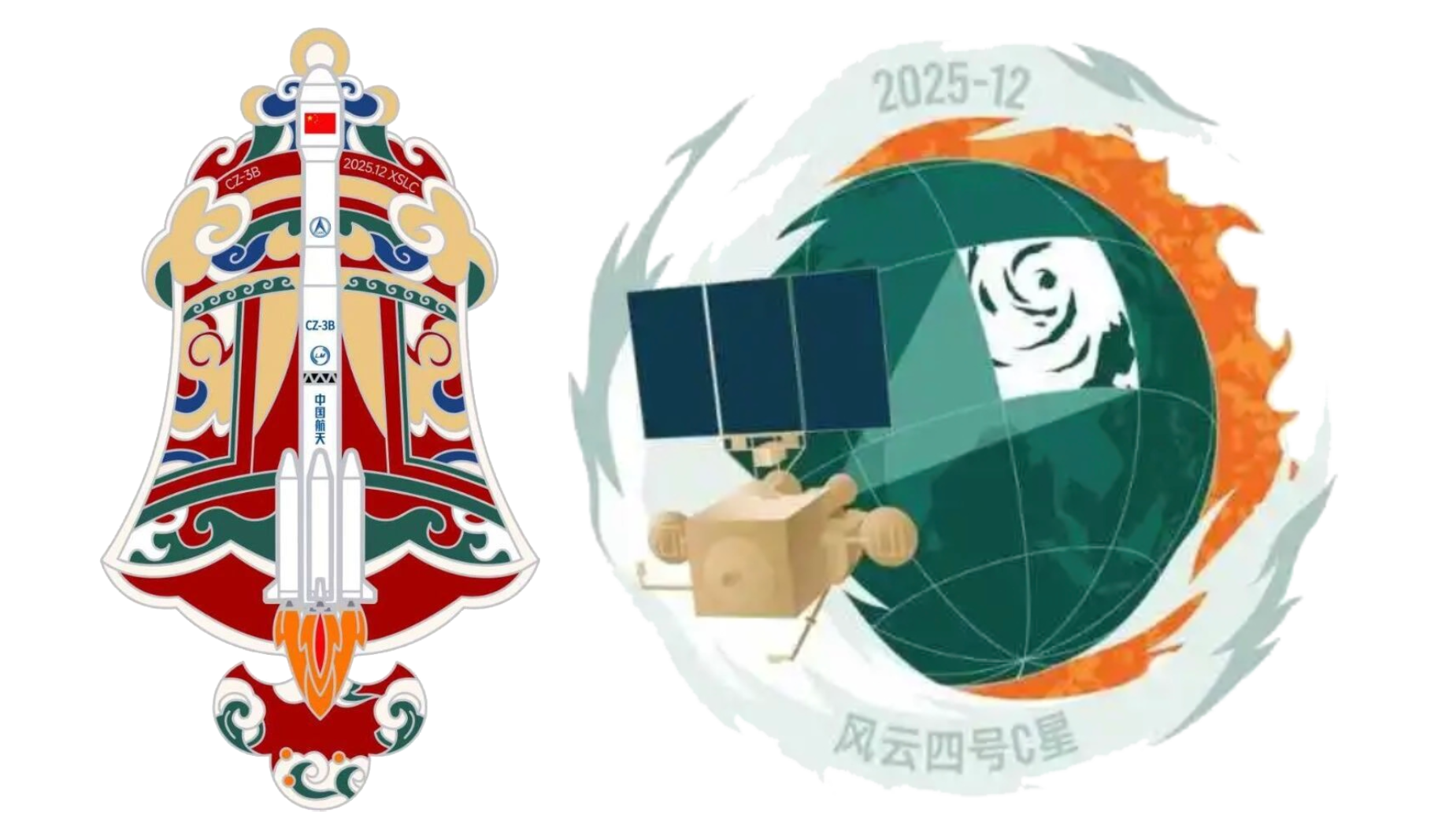
This year, 2025, has been the Long March 3A series’ (the Long March 3A, 3B/E, and 3C/E) busiest to date, with thirteen Long March 3B/E’s and two Long March 3C/E’s taking flight. Before the start of the year, the China Academy of Launch Vehicle Technology stated that they were aiming to launch the Long March 3A series over a dozen times. They have succeeded in achieving that aim with a comfortable margin, while implementing new processes and hardware on the launch vehicles. As of this mission, the Launch Vehicle Academy says that they can have a Long March 3A series vehicle ready to fly every half-month.
Alongside technical changes, a subtle change was made to the paint scheme of the Long March 3B/E for today. Previously, the launch vehicle had blue bands of paint for launch vehicle tracking and aesthetics, and before that there were red tracking squares too. With improved tracking technology, those blue bands are no longer needed and have been removed to reduce weight, consequently introducing a new mostly-white paint scheme (similar to the Long March 7A and Long March 8A), but still with manufacturer, customer, and national branding.
Today’s mission was the 114th launch of a Long March 3B vehicle, and the 621st launch of the Long March launch vehicle series. This was also the 91st launch from China in 2025.
Liftoff footage via ThatSpaceDogeGuy on YouTube.
Livestream replay via ThatSpaceDogeGuy on YouTube.
Check out the previous Long March 3B/E launch
Eighth TJSW Satellite Delivered to Geostationary Space [Long March 3B/E Y119]
![Eighth TJSW Satellite Delivered to Geostationary Space [Long March 3B/E Y119]](https://substackcdn.com/image/fetch/$s_!sSSm!,w_1300,h_650,c_fill,f_webp,q_auto:good,fl_progressive:steep,g_auto/https%3A%2F%2Fsubstack-post-media.s3.amazonaws.com%2Fpublic%2Fimages%2F6519bd49-7c49-44d1-8a57-4fe9772625ae_4284x2180.jpeg)
From Launch Complex 3 at the Xichang Satellite Launch Center, a Long March 3B/E blasted off at 23:08 pm China Standard Time (15:08 pm Universal Coordinated Time) on December 9th, carrying a single payload toward geostationary …
What is the Long March 3B/E?
This section is for those less familiar with China’s Long March series of launch vehicles.
The Long March 3B is an older-generation geostationary orbit workhorse of the China Academy of Launch Vehicle Technology. The first two stages and four boosters of the rocket burn Dinitrogen Tetroxide and Unsymmetrical Dimethylhydrazine, with liquid hydrogen and liquid oxygen in the third-stage.
Over the rocket’s almost twenty-eight-year launch history, two versions of the vehicle have flown, the 3B and 3B/E. Since 2012, only the 3B/E variant has flown due to its increased payload capacity. The payload capacity of the launch vehicle is currently as follows:
11,500 kilograms to low Earth orbit
7,100 kilograms to a sun-synchronous orbit
5,500 kilograms into a geostationary transfer orbit
2,000 kilograms into geostationary orbit
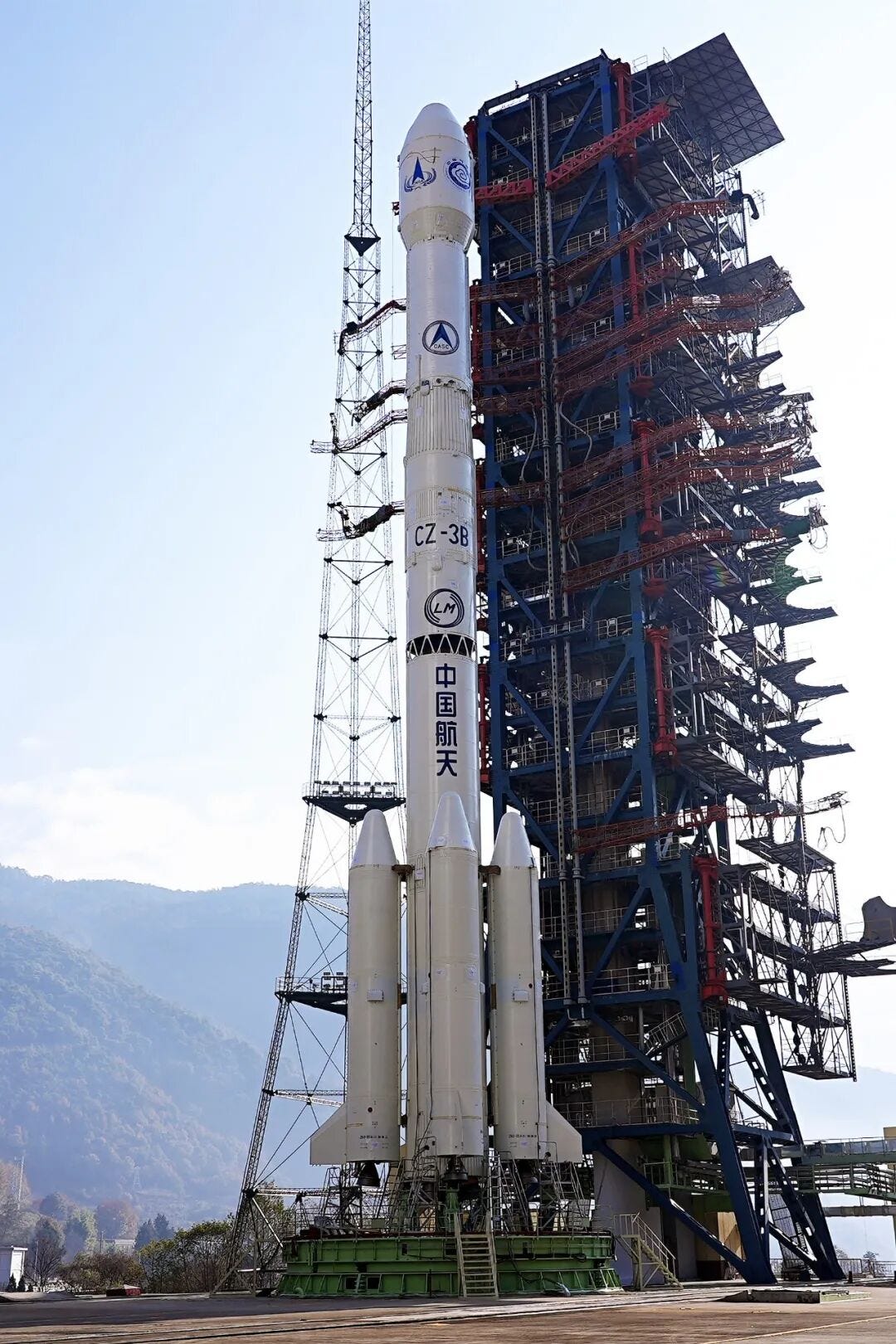
The first-stage is powered by four YF-21C engines that burn Dinitrogen Tetroxide and Unsymmetrical Dimethylhydrazine to generate 302 tons of thrust, while the boosters are powered by one YF-25 engine burning the same fuel to generate 72 tons of thrust each. Combined the four boosters and first stage generate a thrust of 590 tons. The second stage is powered by one YF-22E and four YF-23F vernier engines that also burn Dinitrogen Tetroxide and Unsymmetrical Dimethylhydrazine to generate 81 tons of thrust. The third-stage is powered by two YF-75 engines that burn liquid hydrogen and liquid oxygen to generate 17 tons of thrust.
On the launch pad, the Long March 3B/E is 56.3 meters tall and weighs 458,970 kilograms when fully fuelled. The first and second-stage have a diameter of 3.35 meters, while the third-stage has a diameter of 3 meters, along with the four boosters diameter of 2.25 meters, and the fairing has a diameter of 4.2 meters.
So far, every Long March 3B launch has occurred from the Xichang Satellite Launch Center, in the south of Sichuan province.
Advanced Geostationary Radiation Imager.
Geostationary Interferometric Infrared Sounder.
Giant High-Speed Imager.
Solar Ultraviolet Imaging Spectrometer.
Multiband Ionospheric Ultra-Violet Spectrum Imager.
Solar X-EUV Irradiance Sensor.
That is sending data back to and receiving from Earth via an intermediary satellite.