

Tri-Core Kinetica-2 Soars Into Orbit Carrying Cargo Spacecraft on First Mission! [Kinetica-2 Y1]
A prototype version of the Qingzhou cargo spacecraft is in orbit for the first time following the debut launch, having also carried two small rideshare satellites with it.

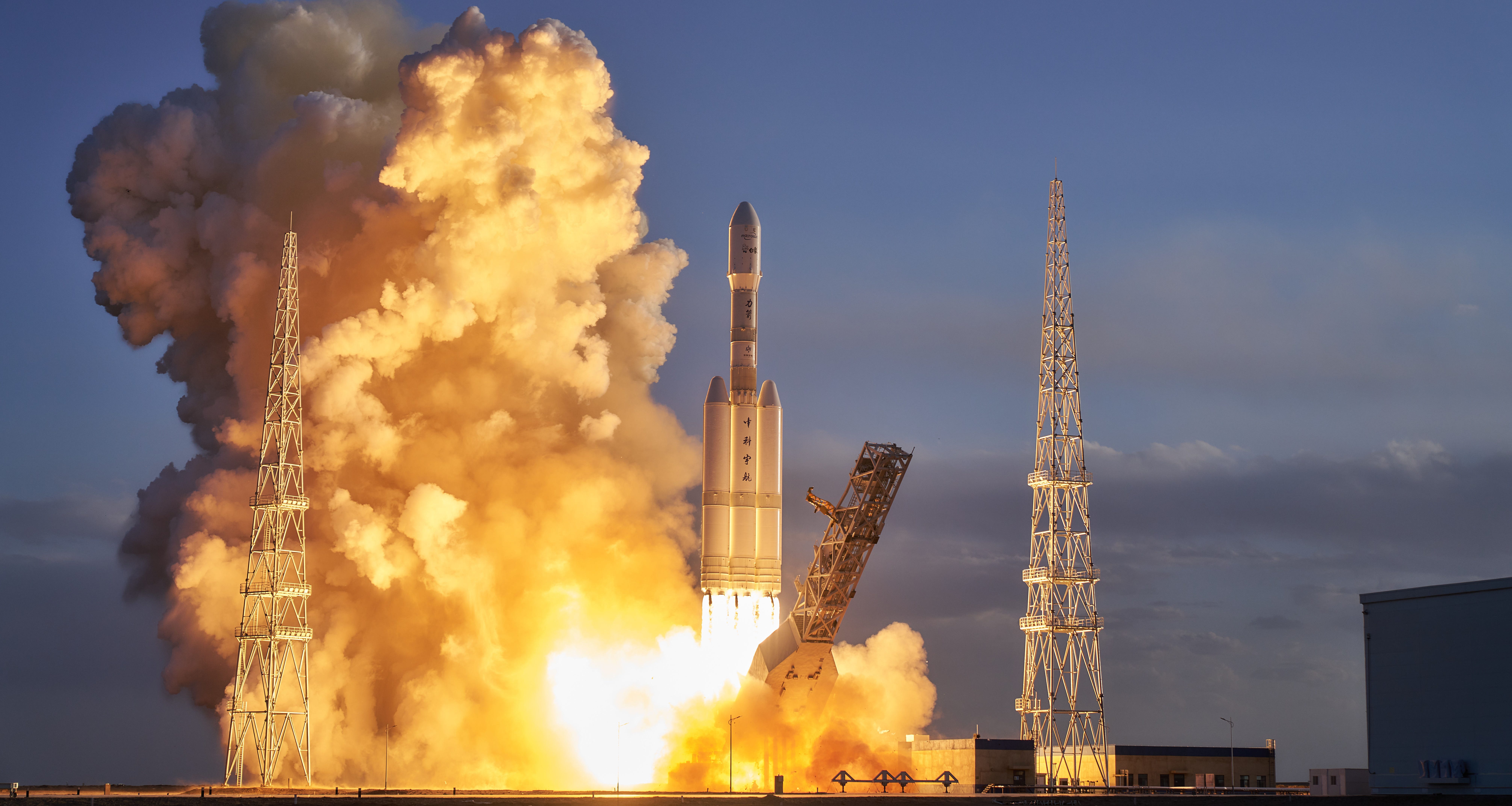
For the first time from Launch Area 140 at the Jiuquan Satellite Launch Center, CAS Space’s Kinetica-2 launch vehicle lifted off at 19:00 pm China Standard Time (11:00 am Universal Coordinated Time) on March 30th, heading towards a sun-synchronous orbit with a prototype cargo spacecraft and two small ridesharing satellites.
The main payload carried by Kinetica-2 on its first outing is a prototype version of the 4,200 kilogram Qingzhou (轻舟) cargo spacecraft, dubbed Xinzhengcheng-02 (新征程02卫星) for this flight1, from the Innovation Academy for Microsatellites, Chinese Academy of Sciences (中国科学院微小卫星创新研究院), to demonstrate its systems on-orbit ahead of a contracted resupply to the Tiangong Space Station. Those systems include many attitude control thrusters, a main engine for maneuvers, and power-generating fixed solar panels and radiators placed around the outside. According to the Global Times, the prototype Qingzhou will operate for up to three years while supporting twenty-seven onboard experiments massing 1,020 kilograms.
Once proven and approved to fly to Tiangong, the Qingzhou cargo spacecraft will be able to deliver up to 1,800 kilograms of cargo, scientific experiments, crew items, and consumables, within 27 cubic meters of internal space. The spacecraft will also be able to take 2,900 kilograms of items from the space station to burn up in the atmosphere.
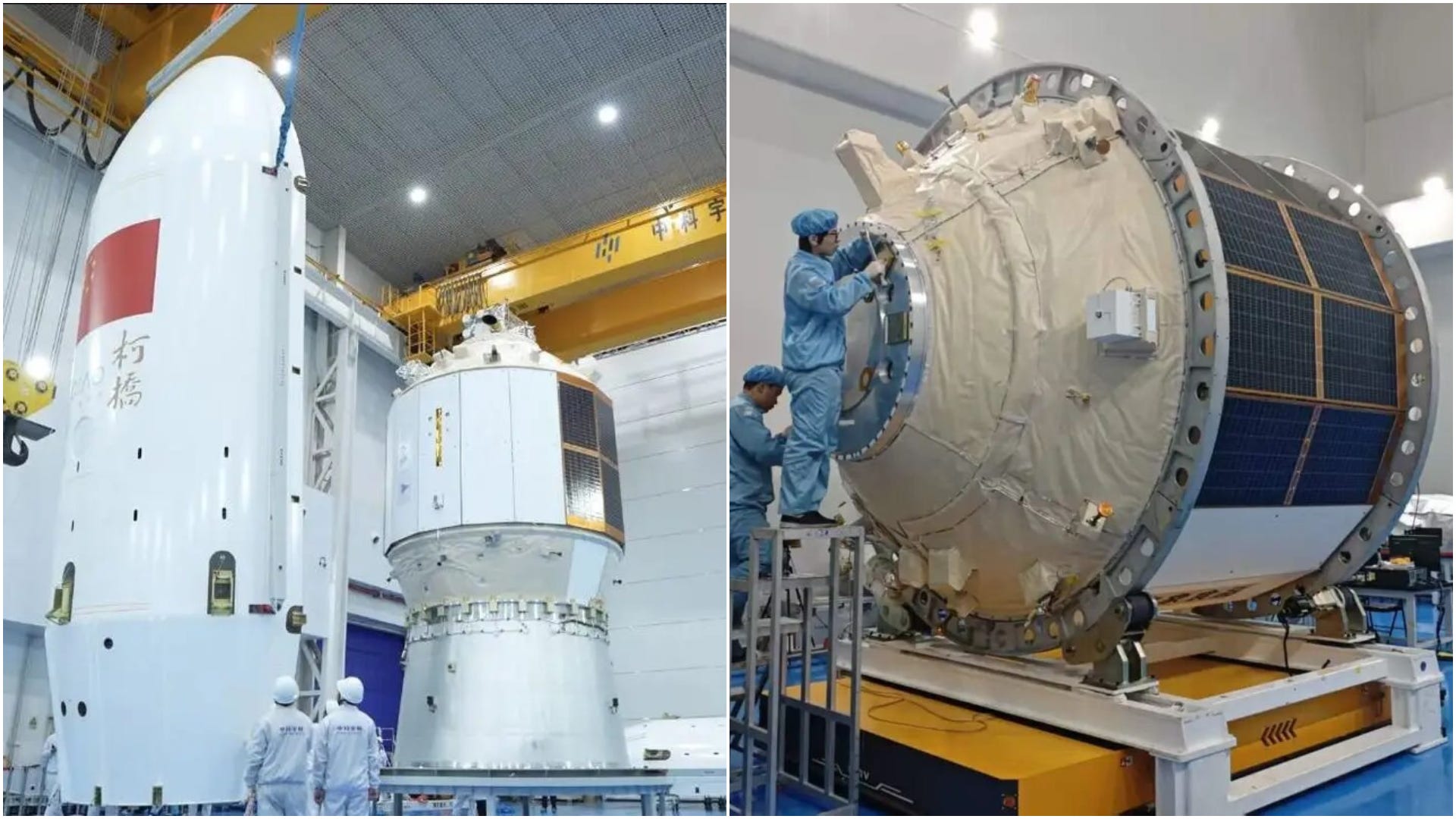
Alongside the prototype Qingzhou, two small satellites tagged along as rideshare payloads for its launch, via mounting to the cargo spacecraft. Those satellites, known as Xinzhengcheng-01 (新征程01卫星) and Tianshi-01 (天视卫星01星), were both stated to be for technology demonstrations. Only Xinzhengcheng-01 had its demonstrations outlined, with them being on-orbit tests and application demonstrations based on commercial off-the-shelf experimental devices like multi-angle remote sensing cameras.
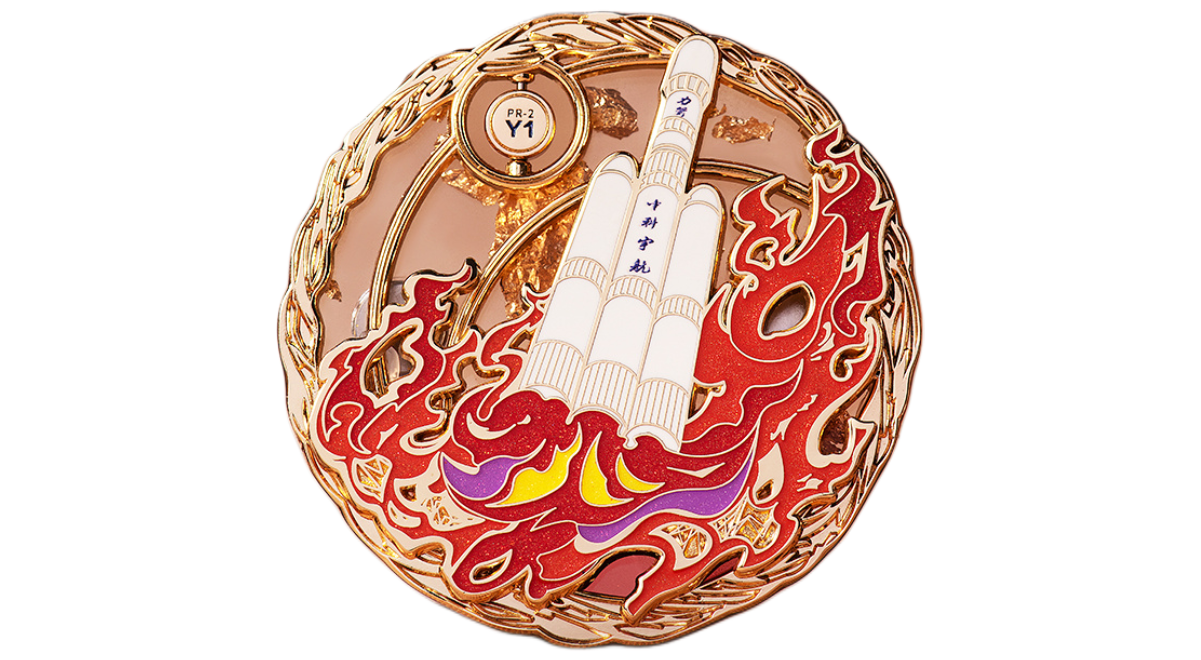
Following an initial announcement of a successful flight into orbit, CAS Space took to its website and WeChat blog to share that additional capabilities are already being prepared for Kinetica-2, like flights towards geostationary space with its ‘Kinastra (力巡)’ optional third-stage2. It was also shared that Kinetica-2 can be modified, depending on customer needs, to fly in its usual tri-core configuration, or alternatively with no side cores or with four for a penta-core layout. Those choices, enabled by the vehicles ‘common booster core’ design, would allow Kinetica-2 to carry between 2,000 and 22,000 kilograms into orbit3. In addition, it was said that a ‘super factory’ able to produce twelve launch vehicles per year is near operation.
The debut flight of Kinetica-2 was powered by the Academy of Aerospace Liquid Propulsion Technology’s (航天推进技术研究院) YF-102 engine, burning rocket-grade kerosene and liquid oxygen. According to CAS Space earlier this month, the YF-102 powered this flight, and will power several more, due to its proven reliability and its off-the-shelf availability while the company develops its own engines, which will enable first-stage reuse later down the line.
Ahead of launch, activities from CAS Space and Space Pioneer, who are preparing to fly their Tianlong-3 for the first time, were deconflicted by launch site officials as both enterprises’ launch vehicles were aiming to fly on the same day, about an hour apart.
Today’s launch was the 1st mission for Kinetica-2, and the 12th for CAS Space through its Kinetica family of launch vehicles. This was also the 18th launch from China in 2026.
Liftoff video via 大漠问天 on WeChat. Liftoff recap via CAS Space on Twitter.
Check out the previous launch from CAS Space
CAS Space Launches Handful of International, Chinese Satellites [Kinetica-1 Y11]
![CAS Space Launches Handful of International, Chinese Satellites [Kinetica-1 Y11]](https://substackcdn.com/image/fetch/$s_!bTRz!,w_1300,h_650,c_fill,f_webp,q_auto:good,fl_progressive:steep,g_auto/https%3A%2F%2Fsubstack-post-media.s3.amazonaws.com%2Fpublic%2Fimages%2F8c4c615b-f104-496f-96c3-a400b60d0974_3091x1406.jpeg)
CAS Space’s Kinetica-1 rocket blasted off from Launch Area 130 at the Jiuquan Satellite Launch Center at 12:03 pm China Standard Time (04:03 am Universal Coordinated Time) on December 10th, carrying a handful of satellites in…
What is Kinetica-2?
This section is for those less familiar with China’s various commercial launch vehicles.
Kinetica-2 is CAS Space’s partially reusable launch vehicle, flying from the Jiuquan Satellite Launch Center. The vehicle burns rocket-grade kerosene and liquid oxygen in both of its stages, with three first-stage booster cores.
At present, Kinetica-2 has a stated payload capacity of up to:
12,000 kilograms to low Earth orbit with a tri-core configuration.
8,000 kilograms to sun-synchronous orbit with a tri-core configuration.
22,000 kilograms to low Earth orbit with a penta-core configuration.
15,000 kilograms into a sun-synchronous orbit with a penta-core configuration.
2,000 kilograms to low Earth orbit in a single core configuration.
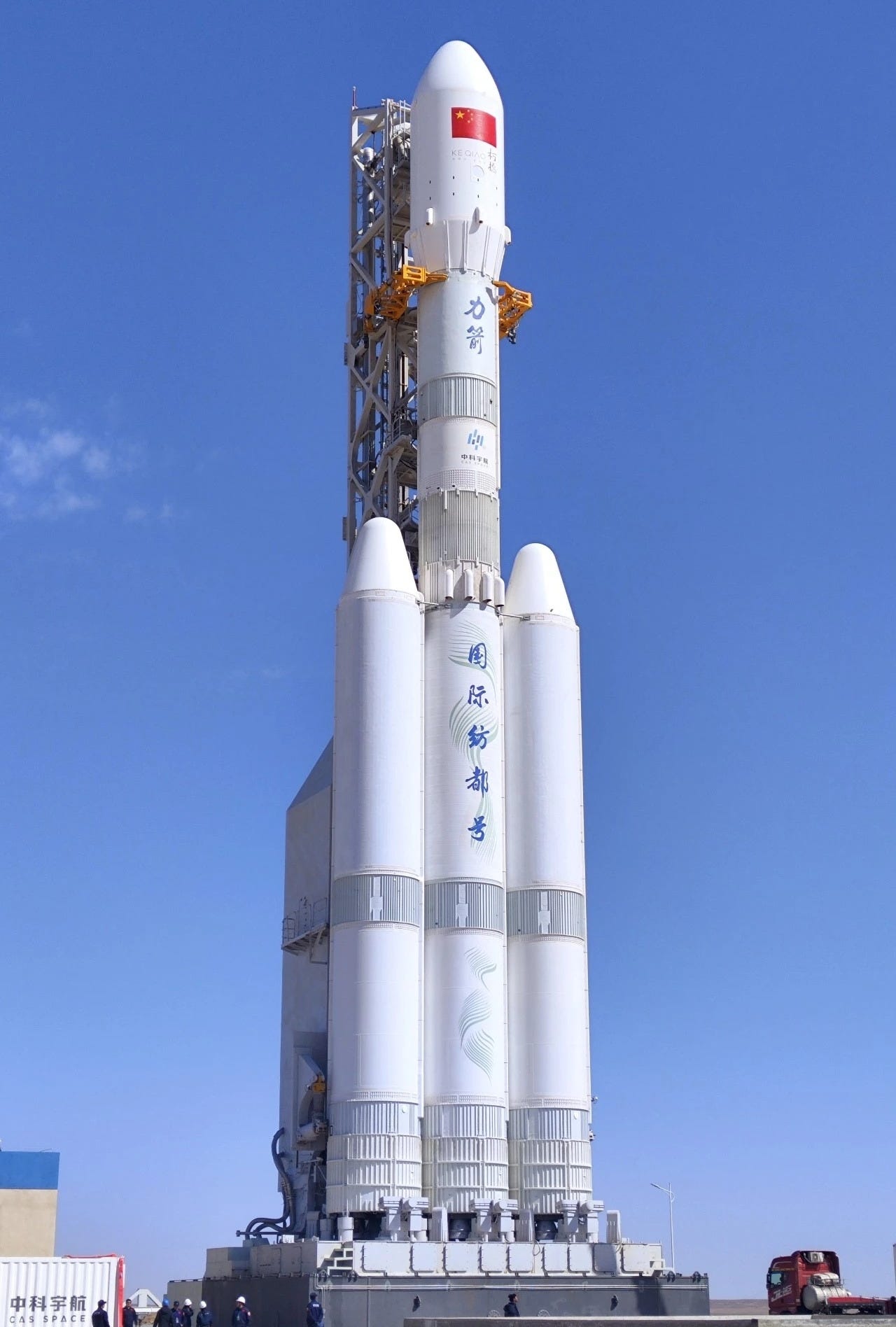
The first-stage of Kinetica-2 is powered by nine 85-ton thrust YF-102 engines, three on each core, that burn rocket-grade kerosene and liquid oxygen for a total of 766 tons of thrust. Kinetica-2’s second-stage is powered by a vacuum-optimized version of the same engine.
On the launchpad, Kinetica-2 is 53 meters tall and weighs 625,000 kilograms fully fuelled. Each booster core is also 3.35 meters wide along with the second-stage, while the fairing is 4.2 meters in diameter.
Kinetica-2 is planned to be reusable but will be flying in an expendable configuration for the first few years of operational missions. A reusable variant of the rocket, featuring landing legs, grid fins, and a reusable rocket engine, is set to fly by 2028.


Likely due to contract terms with the China Manned Space Agency regarding the designation of Qingzhou missions if they are not flying to the Tiangong Space Station.
Which had its engine tested earlier in the month.
CAS Space detailed a penta-core version of Kinetica-2 most recently in September 2025.