

What Do We Know About China's Reusable Spaceplane?
Little remains concretely known ahead of a potential fourth mission starting soon.

Around February 7th, a Long March 2F vehicle may liftoff from the Jiuquan Satellite Launch Center, according to pre-launch notices. Confusingly, the launch vehicle’s next flight was not expected until April for the Shenzhou-23 mission, with the hardware to do so delivered in recent weeks.
But the launch vehicle does have two minorly different variants, the Shenzhou launching ‘G’ and the cargo carrying ‘T’1, with the latter being rather secretive. Much more secretive, and currently the only payload for the ‘T’ variant, is China’s spaceplane-shaped Reusable Experimental Spacecraft (可重复使用试验航天器), possibly meaning it’s set to fly for a fourth time.
Three previous missions
The first mission of the Reusable Experimental Spacecraft began on September 4th 2020, with a Long March 2F/T carrying it from the Jiuquan Satellite Launch Center and into low Earth orbit. After a quite anonymous launch to a 331 by 347 kilometer orbit, Xinhua disclosed:
“After a period of in-orbit operation, the spacecraft will return to the scheduled landing site in China. It will test reusable technologies during its flight, providing technological support for the peaceful use of space.”
That first mission lasted under two days, with one object2 remaining in space afterwards. To end the mission, the spaceplane landed at an airfield in Lop Nur (罗布泊 / لوپنۇر), Xinjiang Uygur Autonomous Region (新疆维吾尔自治区 / شىنجاڭ ئۇيغۇر ئاپتونوم رايونى), on September 6th 2020, possibly spotted by satellite shortly afterwards.
Another Long March 2F/T launch from Jiuquan began the Reusable Experimental Spacecraft’s second mission on August 5th 2022, with Xinhua releasing an identical post-launch statement. The launch placed the spaceplane into a 346 by 593 kilometer low Earth orbit, with maneuvers a few months in raising it to a 593 by 608 kilometer orbit.
During its time in orbit for the second mission, the spaceplane is believed to have conducted rendezvous and proximity operations with an object released from it. Those operations were observed several times, with the object having its own propulsion capabilities too.
The second mission concluded on May 8th 2023, when the Reusable Experimental Spacecraft touched down at the Lop Nur airfield for a second time. Post-mission news from Xinhua mentioned, but did not detail, breakthroughs for reusable spacecraft technologies.
Lastly, on December 14th 2023, the third mission began with yet another Long March 2F/T launch to low Earth orbit from Jiuquan. The spaceplane was placed into an approximately 333 by 348 kilometer orbit initially, before it headed up to a 601 by 609 kilometer orbit.
While in space, the Reusable Experimental Spacecraft was spotted from the ground in Austria, via a 14-inch telescope operated by Felix Schöfbänker, where it appears to have two solar panels attached at the aft end, while heading nose-first through space relative to its orbit. Those panels may have been attached to a service module or the exterior of the spaceplane, then jettisoned ahead of reentry.

After 268 days in space, the third mission came to an end with another landing on the Lop Nur airfield on September 6th 2024. Following touchdown, Xinhua briefly detailed:
“The success of the experiment demonstrates the growing maturity of China’s reusable spacecraft technologies, which will pave the way for more convenient and affordable round-trip methods for the peaceful use of space in the future.”
Through the three current missions, the spaceplane has spent 546 days at most in space. So far, no images have been released of the Reusable Experimental Spacecraft being launched by a Long March 2F/T or returning from space by Chinese news outlets. It’s also unknown if there is just one orbit-capable spaceplane or several.
Pre-orbit testing
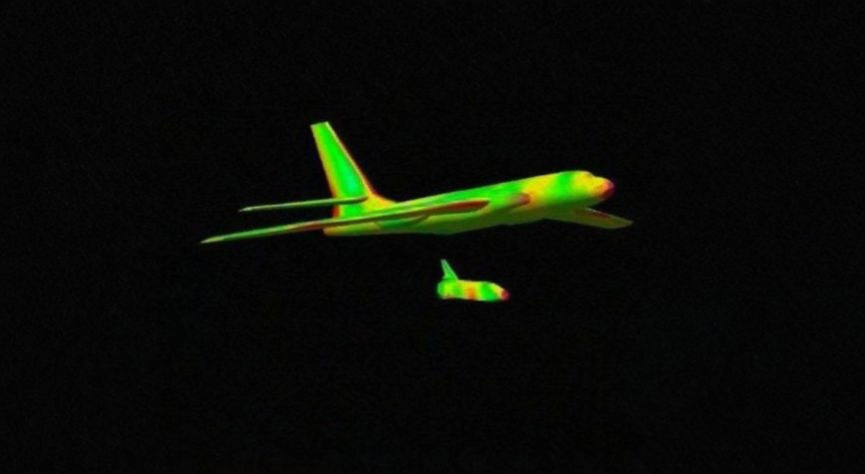
Before the Reusable Experimental Spacecraft headed into orbit, a handful of tests were conducted within, and just beyond, Earth’s atmosphere with a winged vehicle known as Shenlong (神龙), alternatively Divine Dragon. In December 2007, drop tests from the underside of a Xi’an H-6 (轰-6) bomber took place. Details on that test have never been released, with one image leaked, but it probably verified the final minutes of flight and characterized the in-atmospheric understanding of the vehicle’s maneuverability, due to subsequent tests and operational flights.
A few years later, in either late 2010 or very early 2011, a suborbital flight is said to have taken place, with Shenlong passing above the Kármán line and landing afterwards. It’s unknown how the winged vehicle performed that flight, either under its own power or with a booster stage, with it possibly verifying attitude control outside of the atmosphere and a speedy, controlled reentry.
Only two test flights with Shenlong are known about; more probably took place to refine the development of the spaceplane and related hypersonic technologies. Technology breakthroughs with or via Shenlong reportedly took place between 2000 to 2004, around 2007, and 2010 to 2012, according to the U.S. military’s China Aerospace Studies Institute.
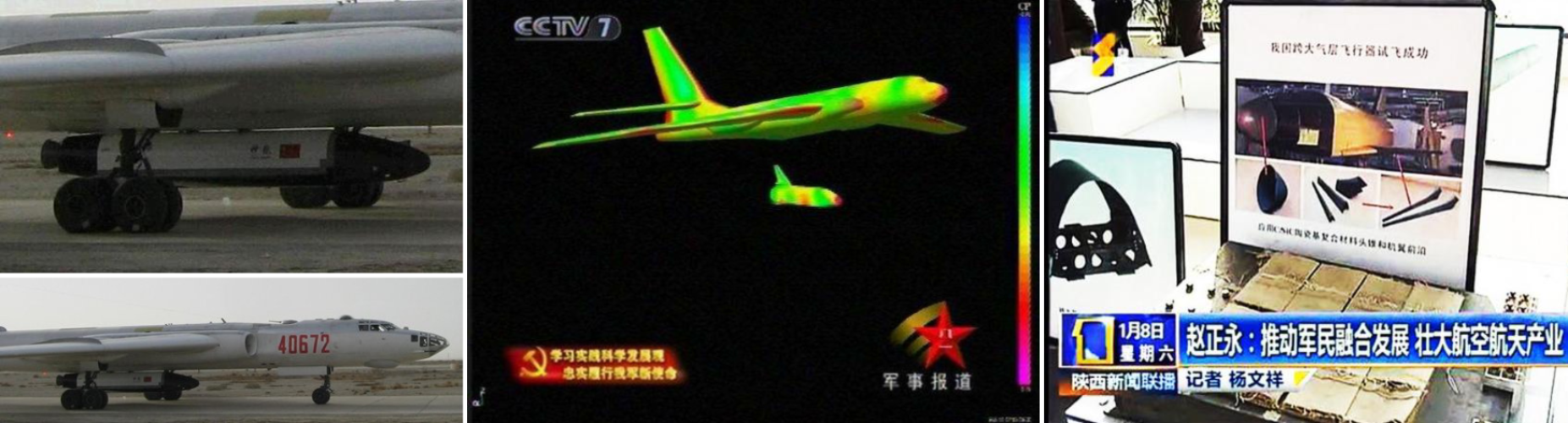
What does it look like?
With only one known image, the design of China’s Reusable Experimental Spacecraft is not well known beyond that it is spaceplane-shaped due to its landing site. With the mid-2024 spotting, it is known that the spacecraft is no more than ten meters in length, while comments from experts basically confirmed it has wings and protections to return to Earth.
Those wings could be quite stubby, as a fairing half (used for the Long March 2F/T’s 4.2-meter-diameter fairing) found after the launch of the spaceplane’s second mission has two protrusions where a wing would be, along with another about forty-five degrees around toward the aft, where a vertical stabilizer may have been. If the other fairing half was similar, the spaceplane might have two stabilizers. During the Shenlong flights, a single vertical stabilizer is believed to have been present, possibly for a point of difference between it and the Reusable Experimental Spacecraft.
Across the underside of the spaceplane’s body and wings, alongside its nose and aft, are many hundreds, if not thousands, of thermal protection tiles to protect it from the heat of atmospheric reentry. Elsewhere on the outside of the Reusable Experimental Spacecraft are likely thermal blankets to keep the inside of the vehicle cool. Within the spacecraft, there is its attitude thrusters’ propellant supply as well as a possible payload section for storing experiments or releasing satellites (as was done on mission two), maybe both.
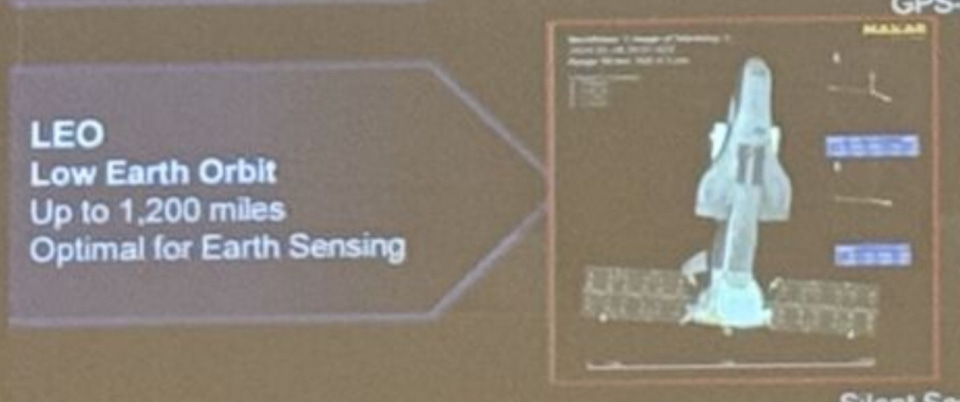
More speculatively, the best image of the Reusable Experimental Spacecraft may have been collected via spacecraft-to-spacecraft imaging by U.S. firm Maxar (now Vantor) and shown off at a U.S. Space Force event in Korea on November 7th 2024. No legible details were intentionally shared, minus a note on imaging capabilities up to 1,200 miles, or 1,930 kilometers, which is far above the spaceplanes’ flown orbits. The imaged spaceplane could actually be America’s X-37B from an odd angle, as China did not release a set of images of the U.S. spaceplane or an equivalently classified spacecraft in response, as was done after Shijian-26 (实践二十六号) last year3.
Differences between the variants are most obvious in the fairings: the ‘G’ variant has the Shenzhou spacecraft’s abort system, while ‘T’ has a 4.2-meter-wide fairing, previously used for the Tiangong-1 and Tiangong-2 space stations, now modified to carry a spaceplane. The payload attachment system atop the second-stage is also different, with ‘G’s designed solely for Shenzhou and ‘T’s interchangeable between cargoes. Some minor systems are said to be different too.
Possibly a satellite being released, a detached service module, or equipment that required jettisoning.
The rationale for that is:
“[The] imagery from the Chinese firm could be a minor geopolitical warning shot to the U.S., demonstrating China’s ability to image and monitor American spacecraft from commercial enterprises, with more capable sensors likely in state-owned enterprises. Those state-owned sensors could then unveil truly classified U.S. satellites if China were so inclined”
Quoted from Chinese, American Firms Begin Imaging Each Other in Space.