

Zhuque-3 Booster Should Land for First Time in 2026, LandSpace Says
"Next time, the goal will be a perfect landing."

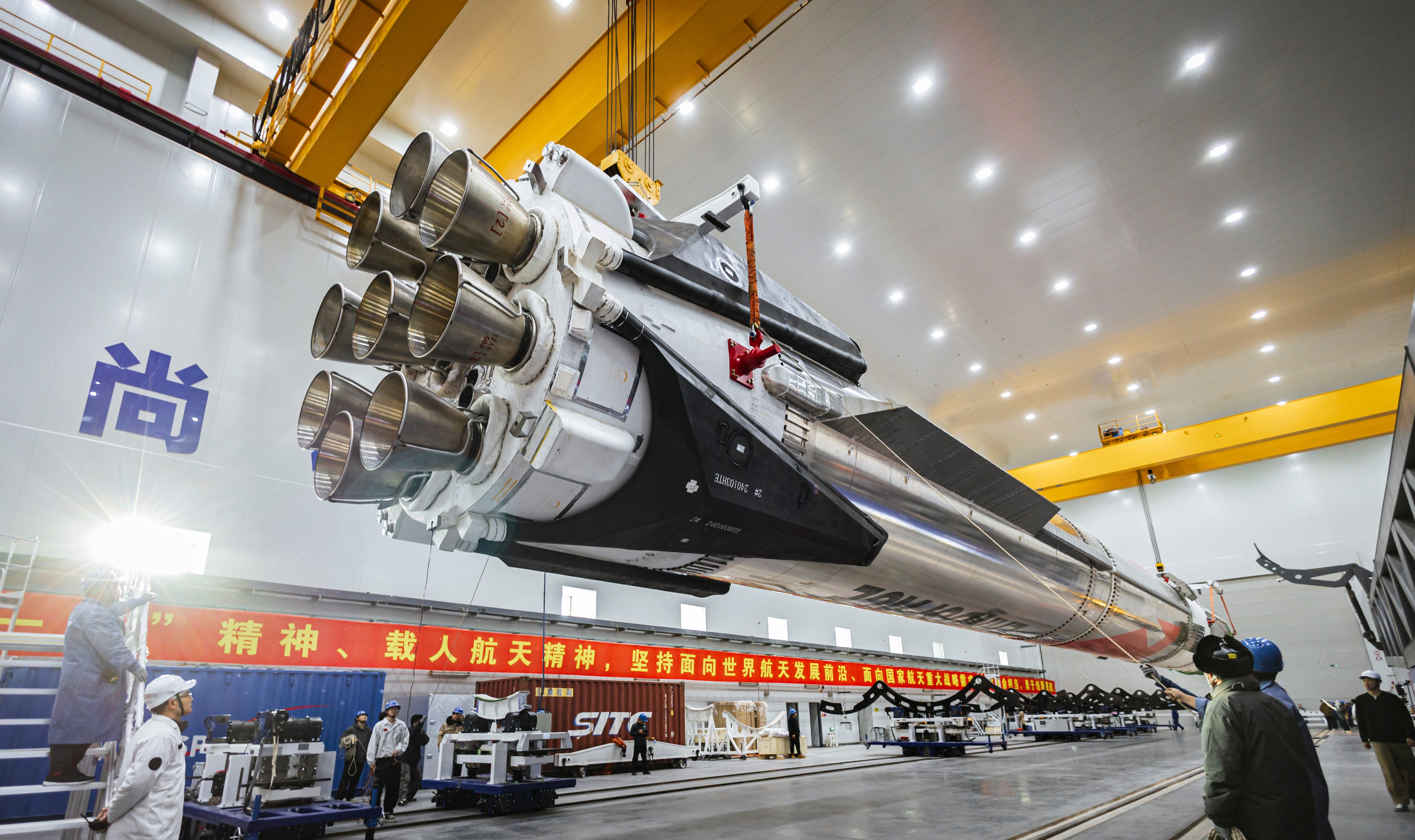
Just over two weeks ago, LandSpace’s partially reusable Zhuque-3 launch vehicle flew for the first time, demonstrating that it can reach low Earth orbit and beyond, but falling seconds short of a successful landing.
During the landing process, the first-stage booster ignited its engine to safely reenter the atmosphere, followed by an unpowered glide toward Minqin County (民勤县). Those two stages of flight were successful, with the final landing burn, igniting one engine, then four more, before swapping back down to one, failing seventeen seconds before touchdown, according to Zhang Xiaodong (张晓东), the Chief Designer of Zhuque-3. The cause of the failure was stated to be ‘abnormal combustion’ at the start of the final burn1.
At the moment, Zhang and LandSpace’s Zhuque-3 team have a few theories on what caused the ‘abnormal combustion’, based on live telemetry from the booster, but a ‘black box’ onboard recorded all vehicle data, and will provide greater certainty on what went wrong. That box has been recovered as part of a required failure analysis process.
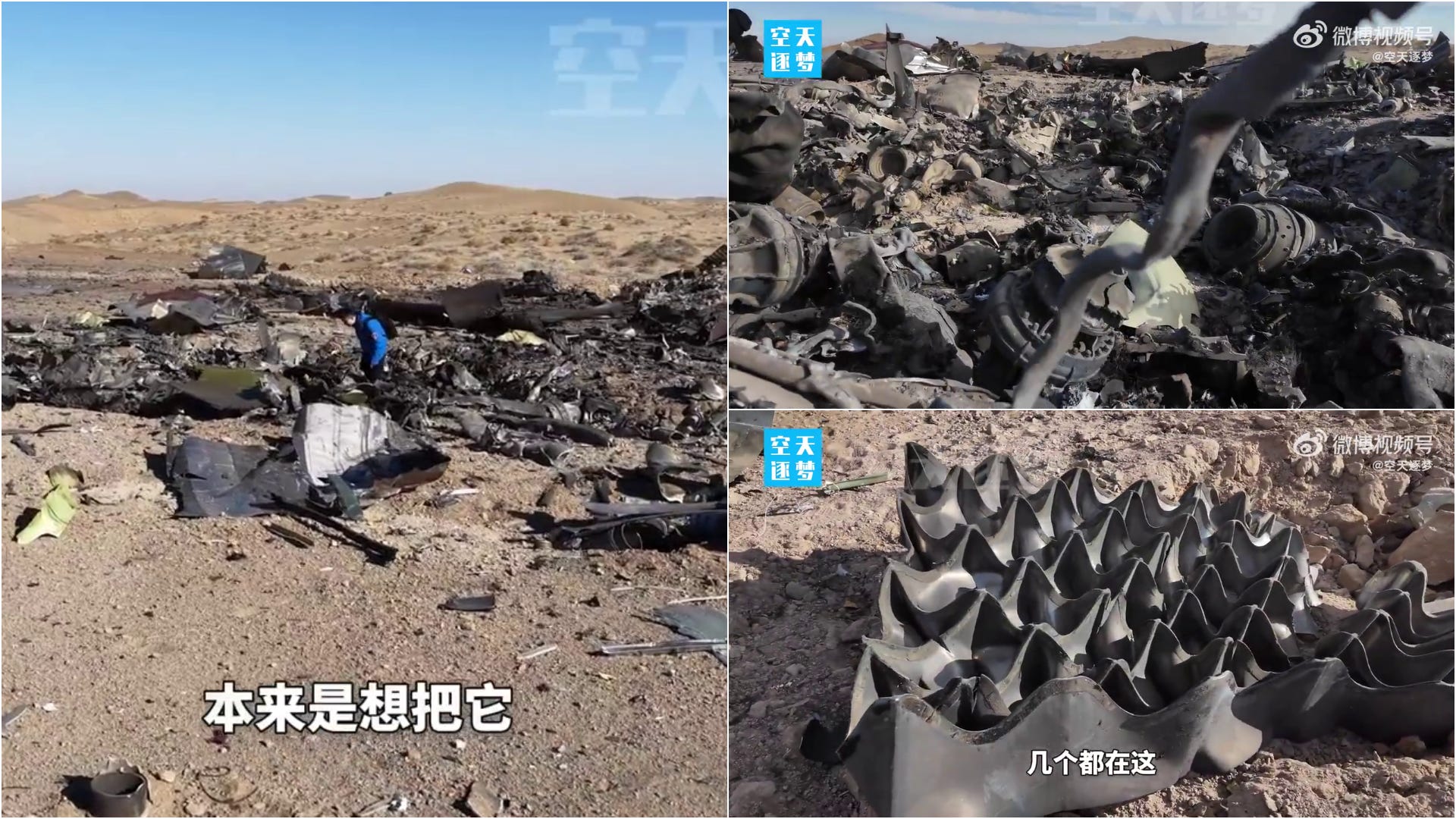
As for the landing site, the first-stage was aiming for the center of it. Instead, it found the ground just off to the side of it at high speed2, resulting in an impressive debris field that was cleared by December 14th.
In a five-minute exclusive walkaround of the landing site shortly afterwards, by ‘Chasing Dreams in the Skies’ (空天逐梦), sections of both the liquid oxygen and liquid methane tanks were found, including parts that were one and nine millimeters thick. Within the center of the impact crater, several turbopumps for the nine TQ-12A engines were in various states of destruction, with some appearing intact from the outside. Two beaten-up grid fins were partially buried by the impact speed.
If the booster had landed, which Zhang gave an about eighty percent chance of happening, recovery teams would have shipped it in one piece to LandSpace’s factory in Wuxi (无锡) for analysis and refurbishment. Now it will head there in many, many pieces.
Following the collection of first-stage booster hardware, Zhuque-3 General Commander Dai Zheng (戴政) sat down with China Central Television for an episode of One on One (面对面). In it, Dai covered a few of the same points as Zhang, while explaining that the company is considering the partially reusable launch vehicle’s first flight a success. Dai reasons that customers care that the vehicle can reach orbit, which was demonstrated, while LandSpace would like to recover boosters to lower costs. While the booster did not land, the first recovery attempt of Zhuque-3 got further than international counterparts on the first attempt3, providing a solid basis for the next flight through data collected.
Regarding the next flight of Zhuque-3, Dai expects, following the conclusion of landing failure analysis, that it will take place in the first half of 2026, around three to six months from now. Software iteration and hardware adjustment will take much of that time, as there are believed to be at least three Zhuque-3 vehicles in production. Zhang Xiaodong has also hinted at plans for Zhuque-3’s next launch, stating:
“[We] saw where the pitfalls are. Next time, the goal will be a perfect landing.”
Partial startup of one engine was observed from the ground before the first-stage booster underwent a rapid unscheduled disassembly.
Believed to be just under supersonic speed.
On its first flight, Blue Origin’s New Glenn was lost during atmospheric reentry, eventually landing for the first time eleven months later. Meanwhile, SpaceX’s Falcon 9 flew many times before landing, coming close a few times.