

A Small Step Towards China-U.S. Space Cooperation
Following a state visit, the two leading space powers have moved towards a more mutually respectful and cooperative atmosphere.

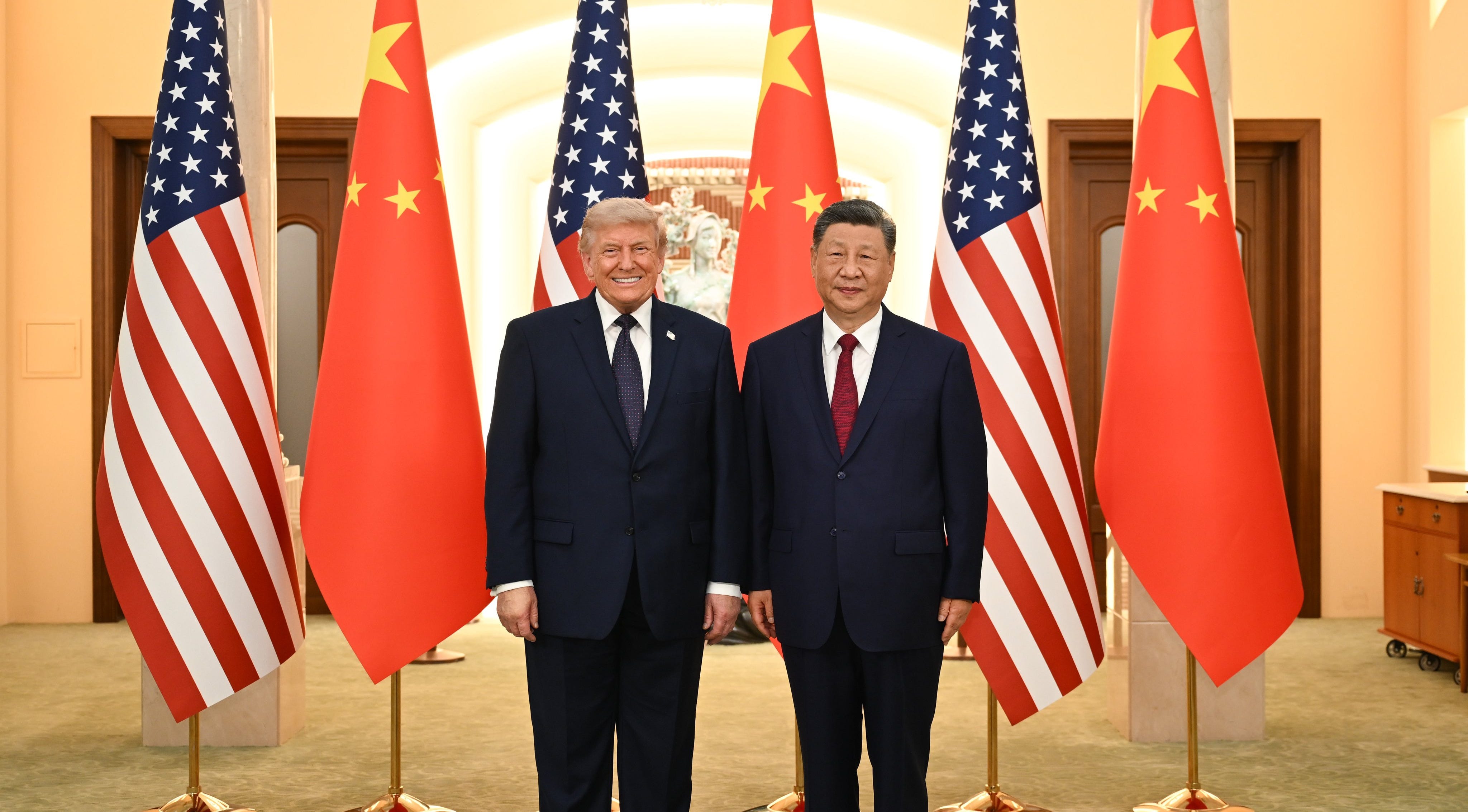
From May 13th to 15th, President Donald Trump led a U.S. state visit to China, bringing with him many leading American business executives such as Elon Musk of SpaceX and Jensen Huang of Nvidia. During the trip, Trump spent much time with Xi Jinping (习近平), President of the People’s Republic of China, and other members of the Communist Party Politburo, for meetings and a banquet in the Great Hall of the People (人民大会堂) as well as more private discussions within Zhongnanhai (中南海).
In the days after the trip, its outcomes were revealed to have mainly been about trade deals, building upon meetings in Seoul days earlier, for the acquisition of aircraft and their key parts along with the removing on restrictions on select commodities. The basics of AI cooperation, for safety and best practices, were discussed ahead of future government-to-government dialogues. Generally, the trip has moved the two countries towards a more cooperative atmosphere following discussions between top leaders.
One restriction removed reportedly includes those on Nvidia’s AI chips, something company leadership has been pushing and hoping for, which led to the smuggling of them for a variety of users. Also regarding AI, with Musk’s inclusion in the visit, he may have gone to lobby for the sale of massive numbers of solar panels to SpaceX for its orbital data center effort, partly a cost-saving measure, due to present production capacity in China, following massive investment in chip production. Both the U.S. and China are looking into placing significant amounts of compute into space, with some firms hoping for a form of cooperation for it.
Following the trip, Chinese media stated that Xi and Trump have agreed to a ‘new vision of building a constructive bilateral relationship of strategic stability’ with ‘positive stability with cooperation as the mainstay, a sound stability with moderate competition, a constant stability with manageable differences’. That vision may have the two nations treating each other as equal partners for the first time, something the U.S. has previously tried to avoid.
In avoiding treating China as an equal, the U.S. has historically placed restrictions on the nation’s space sector, using whatever events it can for sweeping changes. That has included the passing of the ‘Wolf Amendment’ of 2011, which barred NASA from interacting with China and put overbearing restrictions on NASA-funded institutions looking to perform scientific research using data from Chinese missions, such as Chang’e 5. Despite that, in recent months Chinese and American enterprises have been having critical discussions with one another regarding space sustainability, while their national agencies cannot.
With the improvement of both sides’ view of each other and their relationship, it is not entirely unreasonable now that the two nations may find common cooperative ground in space in the near future. For example, both nations’ space agencies are concerned about the prevalence of debris in space and the possibility of cascading collisions of spacecraft, and have jointly created two-thirds of debris items in orbit. Of course, any serious cooperative effort in space will depend on the removal or ignoring of the ‘Wolf Amendment’.
At present, the two nations are still far from working on a major joint dedicated mission, like that of the Sino-European SMILE or the International Space Station. Both, however, are set to explore the Moon at the same time this decade and next, with human and robotic missions.
In the remainder of the year, there will be further opportunities for China and the U.S. to meet and discuss items of joint interest, including space, at the 2026 Asia-Pacific Economic Cooperation meeting in November, the G20 summit in December, and during a visit to the U.S. later this year by President Xi Jinping.