

Brazil Approves Qianfan Constellation to Begin Providing Connectivity Services
Despite having just over a hundred satellites in orbit, services are expected to be available later this year.

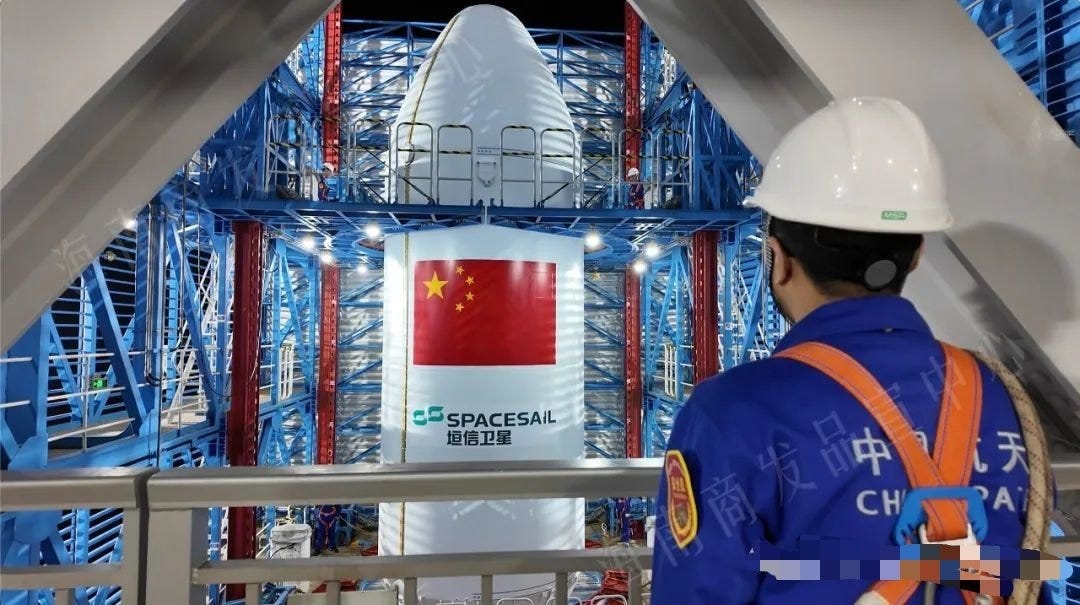
News outlets in Brazil, followed eagerly by their Chinese colleagues, are reporting that the South American nation’s Agência Nacional de Telecomunicações, or Anatel, has authorized the Shanghai-backed Qianfan (千帆) connectivity mega-constellation to operate within the country, following an agreement signed in November 2024.
According to the Brazilian reports, Shanghai Spacesail Technologies Co Ltd (上海垣信卫星科技有限公司), operator of the mega-constellation, has two years to begin providing services from up to 324 satellites in low Earth orbit via its partner Telebras. Once services begin, Qianfan services will be available to customers until July 2031, when reapproval from Anatel will have to be sought if not already ensured before then.
Shanghai Spacesail Technologies has not said themselves when services will begin, but Brazilian outlets understand that commercial operation is intended to begin in the fourth quarter of the year (October, November, December). The outlets also wrote that services in China should start around the same time.
Outlets in China echoed much of the reports from Brazil, adding that services could be used by up to twenty million people, with a focus areas for connectivity being hospitals, schools, and communities living in rural inland regions.
With the allowance of services in Brazil, flights to and from the South American nation from China may be provided with space-based connectivity thanks to agreements with airline manufacturer Airbus, to be a ‘key managed service provider’, and Panasonic Avionics Corporation, who make aircraft-to-satellite connecting terminals.
Approval of Qianfan services elsewhere around the world are likely progressing as well, with agreements in Malaysia, Kazakhstan, and Türkiye during 2025.
As of February 2026, the Qianfan constellation has just 108 satellites in orbit, thanks to five launched between August 2024 and October 2025. In 2026, Shanghai Spacesail Technologies hopes to deploy 324 spacecraft, quadrupling the size of the constellation and improving worldwide services. Deployments for the constellation this year will come from state-owned launch solutions and new commercial offerings, like LandSpace’s Zhuque-3 and Space Pioneer’s Tianlong-3, both contracted to do so.