

CAS Space Debuts Suborbital Research and Technology Testing Rocket
Lihong-1 has soared above the Kármán line with a handful of experiments and safely returned to Earth on its first outing.

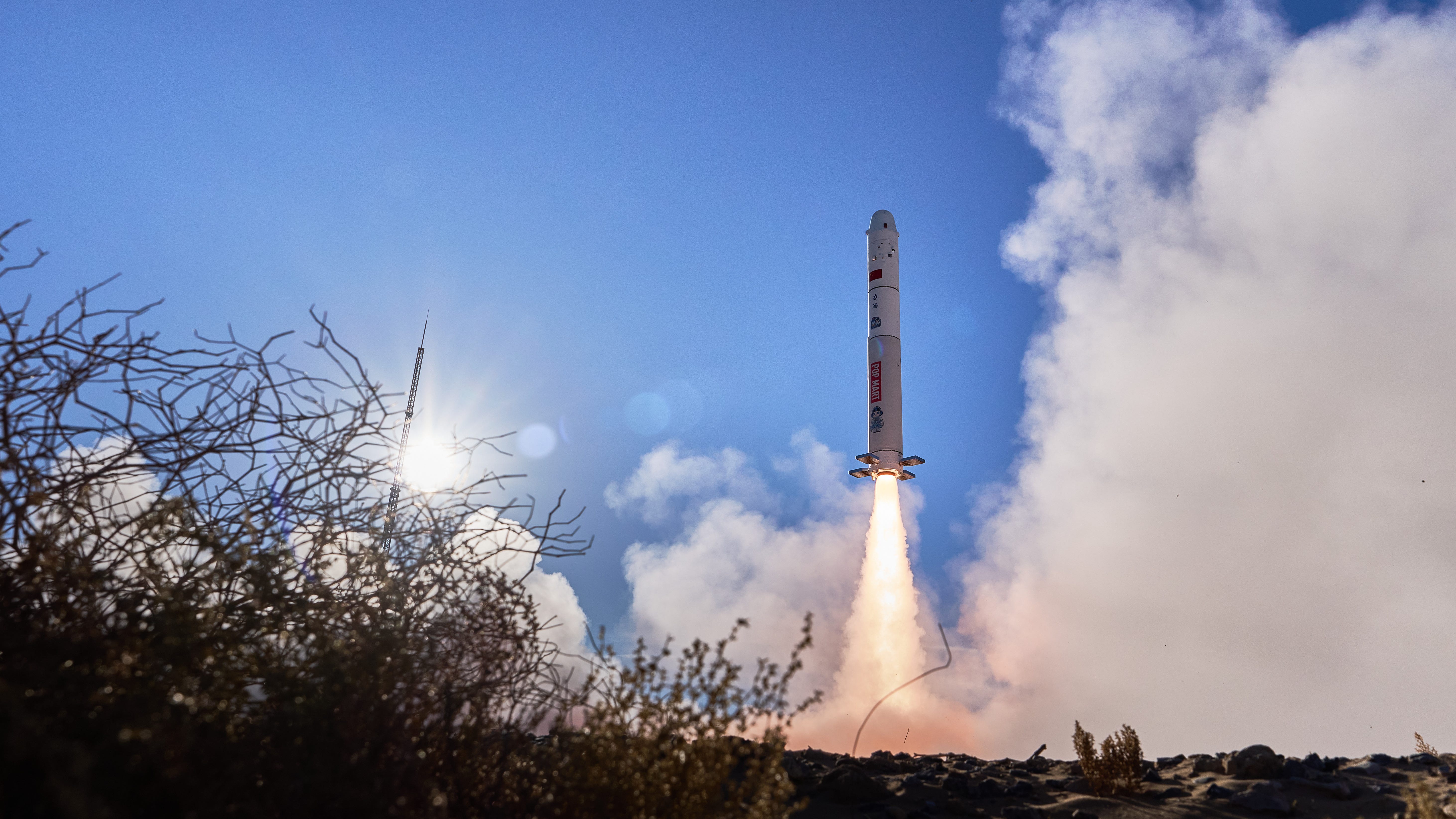
On January 12th at 16:00 pm China Standard Time (08:00 am Universal Coordinated Time), CAS Space debuted its suborbital two-stage research rocket, called Lihong-1 (力鸿一号), with a flight out of the Jiuquan Satellite Launch Center to a peak altitude of about 120 kilometers.
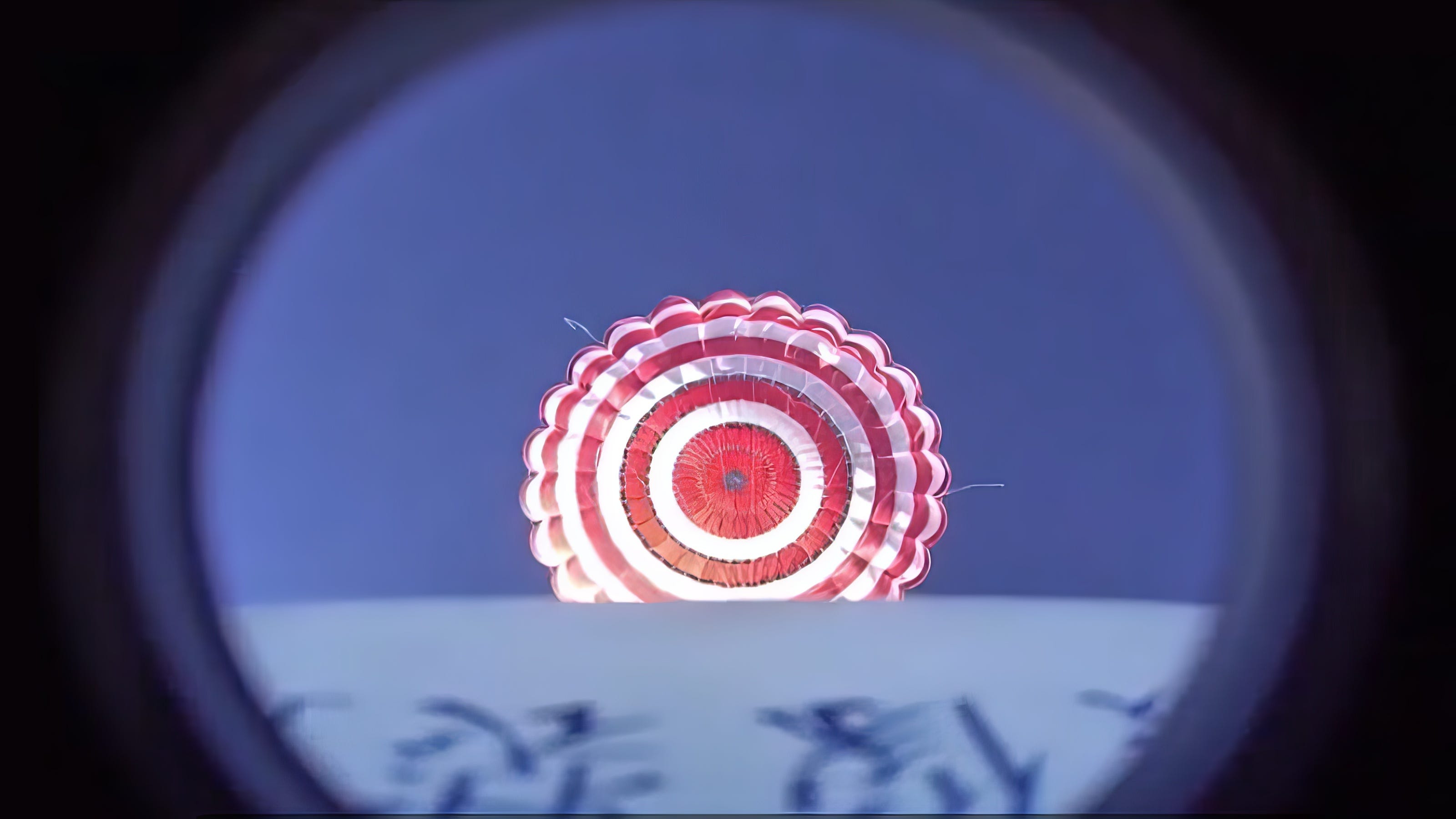
For its first flight, Lihong-1 was initially carried by its first-stage solid rocket motor before its second-stage, also powered by a solid motor, ignited to carry the experiment return capsule higher into space and above the Kármán line. Once in space, payloads inside the capsule were provided with three hundred seconds of microgravity, ended by reentry into the atmosphere and later parachute deployment for a soft touchdown about 150 kilometers downrange within 100 meters of a preset target.
While the capsule was coasting just outside the atmosphere, the first-stage was performing a controlled descent back towards Earth, using its four grid fins at the base of the stage, which also control attitude during ascent. Those grid fins allowed for a controlled crash into the desert surrounding the launch site, also verifying control schemes for reusable launch vehicles that CAS Space is working on. Speaking on the booster descent, the company shared:
“[This] flight verified the re-entry and deceleration processes for the returning capsule, as well as the precise landing-zone control of the booster stage. . . . [By] achieving a precise landing zone for the booster stage, the constraints and algorithms for vehicle re-entry have been rigorously tested. What we have learned will be crucial for reusable orbital vehicles.”
As for the payloads carried onboard Lihong-1, CAS Space stated that several experiments were onboard. Only two of them were listed, with one being a brief demonstration of laser-additive manufacturing to prove its feasibility and the exposure of rose seeds to space radiation to force desired evolutions. An advertisement was also onboard the suborbital mission in the form of two of POPMART’s Space Molly figures, which are now being sold.
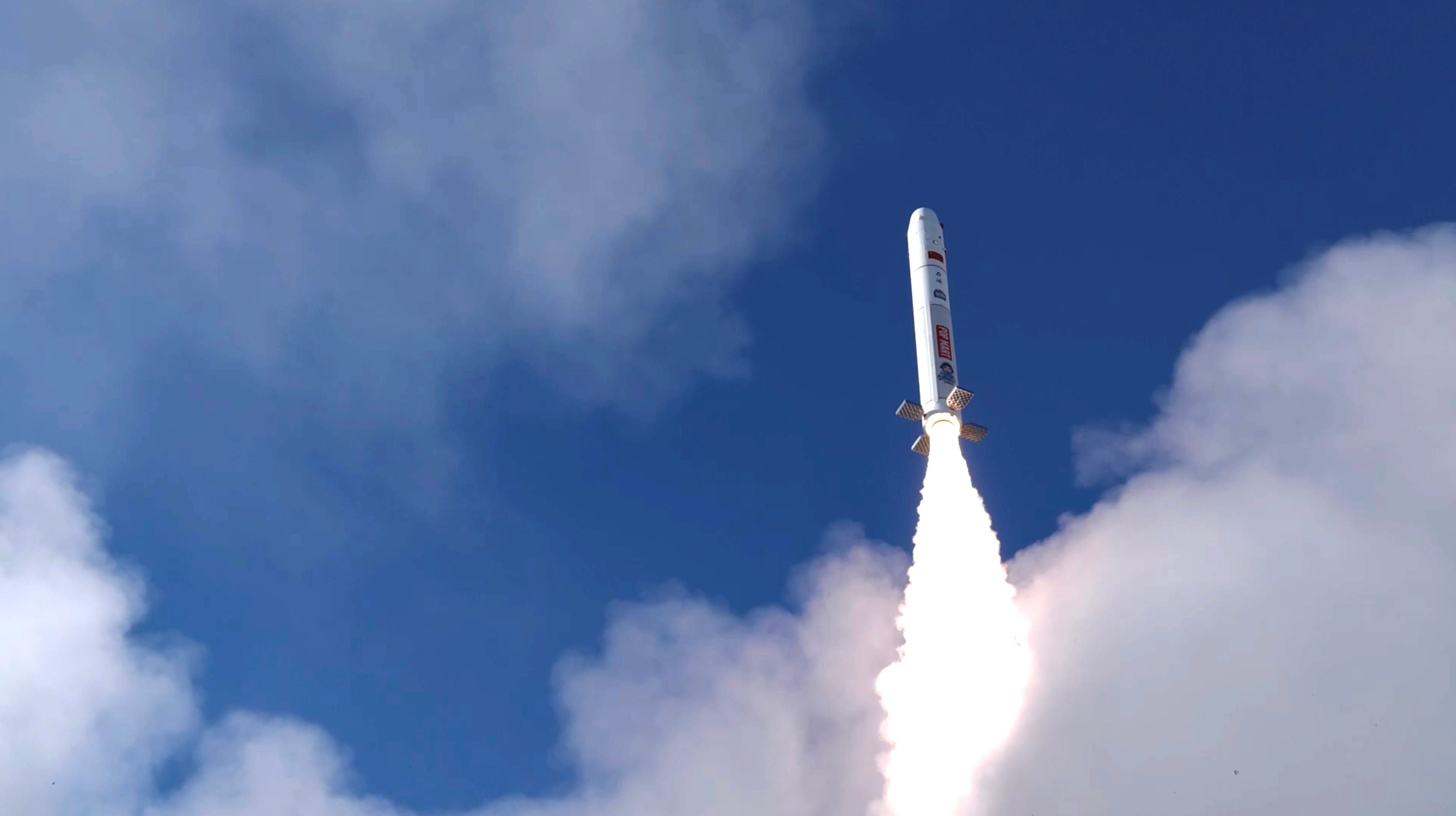
Details about the Lihong-1 suborbital research rocket are fairly few, but earlier materials shared by CAS Space detail that the vehicle stands about 9.3 meters tall while weighing about 7,000 kilograms, with a liftoff thrust of 15.9 tons. Depending on the weight of payloads onboard, up to 150 kilograms, Lihong-1 can fly up to 200 kilometers in altitude while providing between one hundred and eight and three hundred seconds of microgravity flight. As detailed earlier, the rocket has two solid stages, provided by Xi’an Aerospace Commercial Rocket Propulsion Technology Co Ltd (西安航天商业火箭动力技术公司)1, equipped with four grid fins at the base for control, and an experiment return capsule stored inside of a payload fairing during ascent.
As for why Lihong-1 was developed (aside from being a revenue stream other than Kinetica-1 launch missions), CAS Space states that they are aiming to provide a platform for rapidly iterating technologies that require tests in microgravity, but not weeks or months-long flights into orbit. The company does recognise the value of testing on orbit and is looking into evolving the experiment return capsule into a spacecraft that can spend up to a year in space before returning. That capability is currently limited to state-owned enterprises, with the only other commercial entity making progress on pursuing it being AZSpace (紫微科技).
By flying more Lihong-1 missions in the future, CAS Space is building experience for landing its Kinetica-2 launch vehicle’s first-stage boosters as well as operating its planned Lihong-2 (力鸿二号) reusable suborbital tourism vehicle. Lihong-2 is designed to carry seven passengers above the Kármán line for four minutes of weightlessness, with test flights expected between 2026 and 2027.
A subsidiary of the state-owned Academy of Aerospace Solid Propulsion Technology (航天动力技术研究院), who are under the China Aerospace Science and Technology Corporation (中国航天科技集团有限公司).
Why many of the things regarded this launch are kept so secret , as can be seen that only parachute is visible and not the payload that the parachute is carrying . What is so special about the payload that it was kept so secret ?