

CAS Space Opens Zhejiang 'Super Factory' to Scale Kinetica-2
Twelve tri-core launch vehicles are expected to be produced each year at the new site, complementing an existing facility.

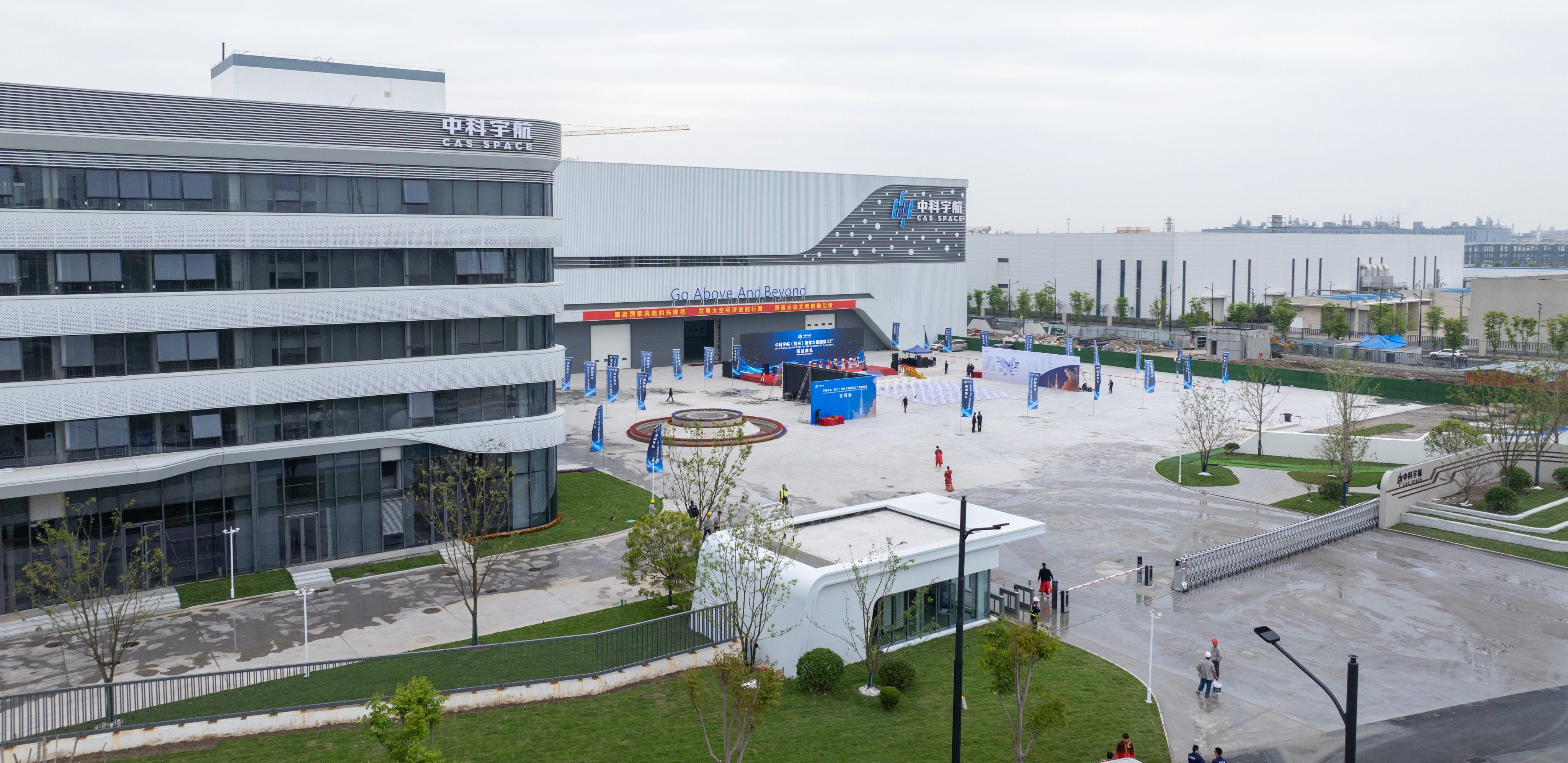
CAS Space, operator of the Kinetica series of launch vehicles, opened its launch vehicle ‘super factory’, located in Keqiao District (柯桥区), Shaoxing (绍兴市), Zhejiang (浙江) province, on April 28th to increase the production capacity of the recently debuted tri-core Kinetica-2.
The ‘super factory’ is set to produce most major sections of a Kinetica-2 launch vehicle, such as propellant tanks, inter-tank joins, interstages, and the engine sections, excluding its engines. Alongside that, those sections will be tested within the site too. CAS Space plans to utilize the ‘super factory’ to produce twelve Kinetica-2’s each year, with a launch vehicle completed every two months, being produced in parallel.
Over the next three to five years, company leadership expects to continually optimize production and testing processes, eventually to support a weekly launch cadence1.
Construction of the ‘super factory’ began in January 2025, covering an area of around 66.5 square kilometers, to establish its manufacturing space and offices. Investment into the site is reportedly valued at 2 billion Yuan (292.6 million United States Dollars, as of April 28th), coming from both CAS Space and local government means.
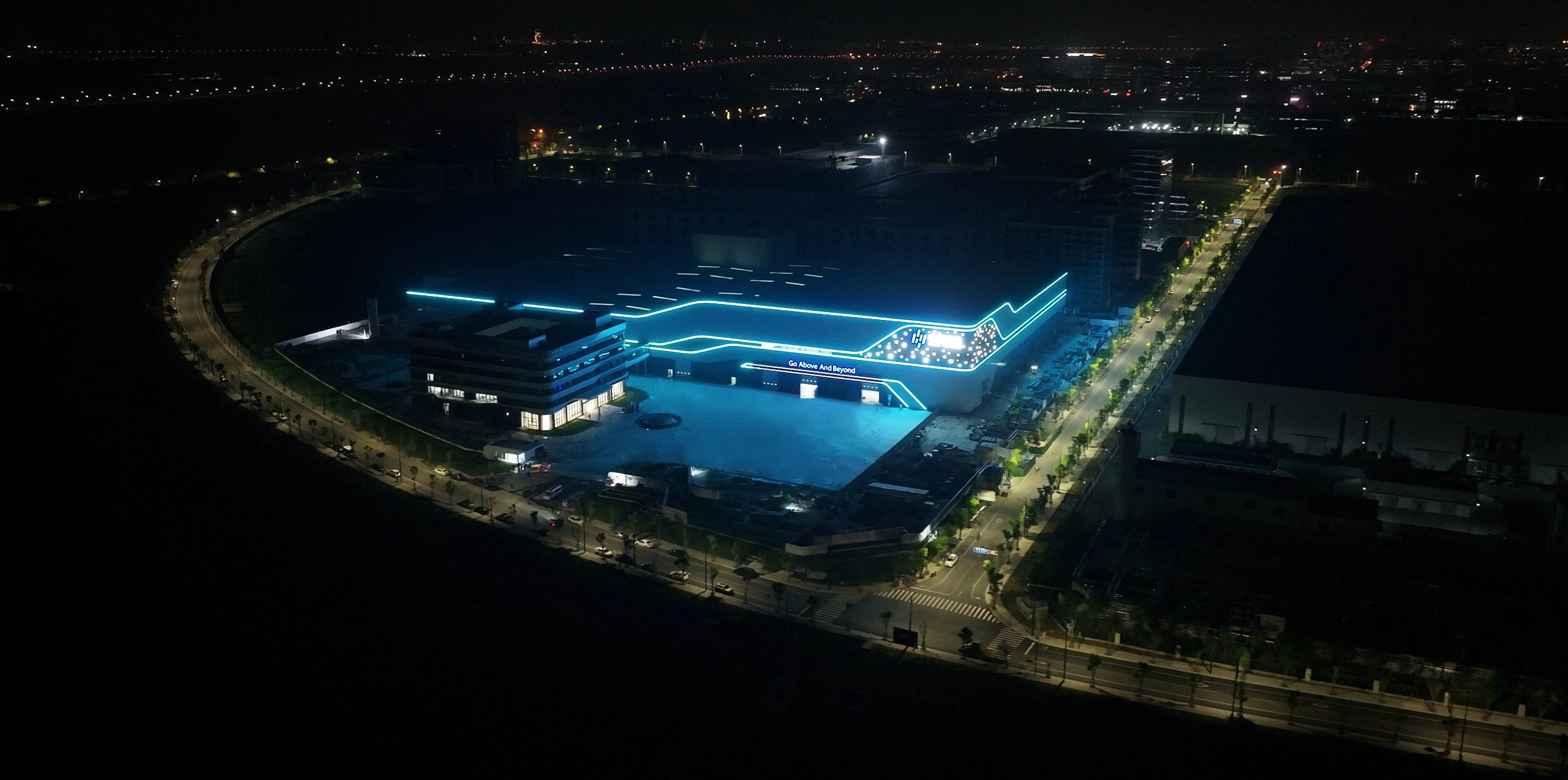
Once the Zhejiang ‘super factory’ begins producing vehicles, stated to be ‘officially commissioned’ already, it will complement an existing facility in Guangzhou (广州), Guangdong (广东) province,2 in meeting Kinetica-2 production needs. With both sites, the company believes up to twenty Kinetica-2’s could be made each year.
Increasing the production rate of Kinetica-2 will be critical for CAS Space to meet its plans of around ten flights before the end of 2028. Those ten flights will be to gradually prove reusable rocket technologies onboard the launch vehicle, first proving aerodynamic control during descent, then an in-flight reignition of a first-stage engine, and then finally landing attempts.
During launch campaigns, CAS Space is confident they can routinely fly Kinetica-2 launch vehicles when they arrive at launch sites. Currently, the company has facilities at the Jiuquan Satellite Launch Center with plans to fly from the Wenchang Commercial Space Launch Site, once an integration facility is built, and then from floating platforms.
Kinetica-2 is set to reuse its first-stages, and doing so would allow production to shift towards second-stages. The vehicle’s second-stage is significantly less complex and requires fewer materials.
Visit CAS Space’s site (available here) and scroll down to see a showcase of existing manufacturing, and other, sites.
The economics of launcher production are starting to look much like those of airliners, a big up front cost to design and certify the production facilities and the actual product, hopefully followed by many years of increasingly profitable operations. CAS Space is replicating the business structure of the early Boeing Company, which also built and operated its own vehicles to provide air service.
Funding this type of effort is challenging for a commercial entity, but CAS Space benefits both from a very compressed schedule, which minimizes the cumulating interest costs accrued, along with supportive government policy which eases credit availability.
The supportive financial environment will need to remain for some years, as the announced business plans do not include a reusable vehicle other than as a future prospect. That seems to lag the competition, both from domestic as well as international suppliers. It is striking that CAS Space has the confidence to provide this conservative a roadmap in face of what appears to be serious competion.