

CGSTL Deploys Eight Imaging Satellite With Non-Earth Target Capabilites [Kinetica-1 Y12]
With a flight by CAS Space from the Jiuquan Satellite Launch Center, new satellites for the Jilin-1 constellation are in orbit with fresh capabilities.

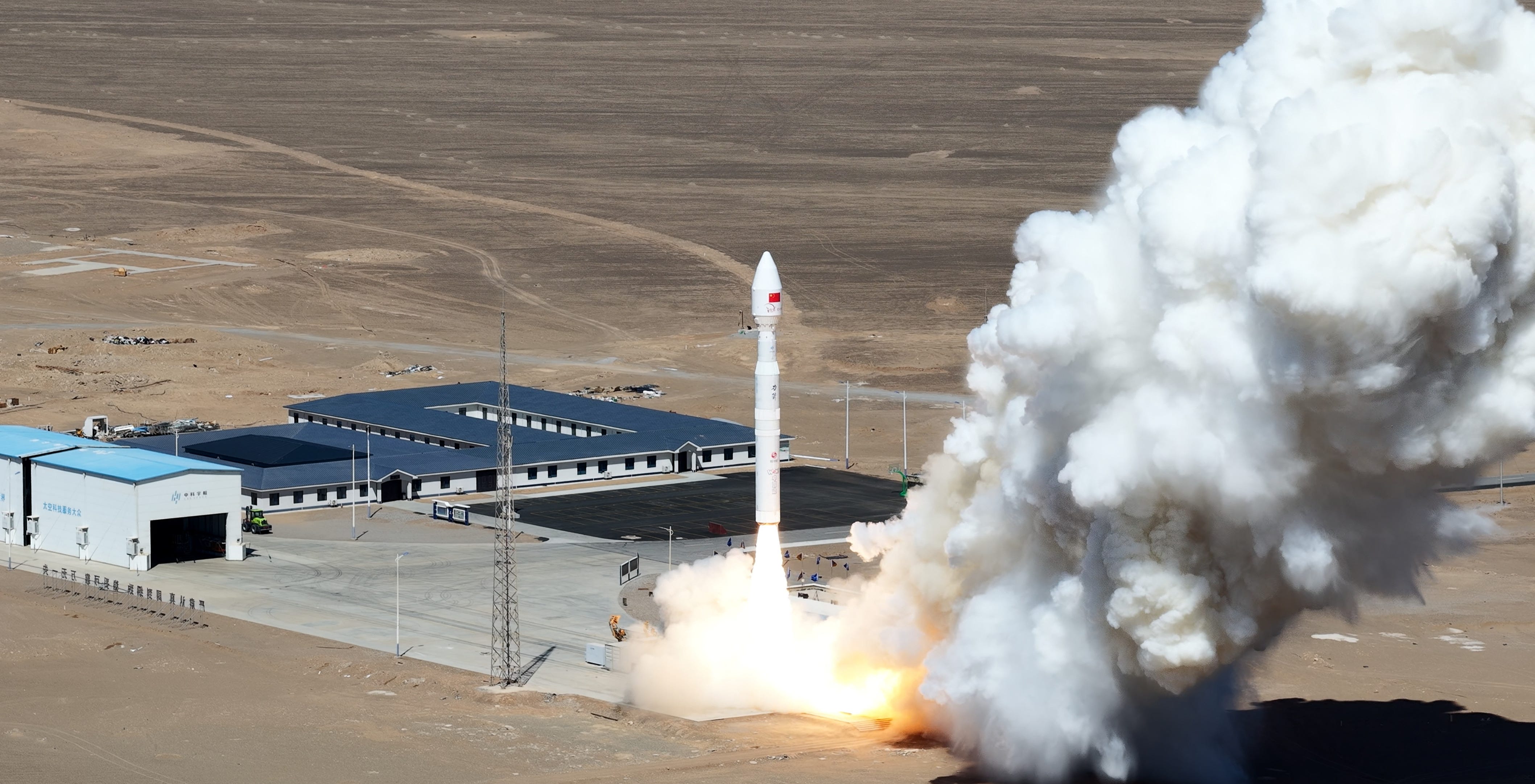
At 12:03 pm China Standard Time (04:03 Universal Coordinated Time) on April 14th, CAS Space’s Kinetica-1 launch vehicle blasted off from Launch Area 130 at the Jiuquan Satellite Launch Center, heading towards sun-synchronous orbit with a handful of satellites.
Those satellites were eight in total and from Changguang Satellite Technology Co Ltd (长光卫星技术股份有限公司), commonly shortened to CGSTL, to expand its Jilin-1 (吉林一号) Earth imaging constellation. Satellites being delivered today were:
Jilin Gaofen-07A02 (吉星高分07A02星).
Jilin Gaofen-07A03 (吉星高分07A03星), also known as Postal Savings Bank Satellite (邮储银行号卫星).
Jilin Gaofen-07A04 (吉星高分07A04星).
Jilin Gaofen-07B02 (吉星高分07B02星).
Jilin Gaofen-07B03 (吉星高分07B03星).
Jilin Gaofen-07B04 (吉星高分07B04星).
Jilin Gaofen-07C02 (吉星高分07C02星).
Jilin Gaofen-07C03 (吉星高分07C03星).
Those satellites, similar to three aboard the previous Kinetica-1, have a resolution of about 0.5 meters alongside onboard AI-assisted processing. That enables them to provide a wide variety of images to customers for various uses, including non-Earth target imaging as a new capability. CGSTL’s Jilin-1 constellation had non-Earth imaging tested in September 2025, possibly in response to an American firm's imaging of Shijian-26 (实践二十六号), before beginning development of relevant hardware a month later.
One of the eight satellites, Jilin Gaofen-07A03, is part of a cooperation with the Postal Savings Bank of China (中国邮政储蓄银行). The cooperation is stated to be for exploring integrations of ‘finance and space’ with the monitoring of relevant international projects, farmland, new energy infrastructures, and nature reserves to improve the bank’s services.
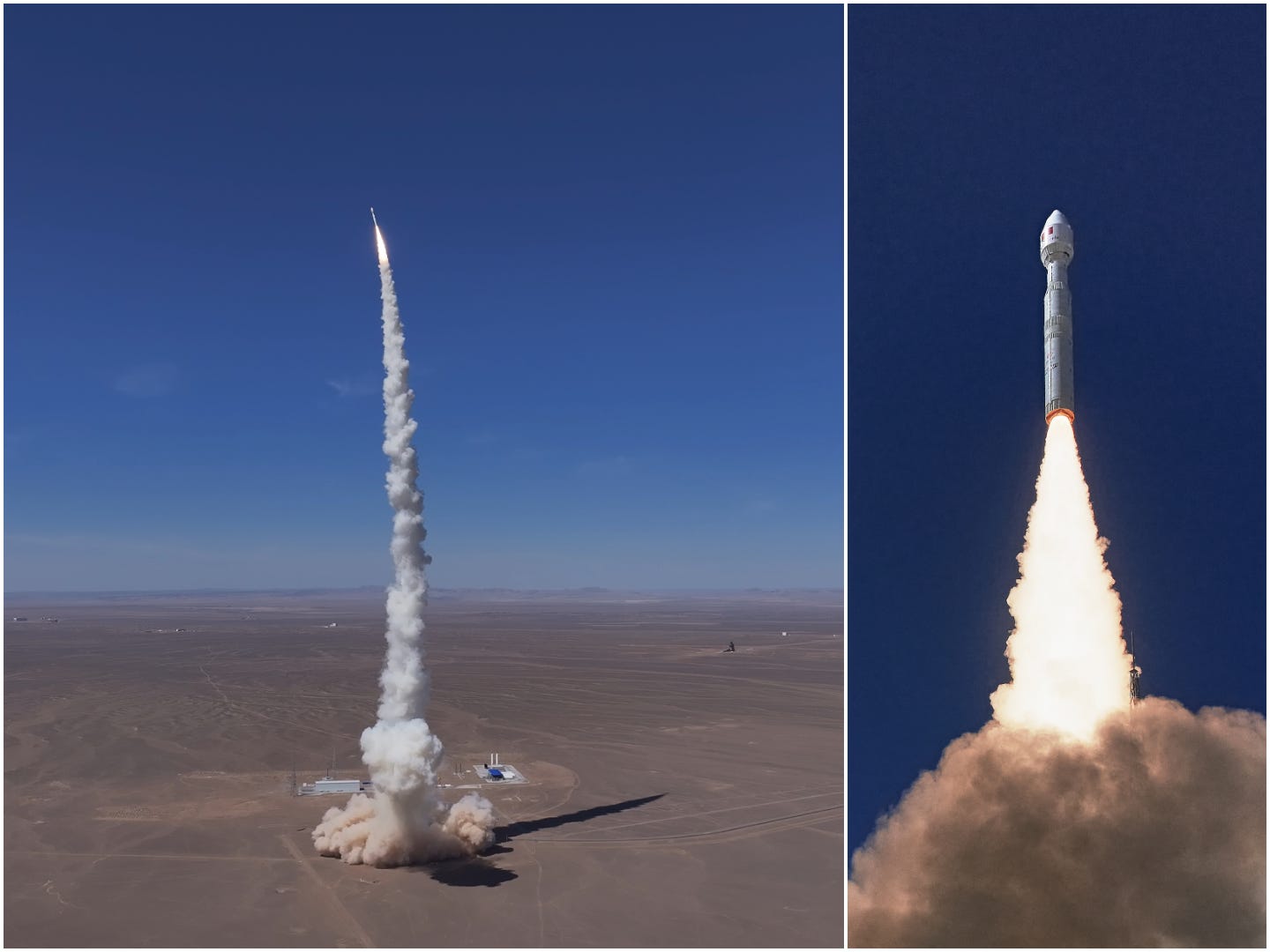
After the conclusion of today’s launch mission, CAS Space was keen to mention via its WeChat blog that the launch vehicle can be assembled and prepared for launch in a short time, while being customized to meet customer needs. Via Twitter, the company mentioned that ten Kinetica-1’s are being produced per year.
The Kinetica-1 launch vehicle flying today also featured artwork to promote the idea of an ecological civilization, where humanity and nature coexist harmoniously, and made in China science and technology, using today’s mission as an example of self-reliance.
Today’s launch was the 12th launch for Kinetica-1, and the 13th for CAS Space through its Kinetica family of launch vehicles. This was also the 23rd launch from China in 2026.
Liftoff video via 大漠问天 and 我们的太空 on WeChat.
Check out previous launches from CAS Space
CAS Space Launches Handful of International, Chinese Satellites [Kinetica-1 Y11]
![CAS Space Launches Handful of International, Chinese Satellites [Kinetica-1 Y11]](https://substackcdn.com/image/fetch/$s_!bTRz!,w_280,h_280,c_fill,f_webp,q_auto:good,fl_progressive:steep,g_auto/https%3A%2F%2Fsubstack-post-media.s3.amazonaws.com%2Fpublic%2Fimages%2F8c4c615b-f104-496f-96c3-a400b60d0974_3091x1406.jpeg)
CAS Space’s Kinetica-1 rocket blasted off from Launch Area 130 at the Jiuquan Satellite Launch Center at 12:03 pm China Standard Time (04:03 am Universal Coordinated Time) on December 10th, carrying a handful of satellites in…
Tri-Core Kinetica-2 Soars Into Orbit Carrying Cargo Spacecraft on First Mission! [Kinetica-2 Y1]
![Tri-Core Kinetica-2 Soars Into Orbit Carrying Cargo Spacecraft on First Mission! [Kinetica-2 Y1]](https://substackcdn.com/image/fetch/$s_!m7Hs!,w_280,h_280,c_fill,f_webp,q_auto:good,fl_progressive:steep,g_auto/https%3A%2F%2Fsubstack-post-media.s3.amazonaws.com%2Fpublic%2Fimages%2F4616777d-768e-46c8-9c87-f4564dfe8e3f_8048x4290.jpeg)
For the first time from Launch Area 140 at the Jiuquan Satellite Launch Center, CAS Space’s Kinetica-2 launch vehicle lifted off at 19:00 pm China Standard Time (11:00 am Universal Coordinated Time) on March 30th, heading towards …
What is Kinetica-1?
This section is for those less familiar with China’s various commercial launch vehicles.
Kinetica-1 is CAS Space’s first launch vehicle and consists of four stages, all burning solid fuel. CAS Space offers the ability to launch a single satellite to utilize all of the rocket’s payload capacity, however more ‘rideshare’ missions occur for multiple satellites to be delivered in one launch.
The payload capacity of the launch vehicle is currently as follows:
2,000 kilograms to low Earth orbit
1,500 kilograms to a 500-kilometer sun-synchronous orbit
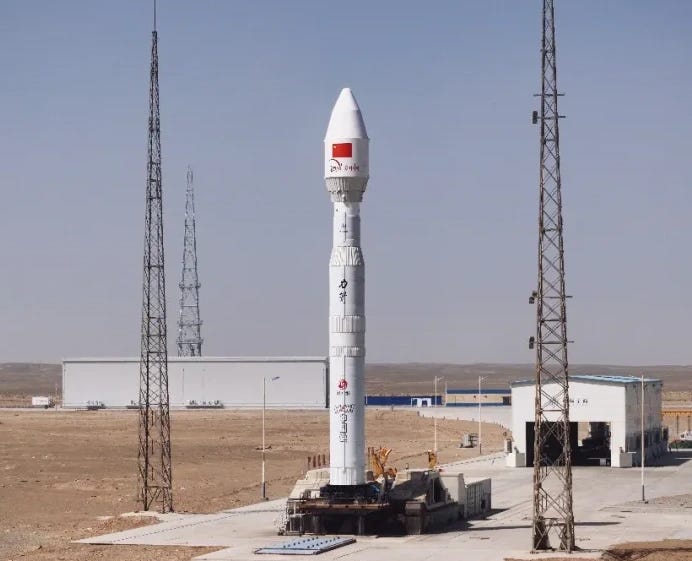
The first-stage is powered by a solid rocket booster that burns an unspecified solid fuel, generating 200 tons of thrust. The second-stage is also powered by a solid rocket booster, producing 110 tons of thrust with the same unidentified propellant. The-third stage, also using the undisclosed propellant, generates 45 tons of thrust. Finally, the fourth-stage is powered by another solid rocket booster, providing 8 tons of thrust with the same solid propellant.
On its launch pad, Kinetica-1 stands at 30 meters tall. The first two stages have a diameter of 2.65 meters, the fairing has a diameter of either 2.65 or 3.35 meters. When prepared for launch Kinetica-1 weighs a believed 135,000 kilograms.
So far, Kinetica-1 has flown all of its missions from CAS Space’s launch facility at the Jiuquan Satellite Launch Center.