


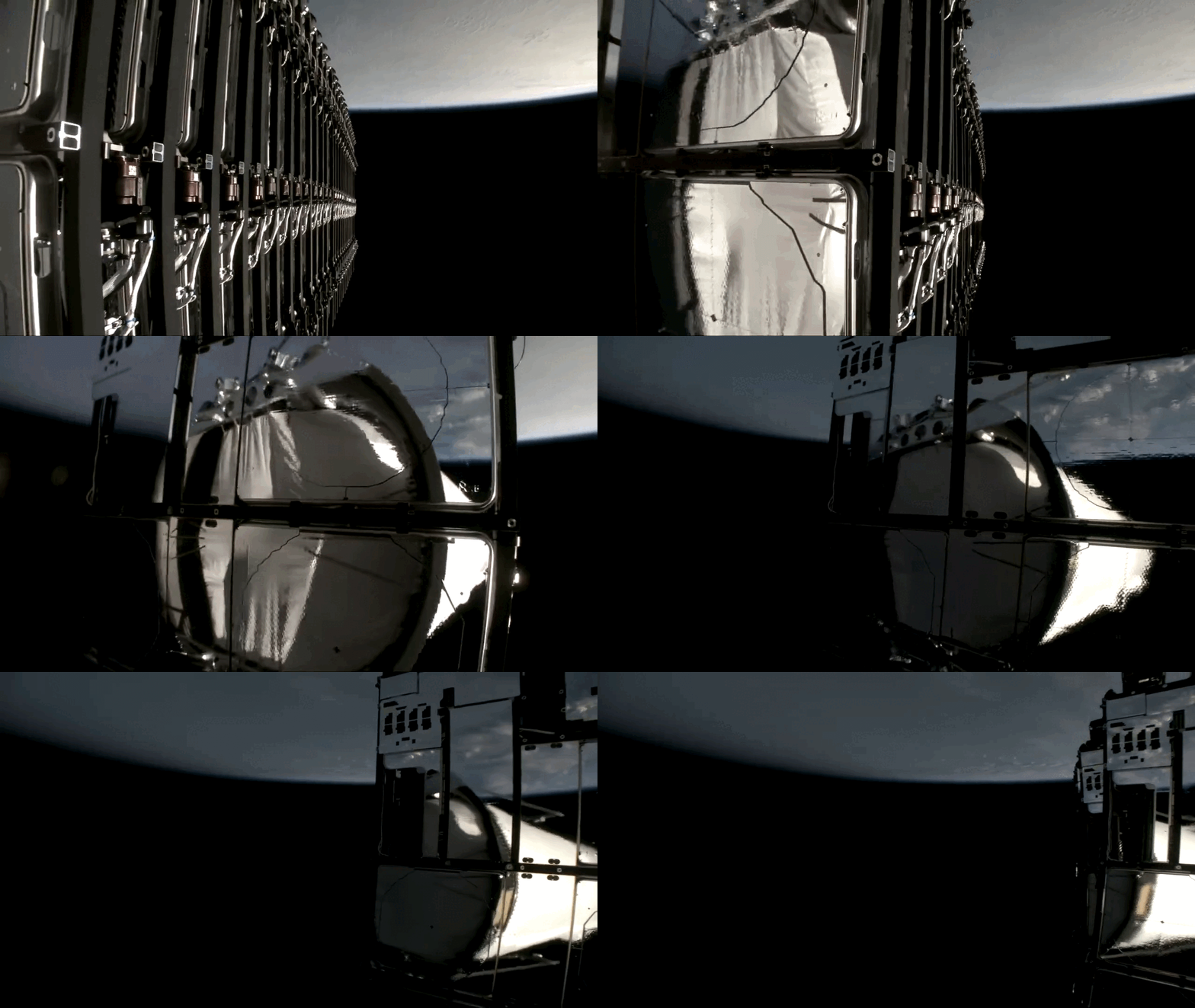
On December 29th 2025, at a United Nations Security Council Arria-Formula meeting1, the permanent five members, ten elected states, and other participating states gathered to discuss the legal challenges and general risks from low Earth orbit satellite connectivity mega-constellations. The 150-minute meeting mainly discussed how constellation operators are or are not following local laws, with possible illegal, internationally interfering, or nationally destabilizing use facilitated by the connectivity businesses.
At the meeting, the People’s Republic of China, through its representative, lodged an informal complaint against SpaceX’s Starlink and other unnamed constellations. The full complaint2 is as follows3:
In recent years, humanity has made strides in outer space exploration. With a strong development momentum, mega low Earth orbit constellations show the potential to play a positive role in improving the quality of global network communication services, bridging the digital divide, and improving people’s livelihood and well being.
Meanwhile, it must be noted that as commercial space activities grow rapidly, the unchecked expansion of commercial satellite constellations by a certain country in the absence of effective regulation poses significant safety and security challenges.
First, this said constellations take up frequency and orbital resources, thus increasing collision risks. Starlink, for example, with other ten thousand satellites in orbit, gobbles up frequency and orbital resources, increasing the risk of spacecraft collisons and space debris. Starlink satellites twice came dangerously close to China’s space station, forcing the station into emergency maneuvers to avoid collision. Thus jeopardizing the safety and security of Chinese astronauts. Recently, a Starlink satellite disintegrated into over one hundred pieces of debris. This problem undoubtedly causes immense risk to spacecraft from developing countries’ lacking capabilities for orbit control, space situational awareness, and timely response.
Second, the expanding military applications intensify the risk of an outer space arms race. A certain country extensively utilizes commercial space entities to provide military reconnaissance, battlefield communications, and other services, even directly intervening in armed conflicts of other countries. This blurs the military-civilian boundary in outer space and creates an accountability predicament, and challenges the Outer Space Treaty and Law of State Responsibility.
Third, the constellation infringes upon other countries sovreignty and undermines regional peace and stability. Disregarding relevant national laws, certain low Earth orbit satellite constellations provide signal services without licenses over foreign territories and borders, thus becoming a tool for interfering in a country’s internal affairs. The African Sahel region, South Asia, and Southeast Asia, Starlink is extensively used by violent terror elements, separatist forces, and telecommunications fraud groups, causing regulatory and law enforcement challenges.
Chair, the launch and deployment of large constellations are space activities and should be regulated by international space law, including the Outer Space Treaty, the Registration Convention, and Liability Convention. They must comply with relevant international legal rules for peaceful use, registration of space objects, state responsibility, and equitable access.
Under the Outer Space Treaty, the member states bear international responsibility for the space activities of their non-government entities and are responsible to ensure such activities comply with the treaty. This means that the relevant country bears jurisdictional responsibility for dangerous tendencies of commercial space activities that impede other nations’ peaceful use of outer space or fuel an arms race in space.
Should a country fail to regulate or supervise its commercial space enterprises, or even direct those entities to use satellite internet services to engage in illegal activities such as intervening in a country’s armed conflicts or interfering in internal affairs, that country must and should also bear responsibility.
China calls on the relevant country to earnestly fulfill its obligations under the Outer Space Treaty, strengthen oversight of its domestic commercial space activities, to address the concerns of the international community, and also supports the UN as the main channel to actively consider interpreting existing legal provisions and evolving relevant codes of conduct to effectively resolve a myriad of problems rising from the abuse of low Earth orbit satellite constellations, thereby safeguarding the rights of all countries to use and explore outer space on an equal basis.
Chair, outer space is a common domain of humanity. We have a shared responsibility to ensure that space technology truly serves the well-being of humanity. As a responsible major country, China has always championed the peaceful use of outer space and the maintenance of outer space security. We have always upheld the international order in outer space based on international space law, fulfilled our obligations under international treaties and outer space in good faith, and actively promoted the development of rule of law in outer space.
Going forward, China stands ready to work with all countries to advance international cooperation in the peaceful use of outer space, promote the improvement of global governance in outer space, jointly safeguard its lasting peace and security, and build a community with a shared future for humanity in outer space.
As China’s representative makes few directly sourceable mentions to Starlink and other U.S. actives, listed below is the information being cited:
In 2021, China formally protested via the United Nations’ Office for Outer Space Affairs to point out two close encounters to the Tiangong Space Station with Starlink satellites.
SpaceX’s Starlink plans alone are set to have 42,000 satellites across dozens of orbital inclinations, a few thousand more than all six of China’s major efforts, as the company shells out several billions in acquiring exclusive broadband spectrum use.
Alongside Starlink, SpaceX has the Starshield constellation for U.S. military users, with its spacracraft equipped for communications, intelligence, and observation. It has been alleged that Starshield connects to the civilian-oriented Starlink.
On December 17th 2025, a Starlink satellite experienced a debris-creating event likely originating from inside of it, effectively killing the spacecraft at a 418-kilometer orbital altitude (more on this in a moment).
SpaceX’s Starlink space-based connectivity services, utilizing the many thousands of satellites, is used as a digital lifeline for fraud sites in South and Southeast Asia. SpaceX can disable the service for those sites, but opts not to save costs for being aware of who its customers are or being in contact with various governments. First action by the company was only taken in late 2025 following government pressures that would threaten revenues.
In a similar vein, Starlink is used to support Jihadist activity in Africa due to lacking company knowledge to save costs, improving profit margins.
Following the kidnapping of Venezuela’s head of state, SpaceX announced that Starlink would begin operating in the South American country without approval from national regulators, likely based upon the false claim that the U.S. is now running the nation.4
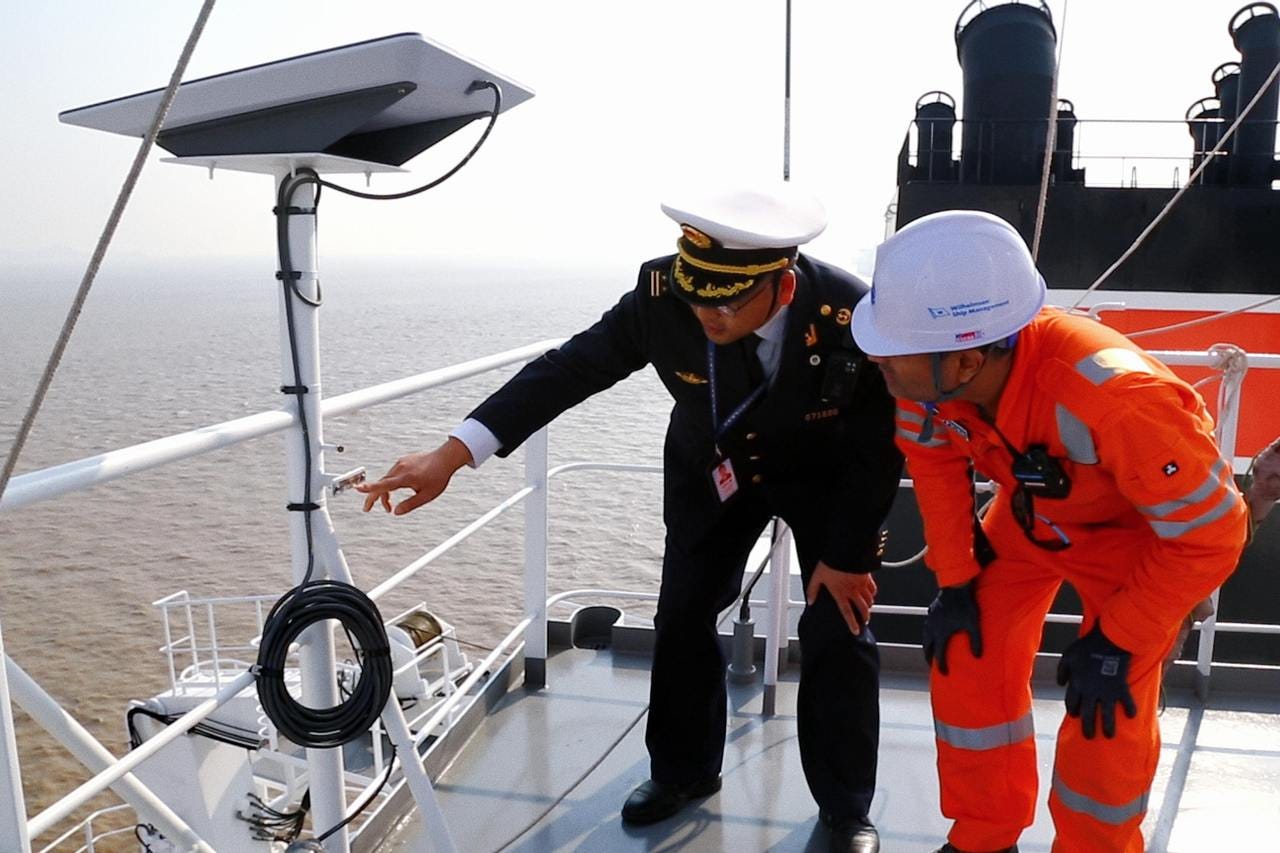
China disallows the use of satellite constellations within its territory if the satellite operator has not applied for regulatory approval, or is not complying with local law. A recent example of this saw Starlink terminals seized off the coast of Ningbo (宁波市), Zhejiang (浙江) province, from a foreign vessel that failed to turn the devices off before entering Chinese jurisdiction. Ownership of the device is allowed so long as it is not used for its intended purpose.
Most of the representatives’ claims were relevant to Starlink as it is the dominant U.S. system. Amazon’s upcoming Leo network has a similar government-dedicated service planned, and it is not clear if different spacecraft will be launched to facilitate it.
Debris creation, a close call, reducing altitude
Looping back to the Starlink breakup, hundreds of pieces of debris were tracked from the event. Those debris are below the International Space Station’s altitude but above the Tiangong Space Station, and will eventually pass through its orbit. SpaceX expects the process to take several weeks. About a week before that, SpaceX alleged that a satellite originating from a Kinetica-1 launch passed within two hundred meters of a Starlink satellite too.
Following both events, SpaceX’s Vice President of Starlink Engineering Michael Nicolls shared on January 1st that almost half of the Starlink mega-constellation is being reconfigured into lower orbits in the interest of improved space safety. While boasting of the constellation’s reliability to date, it was highlighted that SpaceX would like satellites to be dragged out of orbit5 in the event of a failure. How the move increases safety was explained as:
“As solar mininum approaches, atmospheric density decreases which means the ballistic decay time at any given altitude increases — lowering will mean a [greater than] 80% reduction in ballistic decay time in solar minimum, or 4+ years reduced to a few months. Correspondingly, the number of debris objects and planned satellite constellations is significantly lower below 500 [kilometers], reducing the aggregate likelihood of collision.”
Chinese media eagerly reported on the reconfiguration and lowering of the orbits.
Did China ‘lawfare’ SpaceX?
Due to the timing of SpaceX’s decision and China’s informal complaint, it has been suggested that China used ‘lawfare’6 against SpaceX to reconfigure Starlink’s orbits. That is a lacking suggestion for a few reasons.
First of all, the move to lower orbits in the name of safety is a rather effortless public relations win that SpaceX did not need to do. The satellites moving down to that orbit will, of course, be using more propellant than initially planned, but on the other hand, new satellites being deployed will use less to reach their now-lower operational orbit. As a consequence, the new satellites will have more propellant onboard throughout their operational lifetime, to perform greater collision avoidance manoeuvres or to prolong their operational usefulness. Additionally, services will improve too, as satellites are closer to consumer terminals on Earth.
Second, it allows SpaceX, and by extension the U.S., to demonstrate a form of leadership and new norms in how mega-constellations should be operated once regular services are online, with regular launches for expansion and spacecraft replacement. As noted in the above section, lower orbits allow for faster ‘dead’ spacecraft removal, compared to GuoWang’s 1,100-kilometer operational orbit, leaving them in space for decades if control is lost.
Lastly, China has no means to actually pressure SpaceX to change its company policies. Starlink offers no services in China, has no legal consumers, and has no government contracts that could be used as economic pressure. Any legal threats would also have to go via the U.S. government, which would result in little under the current U.S.-China relations, or the slow processes of various international organisations, like the United Nations or the International Telecommunications Union.
An informal gathering of United Nations Security Council members that allows open discussions on specific issues, often involving non-member states, civil society, or experts. These meetings facilitate dialogue without the formalities of official sessions and help inform policy discussions.
Starting at 01:13:35 in the United Nations recording of the meeting.
Mentions to Starlink and U.S. activity in bold.
This specific example is newer than the complaint to emphasize its point, but it is a common SpaceX practice.
Despite being in a vacuum, spacecraft in low Earth orbit experience some drag that, if the orbit is not periodically reboosted, will result in it reentering the atmosphere and being destroyed.
Starlink will get massive and massive each year as Starlink has plans for constellation of the size of more than 10,000 of those small sattelites in the LEO and they are planning another megaconstellation too just for US space force . China's options are getting squeezed year by year so , Unless and until China got a reliable reusable rocket that can be launched every other day like Falcon 9 , China has no chance . Once China got such a rocket and started building Qianfen or Guowang in a quick way then I am sure , US government will have no choice but to talk with China regarding this matter .
Secondly , time has come now that China installed the jamming infrastrcure in her territory to block the communication of Starlink sattelites with a network ground antennas on Chinese land and China has a right to do so . For this massive infrastrucure , sophisticated communication technology will be needed but I am sure HUAWEI can help in this regard .
The future battles of superpowers will start in Space guys and it will all start from the first sattelite destruction in the LEO or VLEO by an adversary .