

SpaceX Alleges Close Approach of China-Launched Satellite to Starlink Constellation
The American space giant has claimed that an object originating from Jiuquan passed a few hundred meters away from a Starlink internet satellite.

December 10th saw the launch of CAS Space’s Kinetica-1 from the Jiuquan Satellite Launch Center, carrying nine satellites, for international and Chinese customers, into sun-synchronous orbit. After launch, the fourth-stage deployed its payloads for their respective owners to start retrieving telemetry from and flying.
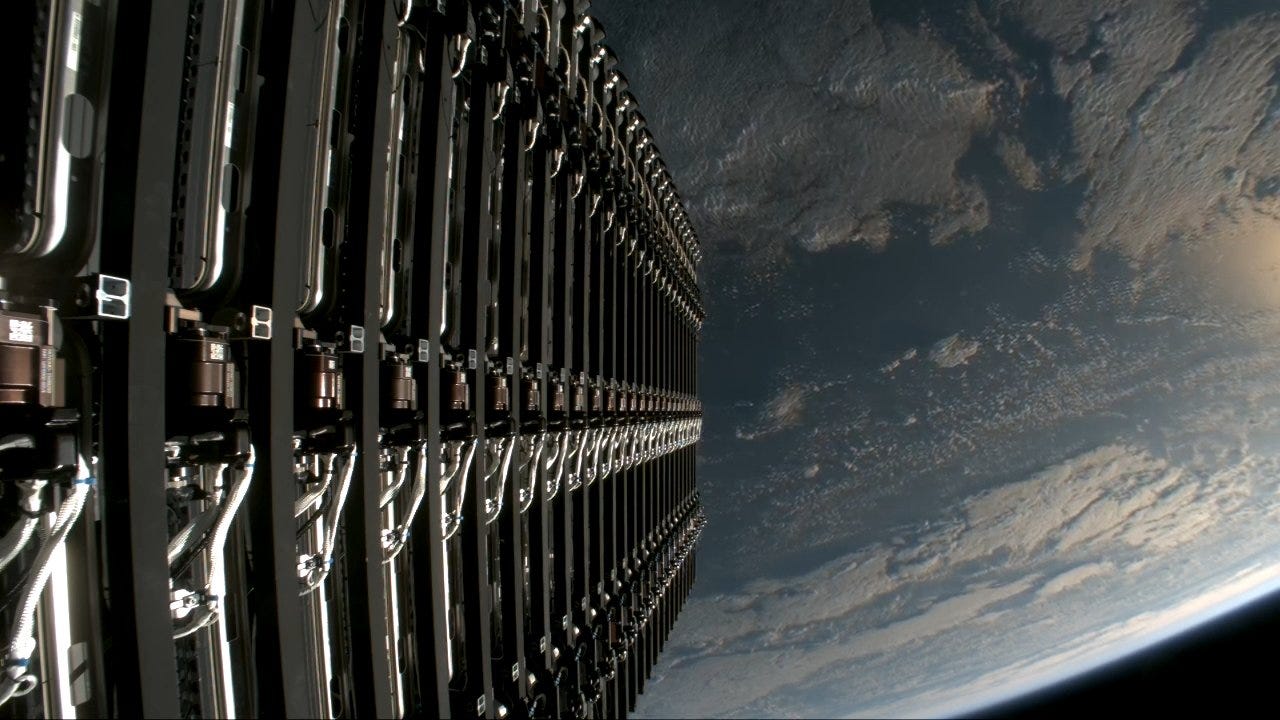
However, following satellite deployment, one of the spacecraft made a close pass on a Starlink internet mega-constellation satellite. Via Twitter, Michael Nicolls, SpaceX’s Vice President of Starlink Engineering, alleges the following:
“When satellite operators do not share ephemeris for their satellites, dangerously close approaches can occur in space. A few days ago1, 9 satellites were deployed from a launch from the Jiuquan Satellite Launch Center in Northwestern China. As far as we know, no coordination or deconfliction with existing satellites operating in space was performed, resulting in a 200 meter close approach between one of the deployed satellites and STARLINK-6079 (56120) at 560 km altitude. Most of the risk of operating in space comes from the lack of coordination between satellite operators—this needs to change.”
In response to Nicolls post, CAS Space wrote back on Twitter as well, sharing:
“Our team is currently in contact for more details. All CAS Space launches select their launch windows using the ground-based space awareness system to avoid collisions with known satellites/debris. This is a mandatory procedure. We will work on identifying the exact details and provide assistance as the [launch service provider].”
CAS Space’s claim that their launches’ avoid orbiting objects’ is true, as Kinetica-1’s fourth-stage performed an orbit-lowering burn shortly after deploying its customer satellites. At the time of writing, that stage is residing in a 554 by 254-kilometer sun-synchronous orbit to burn up in Earth’s atmosphere in a few months.
Nicolls did not provide any details about the close-passing satellite, and SpaceX has a poor track record of communicating with the media, so some educated guessing is necessary to determine which satellite came close.
To begin, MinoSpace (微纳星空), Changguang Satellite Technology Co Ltd (长光卫星技术股份有限公司), and the Innovation Academy for Microsatellites, Chinese Academy of Sciences (中国科学院微小卫星创新研究院) equip their smaller satellites with a means of propulsion to periodically boost orbit and maneuver into a more advantageous orbit for their task, ruling out five of the spacecraft. Sadly, Xinghuo Chuanming (Beijing) Technology Co Ltd (星火传明(北京)技术有限公司) is too new of an enterprise to have enough local media attention to peak at their hardware, so it will be ruled out for that to prevent blind guessing.
Therefore, I believe, either Egypt’s Space Plasma Nano-satellite Experiment (SPNEX), Nepal’s student microsatellite, or Sun Yat-sen University’s (中山大学) Yixian-A (逸仙-A星) could be the culprit. All three of those spacecraft are too small to have substantial propulsion for long-term collision avoidance with their tiny mass budgets, alongside the small costs associated with the two student efforts.
How to reduce collision risks?
As Nicolls pointed out, alongside the alleged close pass, better international coordination between satellite operators is needed. In good news, China agrees, with the U.S. acknowledging it has been informed to ‘hold still’ while a Chinese satellite maneuvers to prevent collisions previously. But improvements are needed, so how?
At the 76th International Astronautical Congress in Sydney, that was a point of discussion, with constellation satellite maker GalaxySpace (银河航天) appearing on a panel with SpaceX, Amazon, NASA, and the International Telecommunications Union. During that panel, it was disclosed that Chinese and American constellation operators were sharing contact information while the International Telecommunications Union sets up a direct point of contact platform for spacecraft operators to reach each other. Despite that, a flaw in direct contact, assuming no available bilingual speakers, is language differences, especially with the significant differences between English and Chinese, both written and spoken.
Contact between operators is a solid solution when collisions are at risk, assuming that they are allowed to get into contact. In the aftermath of the Intelsat-708 accident and political manoeuvring resulting in the Wolf Amendment, contact and information sharing between space enterprises in the U.S. and China are extremely limited. With America designating commercial satellites and related systems as weapons and the amendment basically halting and preventing routine high-level contact, no framework for regular collision avoidance has been worked on.
It is important that China plays a part in collision avoidance too, mainly via stronger regulations. When updating regulations in July, space enterprises are required to continuously ensure that they do not cause accidents (collisions) in orbit. China has also established a government ‘commercial space department’ which will supervise and intervene in space safety efforts.
Of course, there is the argument that mega-constellation operators should take priority in moving out of the way and monitoring what’s around their satellites, as in Starlink’s case, they have many thousands. Mega-constellation operators also have the advantage of scale for both costs and operations, as decommissioning one satellite2 early will barely affect the wider constellation and, as of February 2024, those satellites cost up to 500,000 United States Dollars3 each while resulting in annual revenues in the billions. Evidently, mega-constellation operators can afford to get out of the way if they suspect a collision.
Currently estimated to be on December 12th at 06:42 am Universal Coordinated Time, around forty-eight hours after deployment and after the conclusion of the Kinetica-1 Y11 launch mission, with the launch provider no longer being responsible for collision avoidance (CAS Space owns none of the nine satellites), CAS Space states:
“If confirmed, this incident occurred nearly 48 hours after payload separation, by which time the launch mission had long concluded. CAS Space will coordinate with satellite operators to proceed. This calls for re-establishing collaborations between the two New Space ecosystems.”
Due to faster-than-planned propellant use due to collision avoidance manoeuvres.
Starlink’s per satellite cost has decreased since then due to continued scaling.
This reads like gray-zone in orbit because the real contest is the framing. SpaceX frames it as a coordination failure. CAS Space frames it as a post-separation operator issue. That blame-shift matters because it decides who pays the recurring cost in propellant, risk, and public accountability. The play is not impact, it is burden transfer.