

First Mengzhou Mission May Be Delayed to 2027
Mentions of the new crewed spacecraft are absent and its launch complex is still under construction.

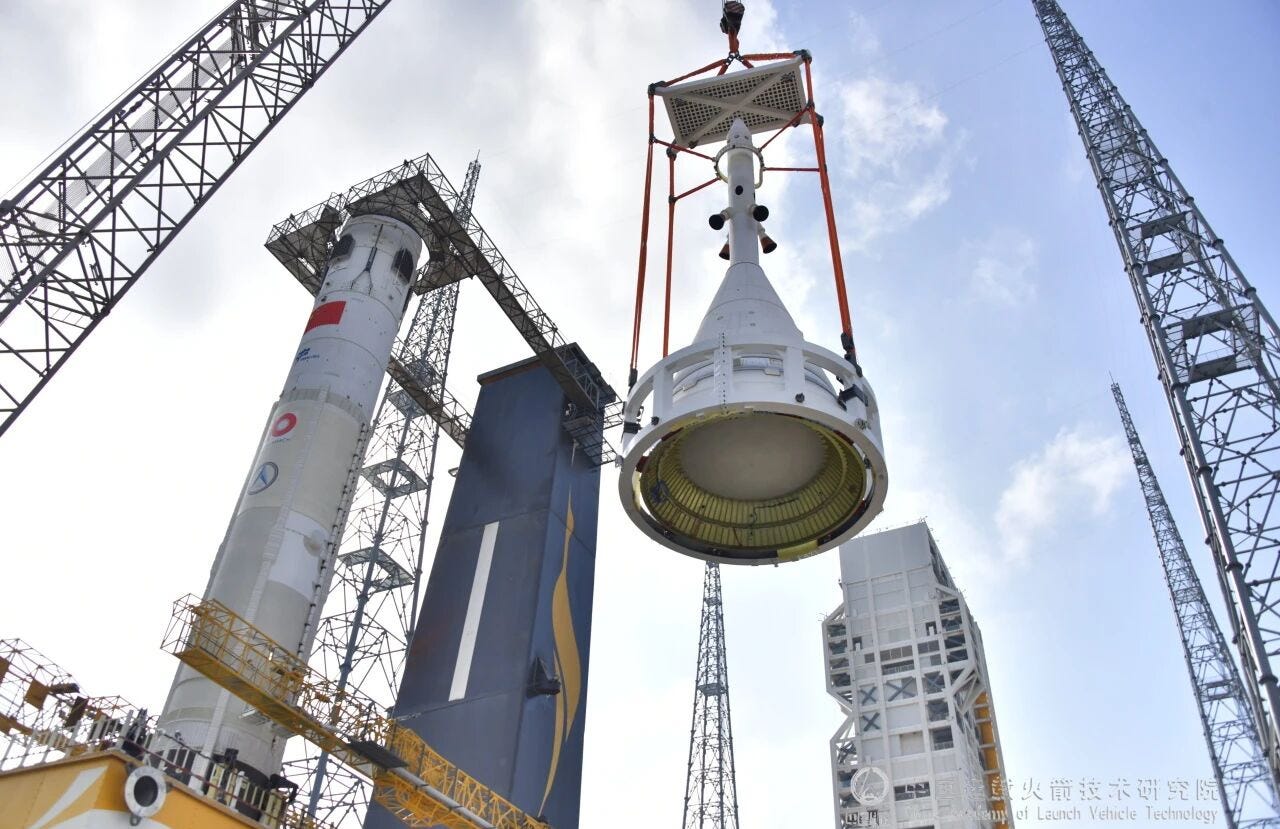
The first Mengzhou (梦舟) mission had been revealed, twice, to be targeting a first launch in the later parts of this year, in late last year. Now it appears that the new crew capsule will be on Earth for a little while longer.
At the end of a recap of its activities over the first six months of 2026, the China Manned Space Agency shared what is upcoming for the remaining months of the year, writing:
“In the second half of the year, the program will carry out the launch of the Shenzhou-24 crewed spacecraft and the return of the Shenzhou-23 crew, respectively. The one-year crewed stay experiment will continue to move forward, and China’s space station will continue to produce more high-quality scientific research results.”
If there are any problems with this translation please reach out and correct me.
As usual, details about the upcoming Shenzhou taikonauts or astronauts were not provided, but notably mentions of Mengzhou or its first mission are absent. Its omission from the recap could be indicative that its first mission has been delayed from the end of the year to 2027, probably in the first few months1 should that be the case.
That is significant for both future use of the Tiangong Space Station, as a means to bring more crew members and cargo to the orbiting laboratory, and China’s crewed lunar landing program, with the spacecraft being responsible for bringing taikonauts to and from lunar orbit.
The inaugural Mengzhou flight, designated Mengzhou-1, is planned to launch uncrewed atop of a Long March 10A from the Wenchang Space Launch Site, being prepared in a new vehicle assembly building and rolled out to Launch Complex 301. Once in orbit, the spacecraft will chase down Tiangong and dock to it, proving its systems and allowing taikonauts to enter it once its hatches are opened. The spacecraft’s capsule is expected to return to Earth with some scientific cargo onboard.
No parts of the above mission, except for the use of its docking system, parachutes, and the first-stage booster, have been proven. The launch complex has hosted a less powerful test rocket in February for Mengzhou’s in-flight abort test.
Launch Complex 301 is, at present, being completed to support proper orbital launch missions, with crew access platforms yet to be installed and a variety of work taking place around it. The Long March 10 series launch platforms’ commodity tower is also not at its full height. Over in the technical area, the twin vehicle assembly buildings dedicated to the launch complex are still undergoing outfitting to prepare missions.
It is possible that with current ground system readiness, the China Manned Space Agency is holding itself back from committing to more concrete target dates. This may also see a satellite carrying launch of the Long March 10A, which would have flown towards lunar space, slotted somewhere else in the vehicle’s future schedule. The lunar satellite for it, reportedly supporting the wider lunar exploration program, also appears to be behind schedule, based on publicly available component bids.
Although the possible Mengzhou delay is unfortunate for those eagerly awaiting it, mission planners will not be losing much sleep over it in relation to the aim of having taikonauts on the Moon by 2030. All needed hardware is steadily progressing through development, with test flights of all planned over the coming years. Additionally, China is not of the view that it is in a race with any country to have people on the Moon soon.
While the Shenzhou-24 mission is ongoing.