


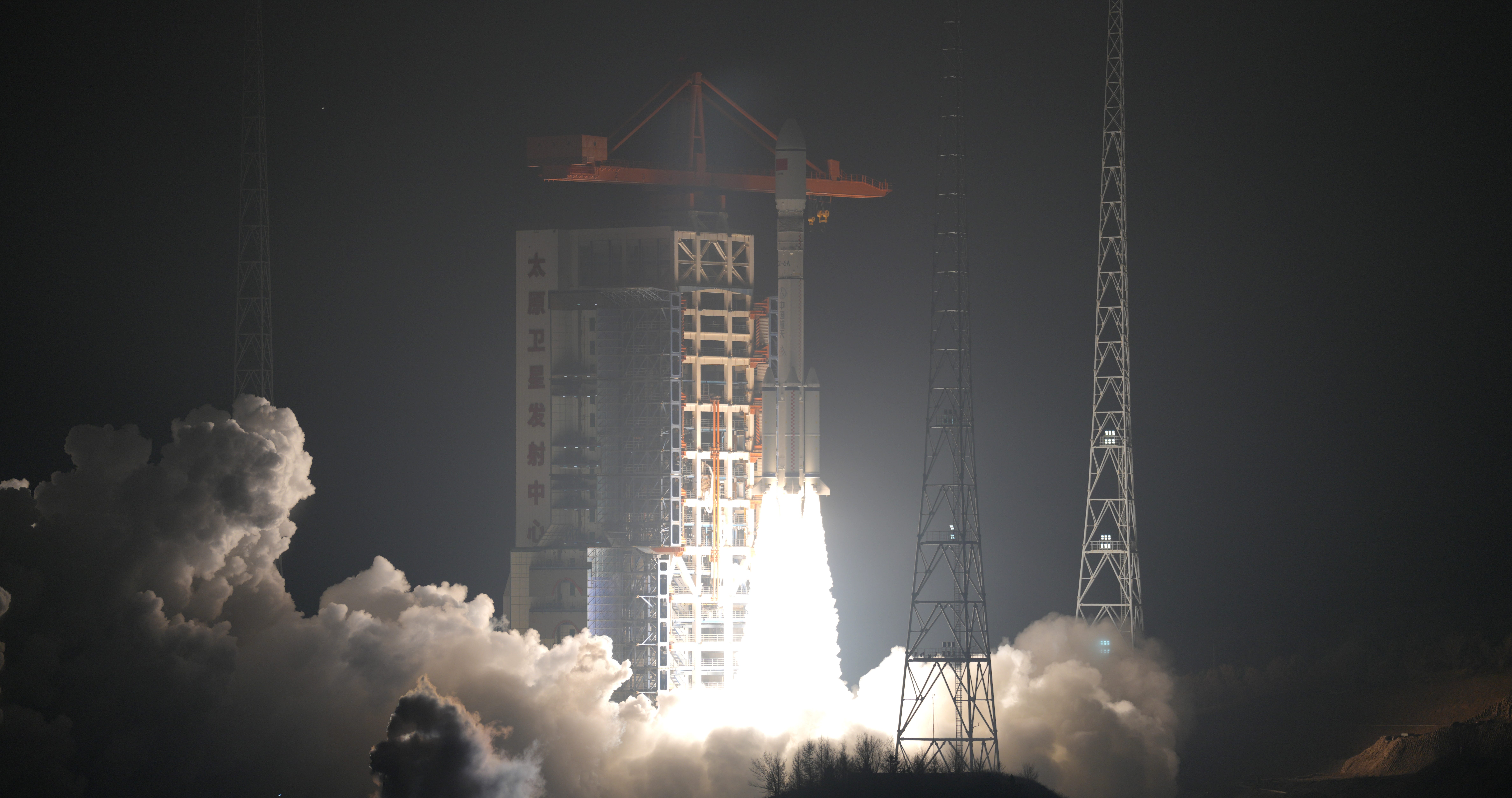
Blasting off from Launch Complex 9A at the Taiyuan Satellite Launch Center, a Long March 6A headed toward a polar orbit with a group of satellites at 03:38 am China Standard Time on April 9th (19:38 pm Universal Coordinated Time on April 8th).
Atop of the vehicle today was the twenty-first group of GuoWang satellites, with five being deployed once in orbit1. Producing this group was the Innovation Academy for Microsatellites, Chinese Academy of Sciences (中国科学院微小卫星创新研究院).
With this launch, 168 GuoWang satellites have been delivered to orbit, now heading up to their operational orbits of approximately 1,100 kilometers. This year, it is planned that 310 satellites2 will be deployed, followed by 900 in 2027, and 3,600 every year beginning in 2028 to sustain and grow the constellation. In the 2030s, up to 13,000 satellites could be in operational orbit.
The GuoWang (国网) constellation is operated by China Satellite Network Group, a state-owned enterprise and wholly backed by the Chinese government. China Satellite Network Group plans to provide worldwide internet services; for now, China-focused services are the immediate priority.
GuoWang spacecraft launched via the Long March 6A and Long March 5B utilize the mega-constellations’ large satellite platform, massing at most 1,000 kilograms. A smaller platform is in use as well, around thirty percent smaller and weighing around 695 kilograms, for launches on the Long March 8A and Long March 12. Both platforms utilize electric propulsion systems to manuever on orbit, powered by two solar panels.
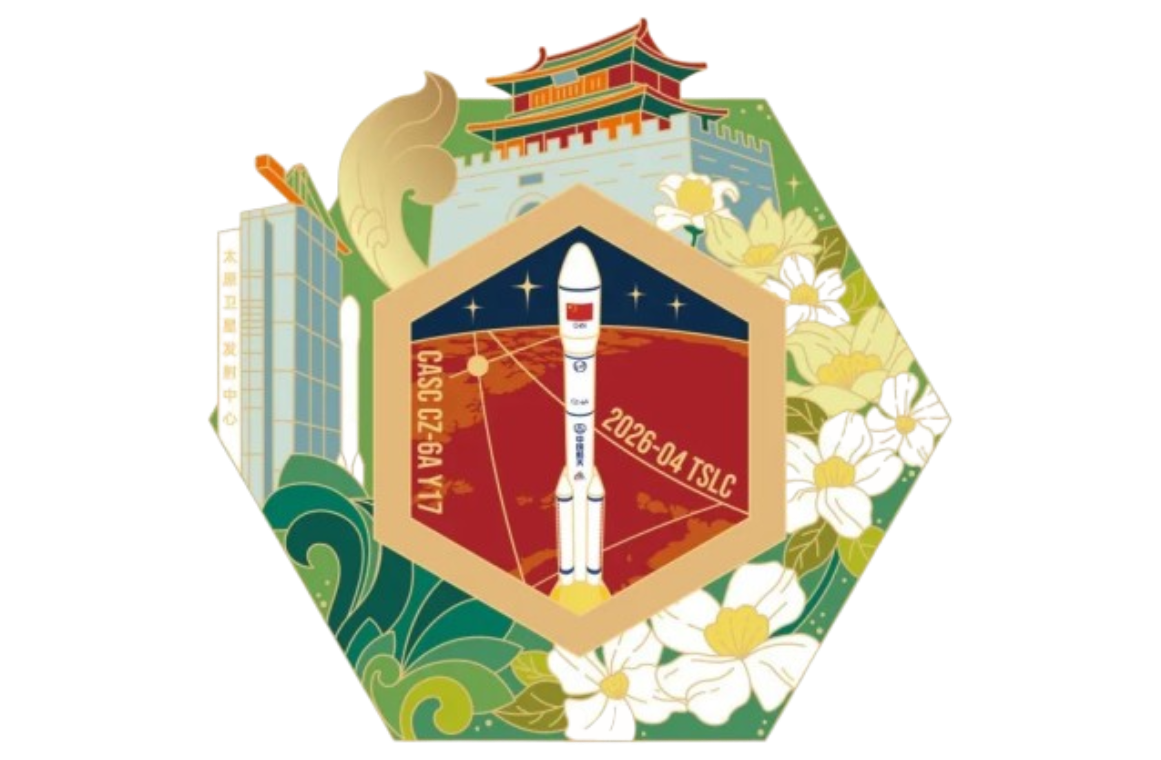
In post-mission blog posts, the Shanghai Academy of Spaceflight Technology and the China Aerospace Science and Technology Corporation said that meticulous pre-flight task controls were maintained while implementing small adjuments to to launch preparation hardware to detect anomalous vehicle activity. Those adjustments may have been additionally helpful today, as sources at Taiyuan for the mission say a minor second-stage gaseous venting issue was present before its resolution under an hour from flagging.
Today’s launch was the 22nd mission for the Long March 6A, the 262nd Long March vehicle launch from the Shanghai Academy of Spaceflight Technology, and the 637th launch of the Long March launch vehicle series. This was also the 21st launch from China in 2026.
Liftoff footage via 我们的太空 on WeChat.
Check out the previous Long March 6A launch
Second Retrograde Yaogan Remote Sensing Satellite Placed into Orbit [Long March 6A Y28]
![Second Retrograde Yaogan Remote Sensing Satellite Placed into Orbit [Long March 6A Y28]](https://substackcdn.com/image/fetch/$s_!PT6t!,w_1300,h_650,c_fill,f_webp,q_auto:good,fl_progressive:steep,g_auto/https%3A%2F%2Fsubstack-post-media.s3.amazonaws.com%2Fpublic%2Fimages%2F4c952d2c-b698-4e63-987c-0807b41383e2_2000x1132.png)
A Long March 6A blasted off from Launch Complex 9A at the Taiyuan Satellite Launch Center on March 15th at 21:22 pm China Standard Time (13:22 pm Universal Coordinated Time), heading into a retrograde low Earth orbit with a single …
What is the Long March 6A?
This section is for those less familiar with China’s Long March series of launch vehicles.
The Long March 6A is the first new-generation launch vehicle in China to utilize a combination of solid and liquid propellants. This vehicle was developed by the Shanghai Academy of Spaceflight Technology and utilizes a two-and-a-half-stage design, the boosters burn an unspecified solid propellant with the first and second stages burning rocket-grade kerosene and liquid oxygen.
The payload capacity of the launch vehicle is currently as follows:
8,000 kilograms to low Earth orbit
4,500 kilograms to a 700-kilometer sun-synchronous orbit
The first-stage is powered by two YF-100 engines, generating a combined thrust of approximately 244 tons using rocket-grade kerosene and liquid oxygen. The first-stage is augmented by four solid rocket boosters, each producing 124 tons of thrust from an unspecified solid propellant, resulting in a combined booster thrust of 492 tons. Together, the first-stage and boosters generate a total thrust of 736 tons. The second stage is powered by a single YF-115 engine, producing 18 tons of thrust using also burning rocket-grade kerosene and liquid oxygen.
On the launchpad, the Long March 6A is believed to be up to 52 meters tall, a handful of fairings are available, and weighs 530,000 kilograms when fully fuelled. The first and second stages of the vehicle have a diameter of 3.35 meters while the solid-fuelled boosters have a diameter of 2 meters, the fairing has a diameter of 4.2 meters.
So far, every Long March 6A has launched from the Taiyuan Satellite Launch Center, in the north of Shanxi province.


The manufacturer of the satellites said after launch that they had deployed 272 spacecraft in total; after their previous satellite deployments that number was 267.
So far, 32 out of 310.
Благодарю Jack C. за эмблему миссии!