


This article discusses a potential initial public offering. I am not a financial advisor, and this article is not investment advice; consult a financial advisor before investing.
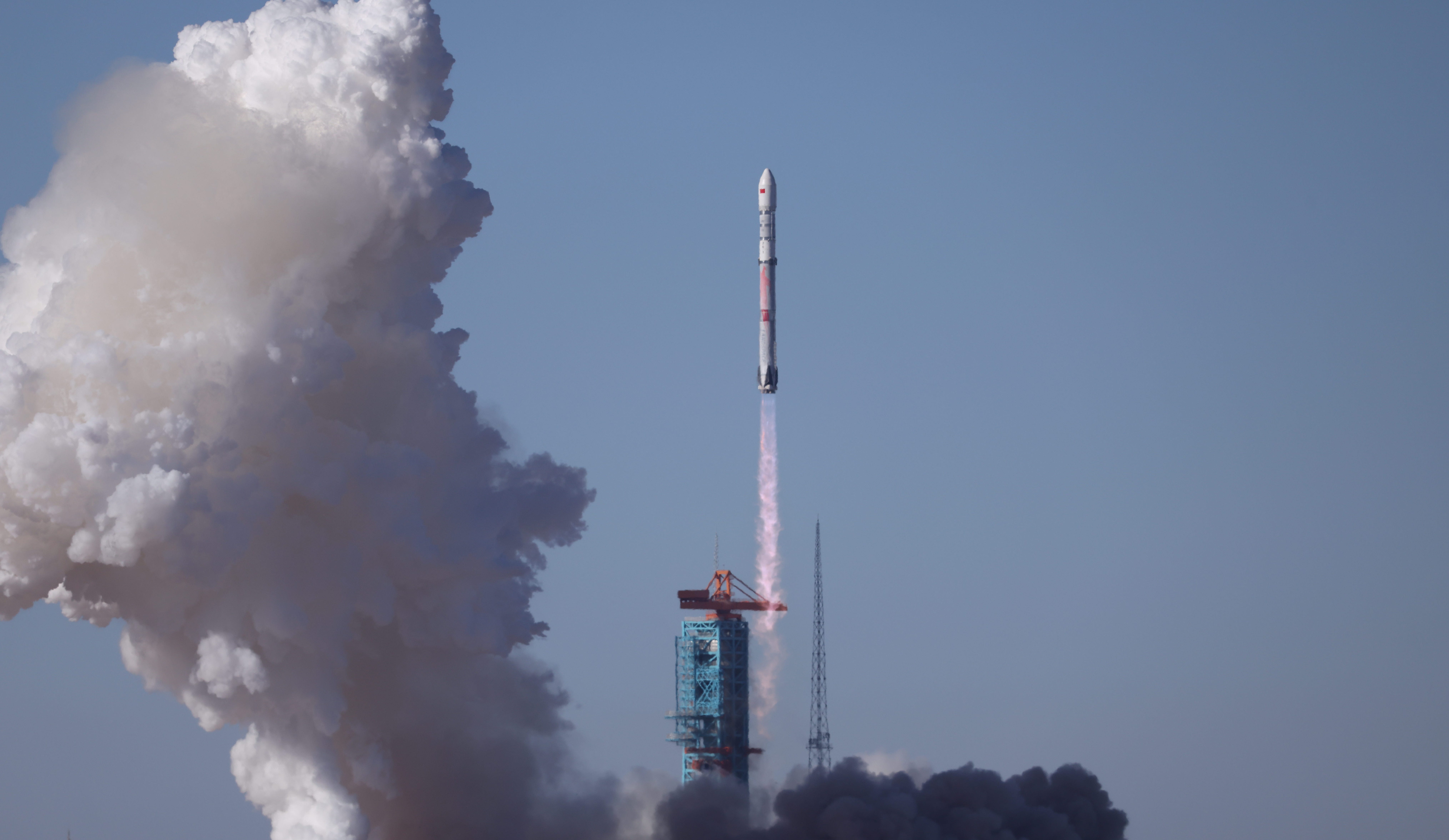
In July 2025, leading privately backed launch company LandSpace began the process of being a traded company on the Shanghai Stock Exchange’s Science and Technology Innovation Board, also called the STAR Market, through an initial public offering, commonly abbreviated as IPO.
Recently on December 31st, East Money (东方财富) reported that the IPO has been accepted and is moving forward. According to application documents from LandSpace to the STAR Market, the company is looking to raise 7.5 billion Yuan (1.072 billion United States Dollars, as of January 2nd 2026) through its first sales of shares.
Through that funding raise, 4.73 billion Yuan (675.97 million United States Dollars) is planned to be used for improving the capabilities and technology of reusable launch vehicles, Zhuque-31 and an unnamed 10-meter diameter rocket, while the other 2.77 billion Yuan (396.2 million United States Dollars) is set to be used to for expanding production capacity of those vehicles, for around fifteen Zhuque-3’s per year. Investor funding will be accompanied by 961.6 million Yuan (137.54 million United States Dollars) from LandSpace for those investments.
As part of the application process, LandSpace submitted financial information for the years 2022, 2023, and 2024, revealing that the company earned 780,000, 3.95 million, and 4.278 million Yuan respectively. Meanwhile, the company spent 820 million Yuan in 2022, 1.216 billion Yuan in 2023, and 916 million Yuan in 2024 for paying employees, expanding facilities, as well as producing and developing Zhuque-2, Zhuque-2E, and Zhuque-3.
Application documents reiterated that Zhuque-3 is aiming to become a low-cost, high-capacity, regularly flying, partially reusable launch vehicle, having first flown a month ago, with a primary focus on routinely deploying space-based connectivity mega-constellations like the state-owned GuoWang (国网) and Shanghai-backed Qianfan (千帆). In August 2025, LandSpace was awarded a demonstration contract for Qianfan and unfortunately lost four GuoWang test satellites2.
As for who will control LandSpace’s direction after the IPO, it will likely be Zhang Changwu (张昌武), Founder and Chief Executive Officer. Although he only directly holds 6.7277 percent of company shares, LandSpace’s board decided in 2021 on the arrangement of voting rights, giving Zhang 75.2 percent of the company's voting rights. That basically gives Zhang de facto control, instead of the other about one hundred individual and enterprise shareholders.
Zhuque-3’s future flights
At the moment, Zhuque-3’s next flight is expected be in the first half of this year, said to be around April, with a first-stage booster landing expected by those involved. By the time another Zhuque-3 launch vehicle is on Launch Area 96B at the Jiuquan Satellite Launch Center, it will have incorporated software iterations and hardware adjustments informed by the first flight, which fell short of landing.
The second flight vehicle is believed to have completed assembly and is now having the changes necessary for a first booster lading made, while a third flight vehicle has had its major parts joined, and a fourth follows slightly behind. Zhuque-3’s first-stage booster test article, built for everything but flight and fired up in June 2025, is no longer at Jiuquan and could be converted into a flight vehicle.
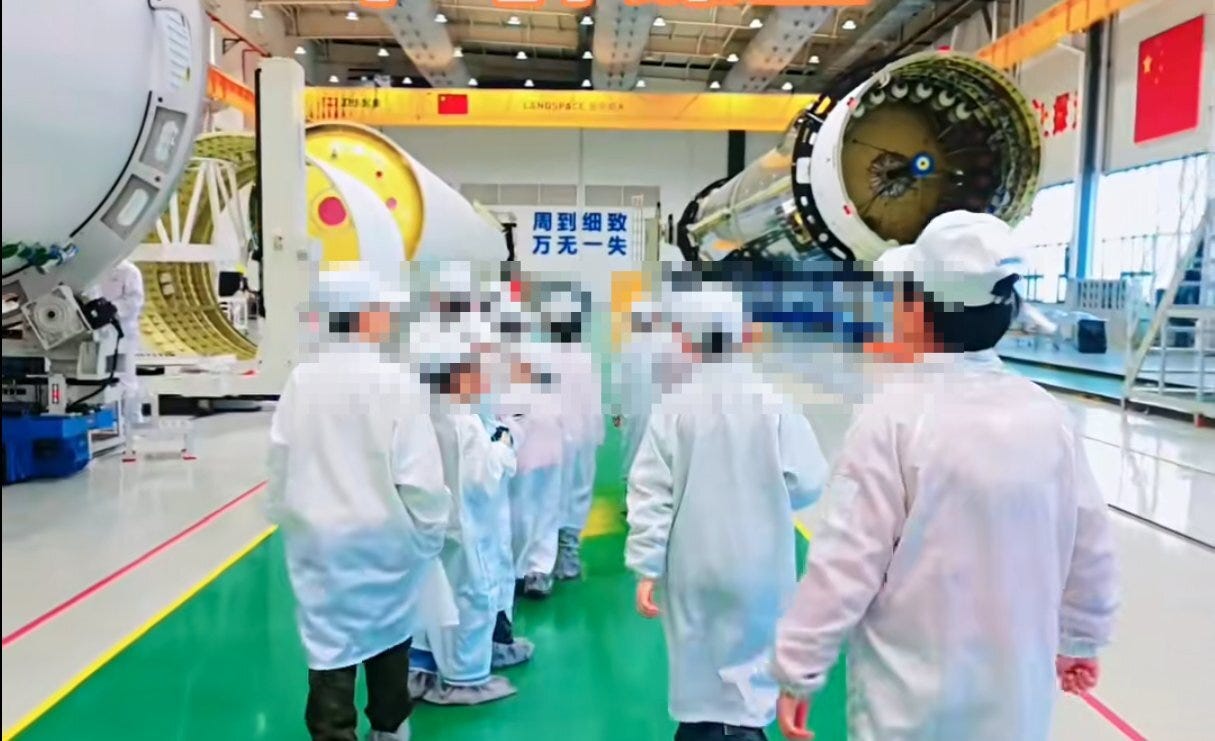
Looking to the second flight, Dong Kai (董锴), Zhuque-3’s Deputy Chief Engineer, shared in a lengthy interview that if the first-stage booster lands following the launch, it will be refurbished for use on the rocket’s fourth mission. He also believes that at least one booster will have landed by mid-2026, either from the second or third flight.
Looking further ahead, Dong Kai detailed that LandSpace will build more landing pads away from Jiuquan, besides the one located in Minqin County (民勤县) in Gansu (甘肃) province, and further downrange. The Minqing County landing pad is about 390 kilometers away from Jiuquan, with future ones set to be between 550 and 600 kilometers downrange on various flight paths for reaching different orbits. More launch pads to support a higher flight rate, for about a week between launches, were said to be part of future launch-related plans.
It was also shared by Dong Kai that Zhuque-3 will have its ‘full capability’ version completed this year, possibly for flight in 2027. That version is the original publicly known design, standing 76.6 meters tall and capable of carrying 21,300 kilograms when expended or 18,300 kilograms with first-stage reuse, and using the TQ-12B engines generating 100 tons of thrust each. In its current design, Zhuque-3 is 66 meters tall and carries up to 11,800 kilograms of cargo, using the 83 tons of thrust generating TQ-12A engines.
Zhuque-3, a two-stage partially reusable liquid-fuelled launch vehicle, is designed to carry up to 21.300 kilograms to low Earth orbit, however a less capable variant of the rocket is performing initial flights while carrying up to 11,800 kilograms of payload.
Neither LandSpace nor China Satellite Network Group, GuoWang’s operator, has provided statements since September 2025, but it is widely believed, via several sources, that four test satellites for the constellation were onboard. GuoWang’s current twenty-four test satellites are rather secretive too.
Extremely bad move by Land Space because first they should prove to us successful recovery of the booster and then they should have gone for IPO . I would again recommend to Land Space to hold this IPO and wait for the successful recovery and technology demonstration of booster reuse , then I am sure they cannot just go for 7.5 billions RMB as they can even go for 15 billions RMB .