

Mengzhou Capsule Undergoing Further Trials at Sea Near Hainan
China's next-generation crewed spacecraft is set to be tested in ways that inform possible emergency scenarios.

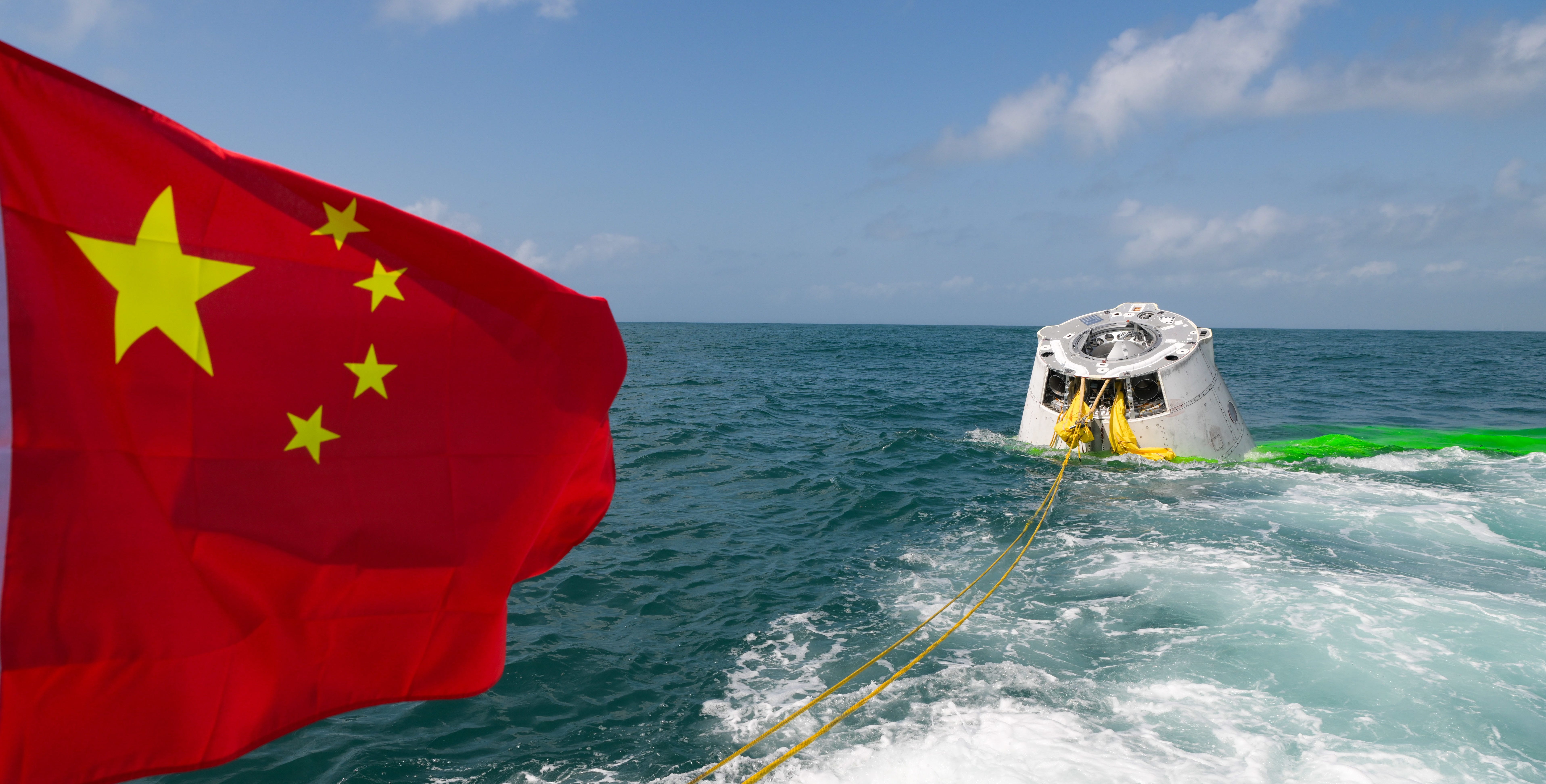
Two weeks ago, the Mengzhou (梦舟) capsule underwent its most important test to date, escaping from a launch vehicle at its peak point of aerodynamic stress. For the capsule, the test occurred flawlessly, resulting in a gentle splashdown under parachute into the South China Sea.
In the days that followed, Mengzhou was brought back to Hainan (海南) province, onboard one of many recovery vessels positioned to retrieve it in a timely manner after its test, for inspection of its structures and systems. Once ashore, Chinese media declared that the country is now capable of collecting crewed spacecraft from both land and sea environments, with recovery teams consulted then promptly taking time off for the Spring Festival (春节).
After the festivities concluded1, the China Aerospace Science and Technology Corporation revealed that the Mengzhou capsule used in the recent abort test was the same one utilized in June 2025’s launch pad escape test, along with lesser publicized drop tests from aircraft. Additionally, it was announced that the capsule will remain in Hainan to conduct various further trials at sea.
Some of those trials are set to determine Mengzhou’s stable states (how the capsule floats unassisted and assisted2) while awaiting recovery in a handful of sea conditions. Another batch of testing will evaluate the capsule’s protective capabilities for spending extended periods of time awaiting recovery. Neither test will have crews inside the spacecraft, but instruments inside will inform how the testing is going.
Regarding why the Hainan-based testing of the capsule is taking place, Ma Xiaobing (马晓兵), Mengzhou’s Chief Designer, told the media3:
“[We have] conducted extensive ground verification work, aiming to transform all uncertainties into certainties. . . . The road ahead is long, and scientific exploration always requires iterative practice.”
If there are any problems with this translation please reach out and correct me.
Ahead of Mengzhou’s sea trials, its basic characteristics in the environment have been understood via simulations and sub-scale laboratory testing4. The upcoming test will be critical for emergency spacecraft and crew recovery, from launch abort scenarios, as the capsule is primarily designed to touchdown on land within the Inner Mongolia Autonomous Region (内蒙古自治区 / ᠥᠪᠥᠷ ᠮᠣᠩᠭᠣᠯ ᠤᠨ ᠤᠨᠥᠪᠡᠷᠲᠡᠭᠨ ᠵᠠᠰᠠᠬᠤ ᠣᠷᠣᠨ) near the Jiuquan Satellite Launch Center.
Meanwhile, other hardware flown earlier this month is likely departing Hainan. The China Aerospace Science and Technology Corporation was eager to point out that extensive testing for reusing YF-100K’s took place over the past two years in the lead-up to the February 11th flight that saw the Long March 10A test booster, with its five real YF-100K engines, performing basically as expected, and being recovered not long after splashdown. For further study into reusing the engines, it is expected that the five YF-100K’s will be shipped away for comprehensive inspections and possible test firings, as they are the first set to be intentionally thrown into seawater in a recoverable state.
A return to work began on February 24th.
Equivalent testing conducted on the Apollo command module can be found here.
Also quoted by the China Aerospace Science and Technology Corporation.
Evident by the ease of recovery following its February 11th test.
CALT's Mengzhou capsule should be made big enough to support both crew and logistics . If a single launch of Mengzhou can do both Tianzhou and Shenzhou tasks then it means 2 rocket launches and 2 spacecrafts cost can be saved by a single Long March 10-A launch . Moreover, reusability of booster and reusability of Mengzhou will make additional rocket launches more and more cheaper and just like SpaceX , CALT can only develop few boosters and few Mengzhou spacecrafts to support all future launches by using same boosters and same Mengzhou again and again.