

More GuoWang Satellites Deployed Aboard Improved Launch Vehicle [Long March 8A Y10]
New hardware introduced last month was utilized again, this time being verified in orbit for multiple hours.

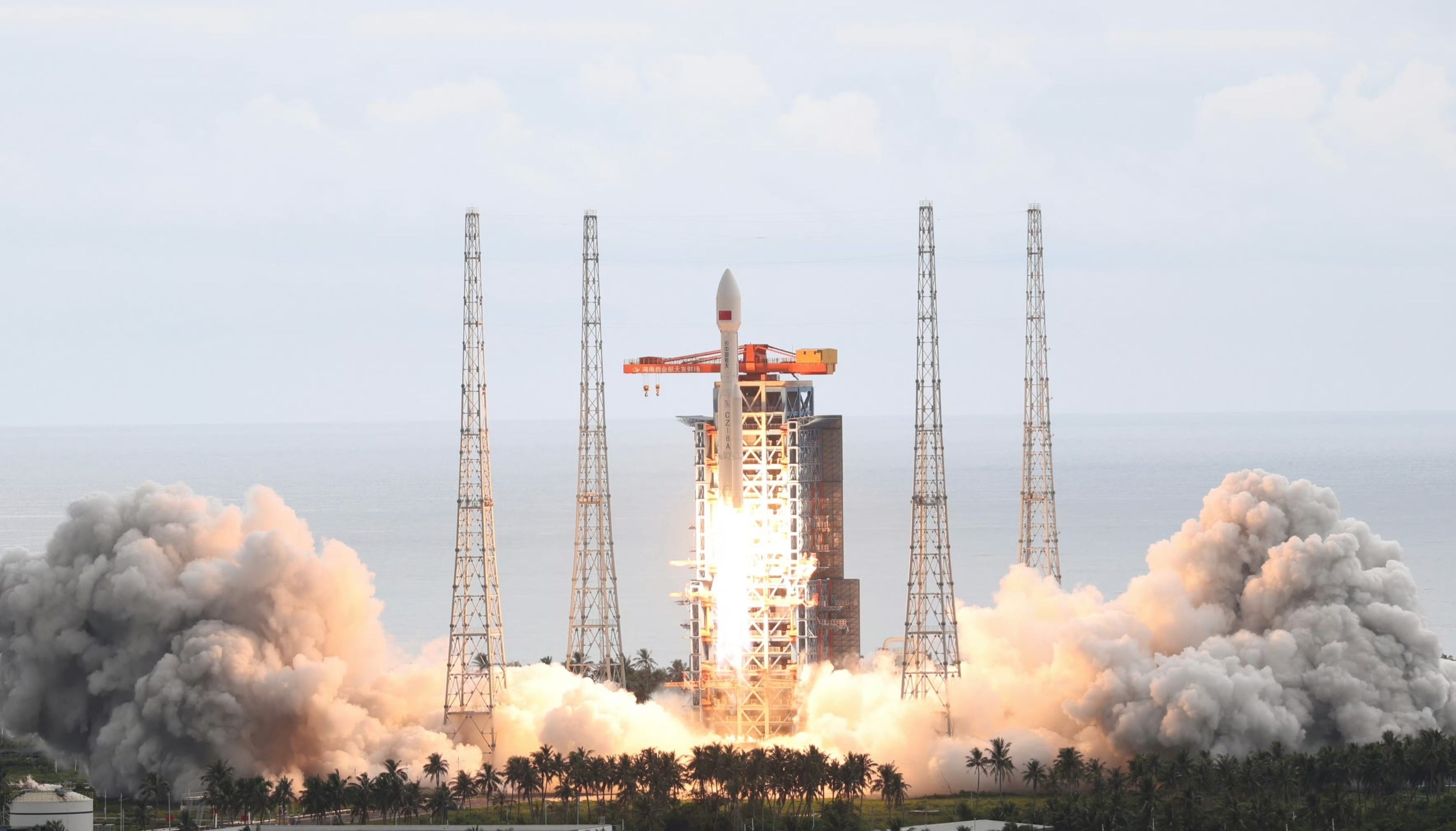
At 16:52 pm China Standard Time (08:52 am Universal Coordinated Time) on August 4th, a Long March 8A lifted off from Commercial Launch Pad 1 at the Wenchang Commercial Space Launch Site, flying into low Earth orbit with another group of connectivity satellites.
Atop of the vehicle were nine more satellites for the GuoWang constellation for its twenty-third deployment overall. Those satellites were made by the China Academy of Space Technology.
GuoWang satellites launched atop of the Long March 8A and the Long March 12 use the mega-constellations’ small satellite platform, weighing about 695 kilograms each. A large satellite platform, around thirty percent bigger and weighing up to 1,000 kilograms, is launched via the Long March 5B and Long March 6A. Both platforms utilize electric propulsion systems to maneuver in orbit, powered by two solar panels.
After today’s launch, 186 GuoWang spacecraft are in orbit, functioning in and heading up to their operational orbits. This year, it is planned that 310 satellites1 will be deployed, followed by 900 in 2027, and 3,600 every year beginning in 2028 to sustain and grow the constellation. In the 2030s, up to 13,000 satellites could be in operational orbit.
The GuoWang (国网) constellation is operated by China Satellite Network Group, a state-owned enterprise and wholly backed by the Chinese government. China Satellite Network Group plans to provide worldwide internet services; for now, China-focused services are the immediate priority.
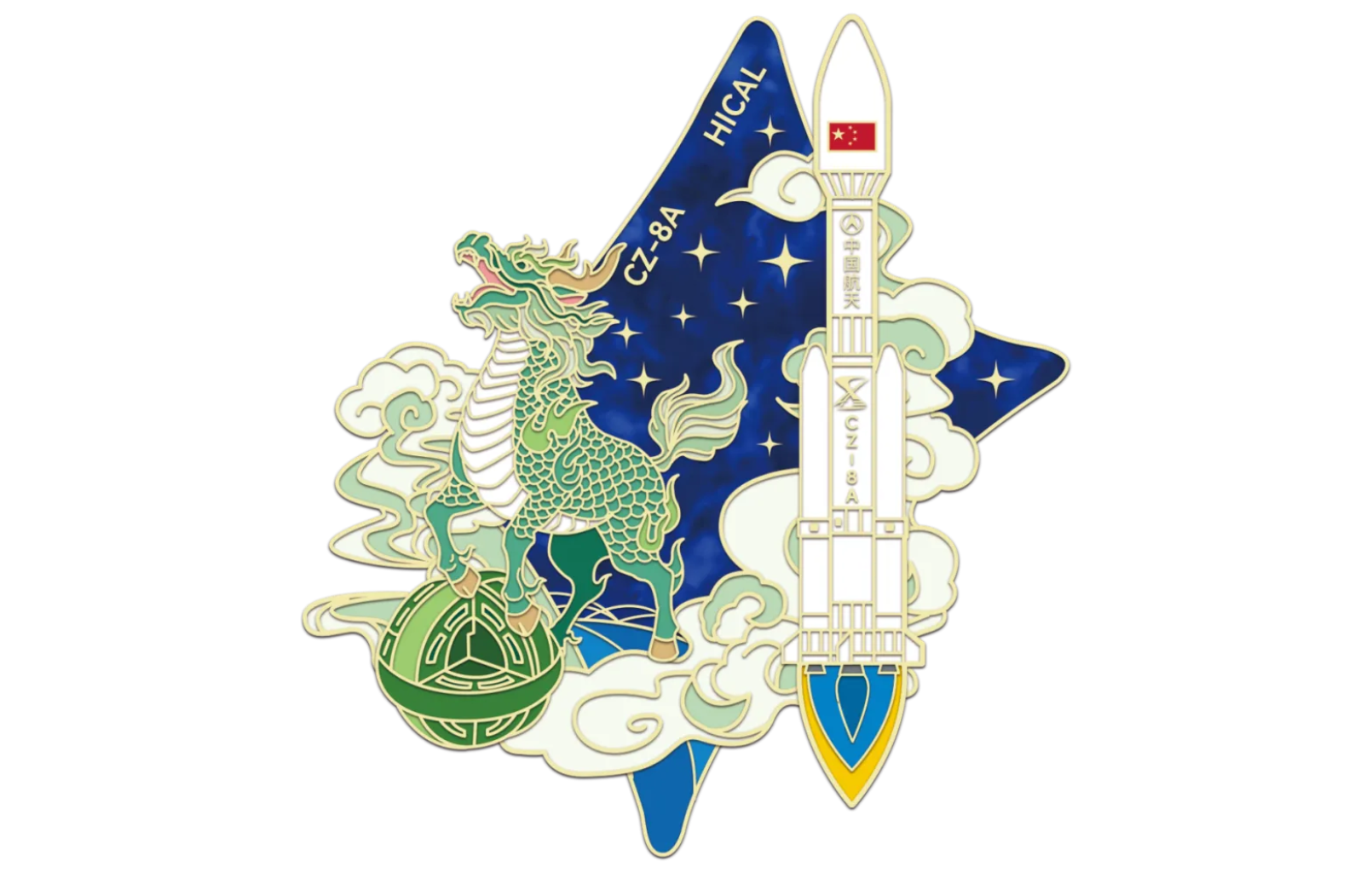
Building upon sweeping upgrades first used on the Long March 8A’s previous mission a month ago, introducing the YF-75DB engine and propellant cooling hardware, today’s saw a series of small improvements such as the introduction of electrohydraulic servos as part of mass optimizations. China Rocket (中国火箭) detailed that the second-stage deploying the GuoWang satellites also coasted in space for multiple hours to bring them closer to their desired altitude. This launch also acted as a ‘system-wide verification’ mission for last month’s upgrades.
Along with changes to the vehicle, the China Academy of Launch Vehicle Technology added that optimizations to pre-flight preparation processes have taken place too. Hainan International Commercial Aerospace Launch Co Ltd (海南国际商业航天发射有限公司), operator of the commercial launch site, detailed that to be a broadening of the acceptable weather situations in which a launch vehicle can be brought out to the launch pad, with today’s being moved out on July 30th in some rain.
Back in March, China Central Television (中国中央电视台) reported that the Long March 8 series of launch vehicles, including the Long March 8 and 8A, is set to fly fifteen times in total this year, for eight more flights over the next five months. With current infrastructure at the launch site, the Long March 8 series is stated to be able to fly up to thirty times per year.
This mission was the 10th launch of a Long March 8A vehicle, the 17th launch of the Long March 8 series, and the 661st launch of the Long March launch vehicle series. This was also the 54th launch from China in 2026.
Liftoff video via 央视新闻 on Weibo, 中国的航天 and 海南商发 on WeChat.
Check out the previous Long March 8A launch
Largest Qianfan Group Delivered via Upgraded Launch Vehicle [Long March 8A Y9]
![Largest Qianfan Group Delivered via Upgraded Launch Vehicle [Long March 8A Y9]](https://substackcdn.com/image/fetch/$s_!x2sr!,w_1300,h_650,c_fill,f_webp,q_auto:good,fl_progressive:steep,g_auto/https%3A%2F%2Fsubstack-post-media.s3.amazonaws.com%2Fpublic%2Fimages%2F9bdfd3b4-d3f8-44fd-9f26-ad692b99b5e6_3860x2350.jpeg)
From Commercial Launch Pad 1 at the Wenchang Commercial Space Launch Site, a Long March 8A lifted off at 21:43 pm China Standard Time (13:43 pm Universal Coordinated Time) on July 5th to bri…
What is the Long March 8A?
This section is for those less familiar with China’s Long March series of launch vehicles.
The Long March 8A is an improved and more cost-efficient upgrade of the Long March 8 and the future workhorse of its developer, the China Academy of Launch Vehicle Technology. The vehicle utilizes a two-and-a-half-stage design and is fuelled by rocket-grade kerosene and liquid oxygen in its first-stage and boosters along with liquid hydrogen and liquid oxygen in the second-stage.
The payload capacity of the launch vehicle is currently as follows:
10,000+ kilograms to low Earth orbit
7,000 kilograms to a 700-kilometer sun-synchronous orbit
6,800 kilograms to a 900-kilometer sun-synchronous orbit
3,500 kilograms to geostationary transfer orbit
The Long March 8A’s boosters and first-stage are powered by YF-100 engines, with two engines on the first stage and one on each of the two boosters, generating a combined thrust of 490 tons at liftoff. The second-stage is equipped with two YF-75DB engines, which produce 20 tons of thrust.
On the launchpad, the Long March 8A stands at 50.5 meters tall and weighs 371,000 kilograms when fully fuelled. The first and second-stage have a diameter of 3.35 meters, the two boosters have a diameter of 2.25 meters, while the fairing has a diameter of 4.2 or 5.2 meters.
Currently, the Long March 8A is flown from the Wenchang Space Launch Site and the Wenchang Commercial Space Launch Site, both on the east coast of Hainan province.


So far, 50 out of 310.