

New Commercial Rocket Fails During Debut Mission [Ceres-2 Y1]
Galactic Energy’s newer and larger member of its Ceres launch vehicle series has experienced a setback at the start of its operations.

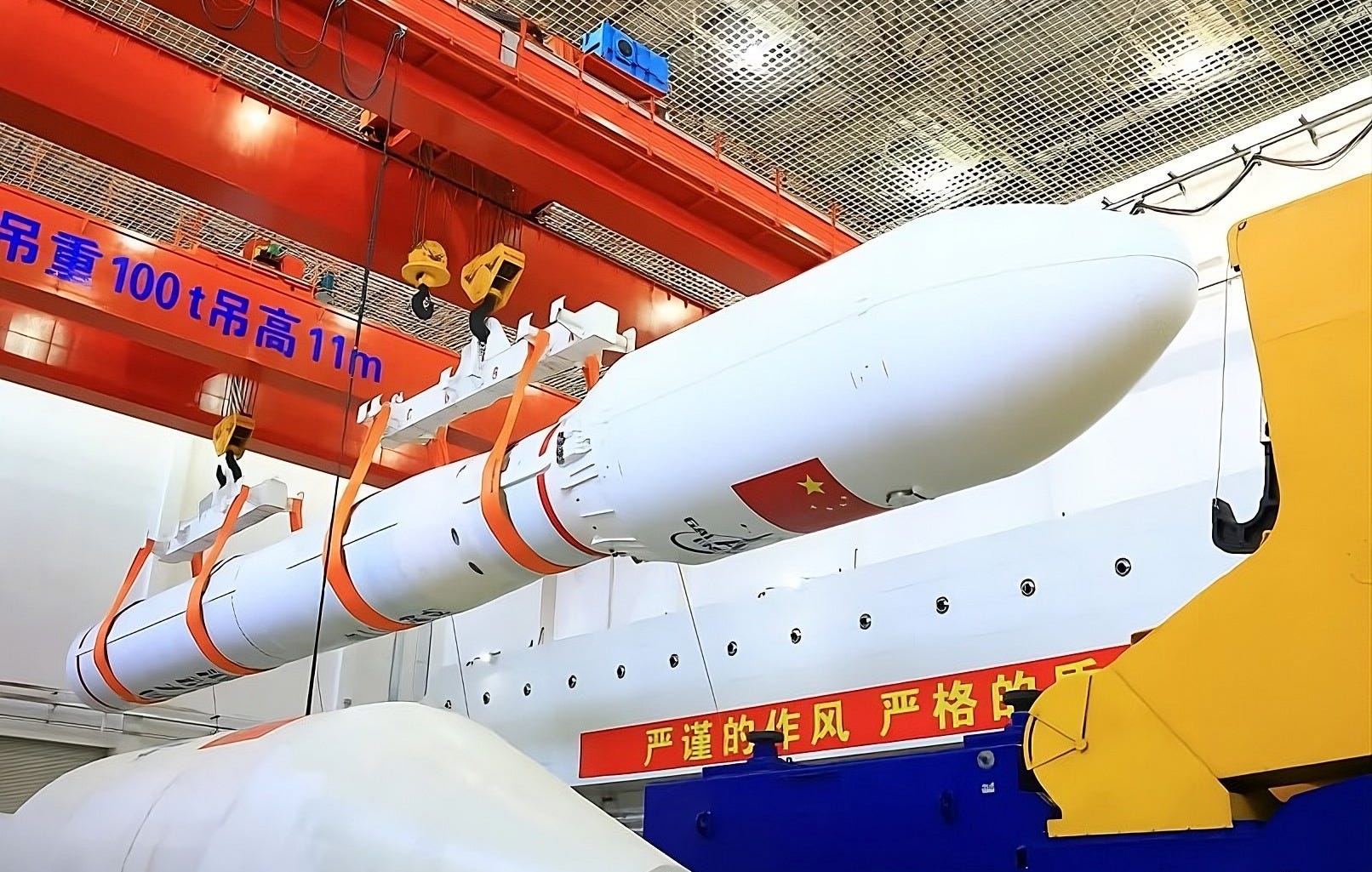
At the Jiuquan Satellite Launch Center on January 17th at around 12:08 China Standard Time (04:08 am Universal Coordinated Time), Galactic Energy’s Ceres-2 vehicle blasted off for the first time, aiming for a sun-synchronous orbit.
However, following liftoff, the launch vehicle experienced an anomaly in the early stages of flight, resulting in its early termination and conclusion. A few hours afterwards, Xinhua reported:
“[Ceres-2] experienced flight anomalies, resulting in the failure of its maiden flight test mission. The specific cause is currently under further analysis and investigation.”
Later on in the day, Galactic Energy carried Xinhua’s report but added:
“We extend our deepest apologies to all parties involved in this mission and to the leaders and friends who have shown concern and support for Galactic Energy. We will continue to approach space technology with reverence, spare no effort in identifying the root cause of the failure, and rigorously organize the return-to-zero and relaunch preparations for Ceres-2 to ensure the complete success of future launch missions.”
According to footage viewed by China Daily’s staff, Ceres-2 flew successfully for several moments before veering off-course and crashing into the ground. It is unclear if that crash involved various parts of the rocket or most of it following the activation of its flight termination systems.
As of August 2025, eight payloads were said to have been onboard Ceres-2’s debut mission, six of them would have separated after entering orbit. All are now destroyed.
Ceres-2’s failure comes just two days after Ceres-1’s return to flight mission, having failed in November 2025. Through the smaller Ceres-1, Galactic Energy has twenty-one successful flights on its record.
In an exceedingly rare occurrence for China’s space sector, Galactic Energy’s launch failure followed the loss of the China Academy of Launch Vehicle Technology’s Long March 3B/E about twelve hours before.

Ahead of Ceres-2’s first flight, vehicle assembly and launch processing testing was completed in Haiyang (海阳市) during September 2025, before being disassembled and shipped to Jiuquan. Testing of the four stages and necessary systems has been going on throughout the year.
Today’s mission was the 1st for the Ceres-2 launch vehicle, and the 24th of the Ceres series of rockets from Galactic Energy. This was also the 6th launch from China in 2026.
Check out the previous Ceres series launch
Commercial Sea Launch Lofts Four Internet of Things Satellites [Ceres-1S Y7]
![Commercial Sea Launch Lofts Four Internet of Things Satellites [Ceres-1S Y7]](https://substackcdn.com/image/fetch/$s_!qKqw!,w_1300,h_650,c_fill,f_webp,q_auto:good,fl_progressive:steep,g_auto/https%3A%2F%2Fsubstack-post-media.s3.amazonaws.com%2Fpublic%2Fimages%2F4c254a17-0378-4bec-8199-a45c3d4b3f81_5759x3190.jpeg)
Just off the shore of Rizhao (日照市), in Shandong (山东) province, Galactic Energy’s Ceres-1S blasted off from a sea-launch platform on January 16th at 04:10 am China Standard Time (January 15th at 20:10 pm Universal Coordinated Time), heading into low Eart…
What is Ceres-2?
This section is for those less familiar with China’s commercial launch vehicles.
Galactic Energy’s Ceres-2 is a four-stage launch vehicle that burns solid fuel in the first three stages, and a storable propellant in the fourth-stage. The vehicle is based upon experiences and technologies from the smaller Ceres-1.
The payload capacity of the launch vehicle is currently as follows:
1,600 kilograms to low Earth orbit
1,300 kilograms to a 500-kilometer sun-synchronous orbit
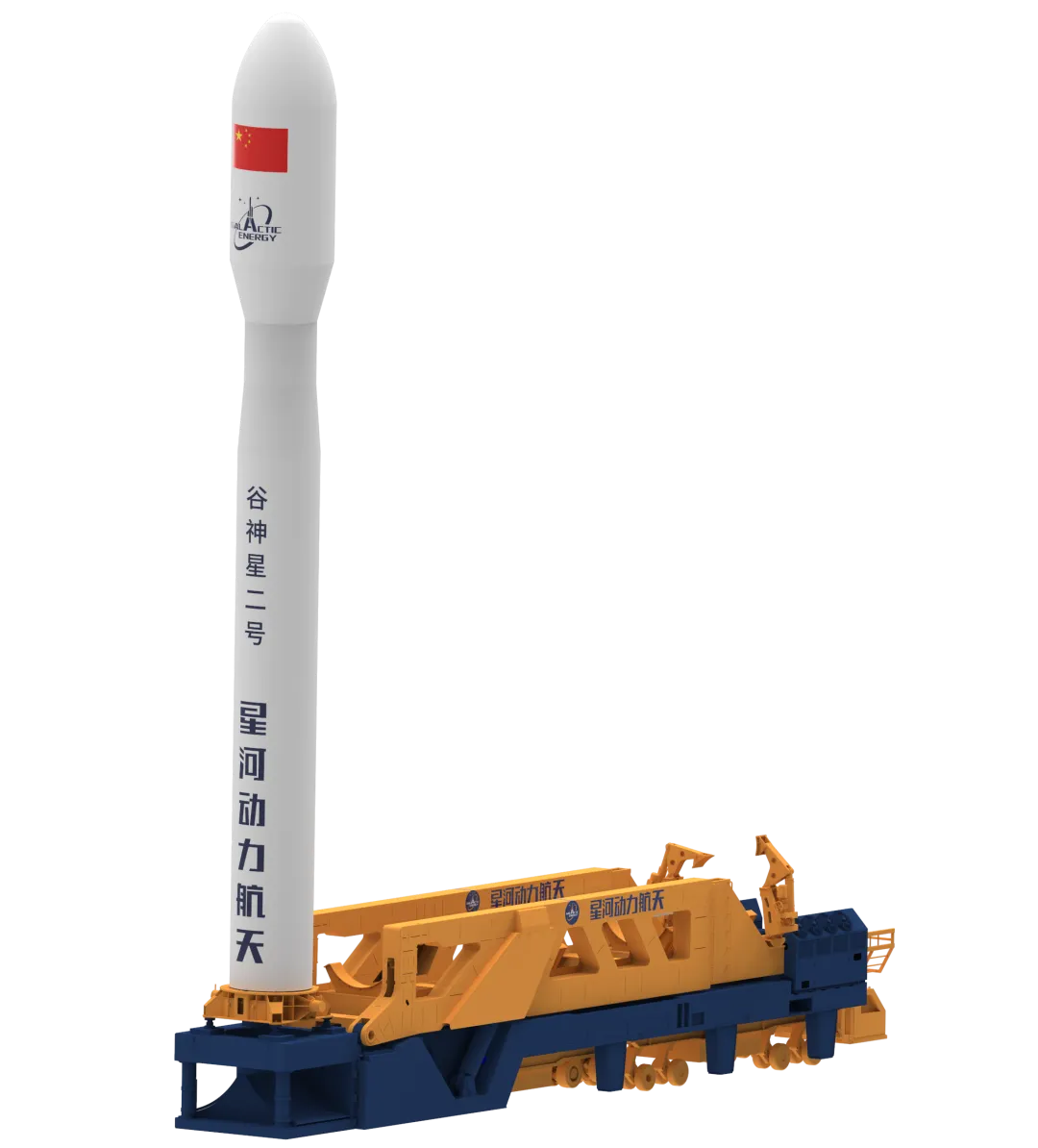
The first, second, and third stages are powered by a solid rocket motor that burns an undisclosed solid propellant to produce a positive level of thrust. The fourth-stage burns a storable propellant, likely liquid Monomethylhydrazine and mixed oxides of nitrogen, to bring its and onboard payloads into orbit.
On the launchpad, Ceres-2 weighs about 100,000 kilograms and stands over 30 meters tall. The first and second stage have a diameter of around 2.6 meters, while the fairing has a diameter of 2.9 meters. Measurements for the third and fourth stages are not available.
At the moment, the Ceres-2 has flown from the Jiuquan Satellite Launch Center, with plans for missions off of various sea-based launch platforms.