

New Qingzhou Cargo Spacecraft Testing Proceeding Well in Orbit
Having been in space for almost three weeks now, experiments onboard and verifications of spacecraft systems are going well for a planned three year mission.

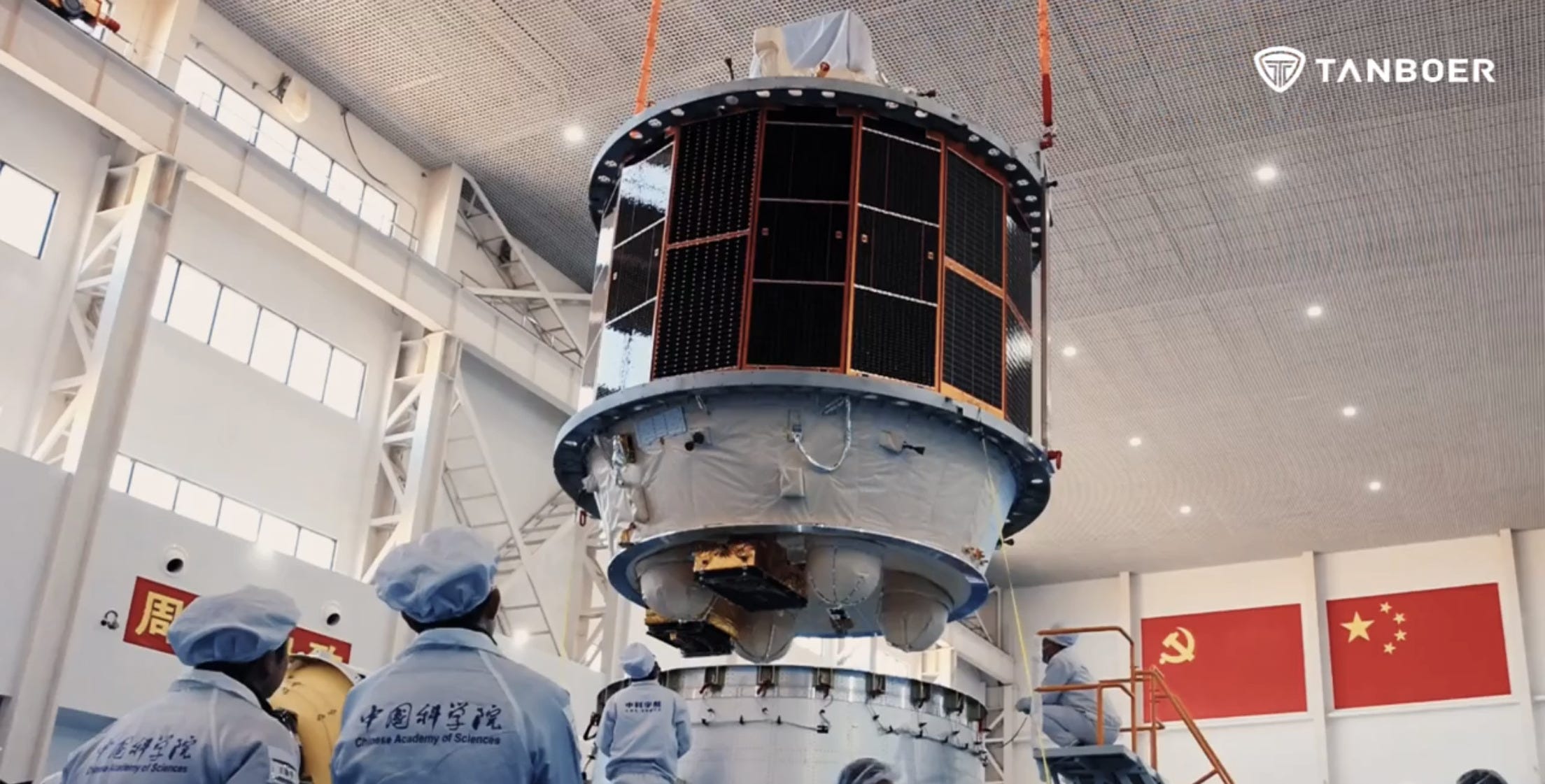
One and a half years on from its contract award and almost three weeks after its launch, the Qingzhou (轻舟) cargo spacecraft’s testing in orbit is proceeding well, for systems running the spacecraft and experiments within it.
According to the Innovation Academy for Microsatellites, Chinese Academy of Sciences (中国科学院微小卫星创新研究院), who developed the 4,200-kilogram spacecraft, in the days after launch Qingzhou brought itself into a circular 600-kilometer sun-synchronous orbit, out of its 604 by 217-kilometer deployment orbit, where it will reside for around three years1. That maneuver verified the spacecraft’s guidance and control systems and the performance of its thrusters.
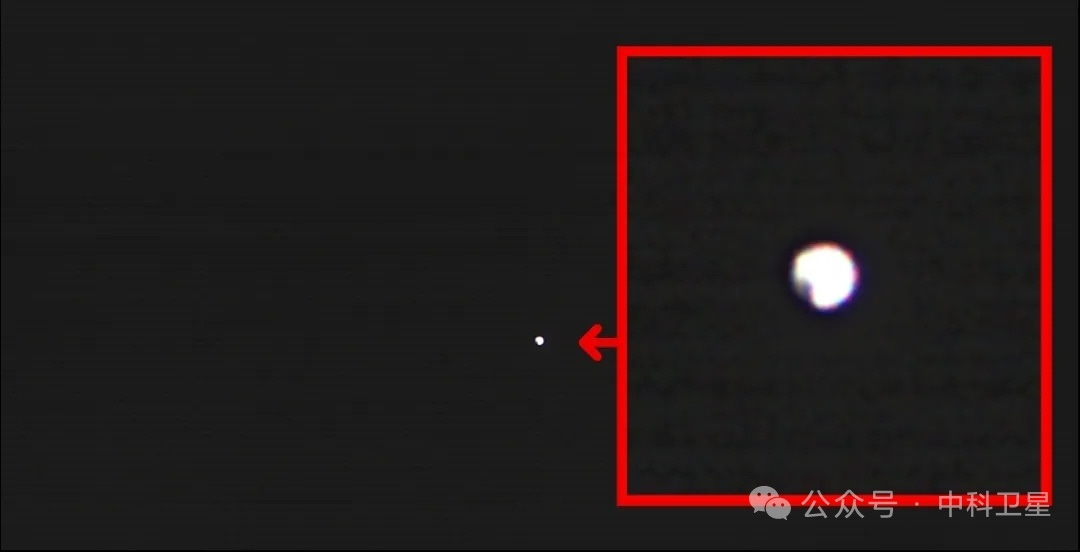
In that orbit, Qingzhou released three satellites, between April 2nd and 3rd, attached to it during launch, one where its docking port would be and two next to its main propulsion system. One of those satellites, Xinzhengcheng-01 (新征程01卫星), performed rendezvous operations with the cargo spacecraft, coming within 5 kilometers of it2, ahead of its planned remote sensing technology tests.
Within the Qingzhou spacecraft, twenty-seven experiments are taking place, some part of system tests. Experiments mentioned by the Microsatellite Academy were microgravity metal manufacturing tests, an active vibration isolation system, a laser inertial measurement unit, a spacecraft-to-spacecraft communications module3, an autonomous proximity monitoring and retreat system, as well as new materials for the spacecraft’s structures and solar panels. Those within the spacecraft weigh 1,020 kilograms and are stowed in cargo containers, which can be climate-controlled.
A handful of experiments being focused on by Chinese outlets as part of Qingzhou’s first mission are medical research projects from the Shenzhen University of Advanced Technology (深圳理工大学) to take the first step for what they call a ‘space hospital’. Two experimental devices being tested in microgravity are an ultraviolet non-invasive phototherapy device, hope to promote vitamin D synthesis to prevent bone loss during human spaceflight, and a plasma therapeutic device, aimed at assisting the wound healing process that is slowed by microgravity.
Back on Earth, learnings from the first Qingzhou mission are being incorporated into a second spacecraft, said to already be in production, that may head to the Tiangong Space Station. The second mission may launch on another Kinetica-2, should CAS Space meet cadence goals, but the door remains open to alternative launch solutions.
At present, the Microsatellite Academy’s efforts with the Qingzhou spacecraft have been impressive since its October 2024 contract award from the China Manned Space Agency. A comparable U.S. spacecraft to that is Northrop Grumman’s Cygnus, which took four years and eight months to go from award to a first orbital mission, which went straight to the International Space Station.
That duration was probably chosen to properly understand how Qingzhou operates for prolonged periods, ahead of extended stays docked to Tiangong, and to allow for its onboard experiments to run for as long as needed.
Here is Qingzhou as seen by Xinzhengcheng-01 at that distance:
Said to have a range of 450 kilometers, possibly having it communicate with one of China’s mega-constellations as few other satellites would be within range.