

New Tiangong Relay Satellite Sent Towards Geostationary Space [Long March 3B/E]
Communications and data capacity is set to expand for the orbiting lab after a lightning-hit Xichang launch.

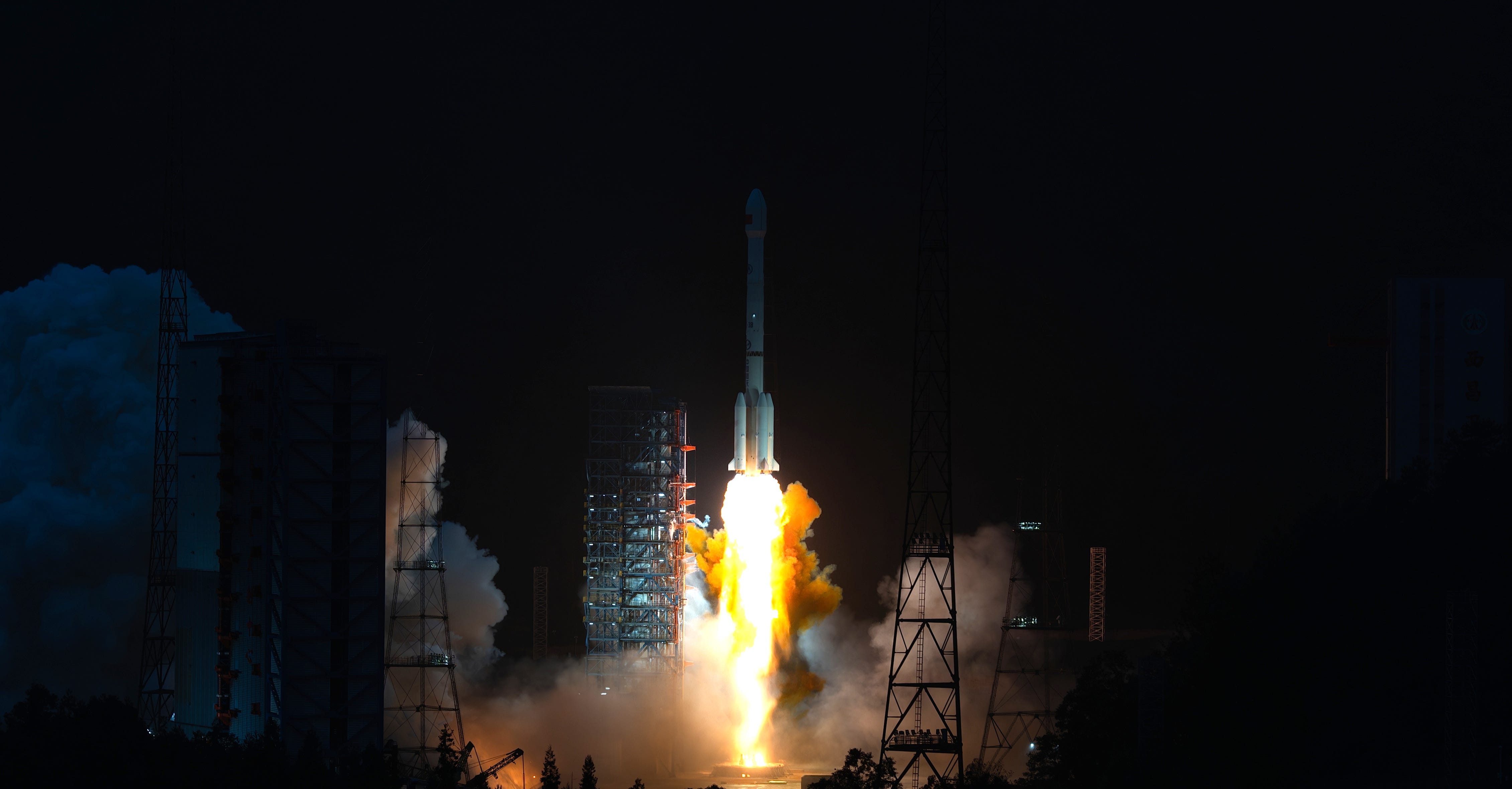
A lightning-struck Long March 3B/E lifted off from Launch Complex 2 at the Xichang Satellite Launch Center at 20:00 pm China Standard Time (14:00 pm Universal Coordinated Time) on July 23rd, carrying a satellite toward geostationary space.
Being placed into a geostationary transfer orbit was the China Academy of Space Technology-made Tianlian-2-06 (天链二号06星), a new communications and data relay satellite for the permanently crewed Tiangong Space Station as well as visiting vehicles like Shenzhou and Tianzhou. Each Tianlian satellite also removes communication dead zones where ground stations are absent on Earth.
By launching new Tianlian satellites, the amount of scientific data able to be transmitted from the orbiting laboratory can be increased, as well as the fidelity of video calls between taikonauts, researchers, and their families. Previous additions to the relay network took place in March and April 2025 after a three-year hiatus following deployments from 2019 to 2022.
The satellite is the eleventh of its series to be launched, and the sixth of the second generation based on the DongFangHong-4 spacecraft bus (东方红4号卫星平台). Usage of that bus allows the second-generation satellites to have a lifespan of up to fifteen years.
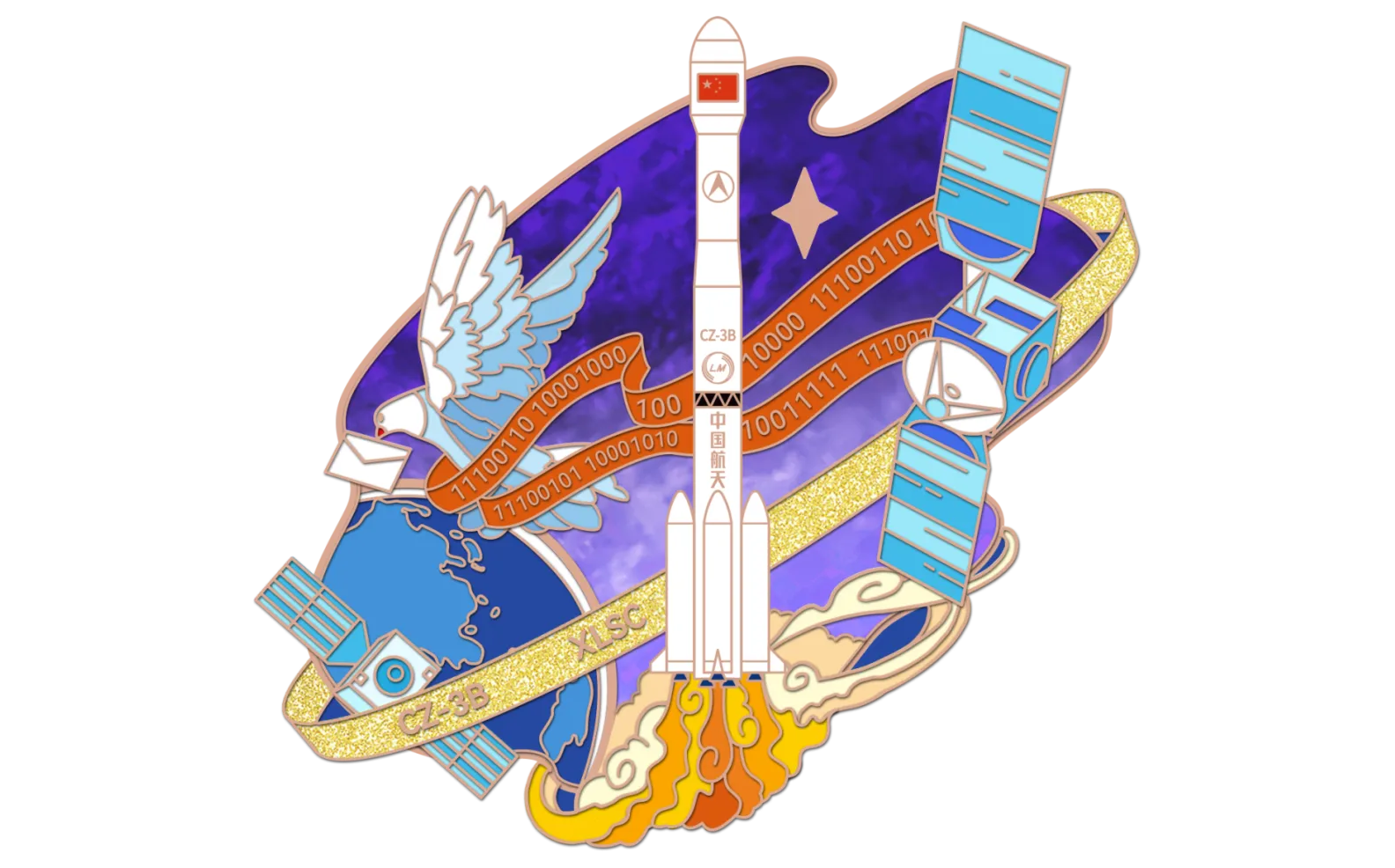
In a post-launch blog post, the China Academy of Launch Vehicle Technology declared that Xichang-based personnel will continue to adapt the Long March 3B/E to the requirements of each mission and the current season to ensure success. It was also stated that quality control has been and will continue to be tightened, following a failure in January and a return to flight last month. Before January’s failure teams were working to fly the launch vehicle up to two times per month.
During ascent out of the lower atmosphere today, the Long March 3B/E was struck by lightning for the first time in-flight. That strike, despite entering through the fairing and exiting at the base of the first-stage, did not affect the outcome of the launch mission. Other rockets that have been struck and continued are Russia’s Soyuz-2 and the United States’ Saturn V.
Today’s mission was the 117th launch of a Long March 3B vehicle, and the 658th launch of the Long March launch vehicle series. This was also the 50th launch from China in 2026.
Liftoff video via 中国航天文化 and 卡尔达瓦里希 on Weibo.
Check out the previous Long March 3B/E launch
Long March 3B/E Triumphantly Returns to Flight With Shijian Spacecraft [Long March 3B/E]
![Long March 3B/E Triumphantly Returns to Flight With Shijian Spacecraft [Long March 3B/E]](https://substackcdn.com/image/fetch/$s_!Zm-X!,w_1300,h_650,c_fill,f_webp,q_auto:good,fl_progressive:steep,g_auto/https%3A%2F%2Fsubstack-post-media.s3.amazonaws.com%2Fpublic%2Fimages%2F8166b259-32c9-4c5f-9ff3-9ab17af08294_2000x1201.png)
For the first time in five months, a Long March 3B/E returned to flight from Launch Complex 2 at the Xichang Satellite Launch Center at 17:45 pm China Standard Time (09:45 am Universal Coor…
What is the Long March 3B/E?
This section is for those less familiar with China’s Long March series of launch vehicles.
The Long March 3B is an older-generation geostationary orbit workhorse of the China Academy of Launch Vehicle Technology. The first two stages and four boosters of the rocket burn Dinitrogen Tetroxide and Unsymmetrical Dimethylhydrazine, with liquid hydrogen and liquid oxygen in the third-stage.
Over the launch vehicle’s history, two versions of the vehicle have flown, the 3B and 3B/E. Since 2012, only the 3B/E variant has flown due to its increased payload capacity. The payload capacity of the launch vehicle is currently as follows:
11,500 kilograms to low Earth orbit
7,100 kilograms to a sun-synchronous orbit
5,500 kilograms into a geostationary transfer orbit
2,000 kilograms into geostationary orbit
The first-stage is powered by four YF-21C engines that burn Dinitrogen Tetroxide and Unsymmetrical Dimethylhydrazine to generate 302 tons of thrust, while the boosters are powered by one YF-25 engine burning the same fuel to generate 72 tons of thrust each. Combined the four boosters and first stage generate a thrust of 590 tons. The second stage is powered by one YF-22E and four YF-23F vernier engines that also burn Dinitrogen Tetroxide and Unsymmetrical Dimethylhydrazine to generate 81 tons of thrust. The third-stage is powered by two YF-75 engines that burn liquid hydrogen and liquid oxygen to generate 17 tons of thrust.
On the launch pad, the Long March 3B/E is 56.3 meters tall and weighs 458,970 kilograms when fully fuelled. The first and second-stage have a diameter of 3.35 meters, while the third-stage has a diameter of 3 meters, along with the four boosters diameter of 2.25 meters, and the fairing has a diameter of 4.2 meters.
So far, every Long March 3B launch has occurred from the Xichang Satellite Launch Center, in the south of Sichuan province.