

Shenzhou-21 Trio Reflect on 210-Day Space Mission, Emergency Protocols
A press conference with the three taikonauts was held on August 5th, with the crew responding to questions from the media.

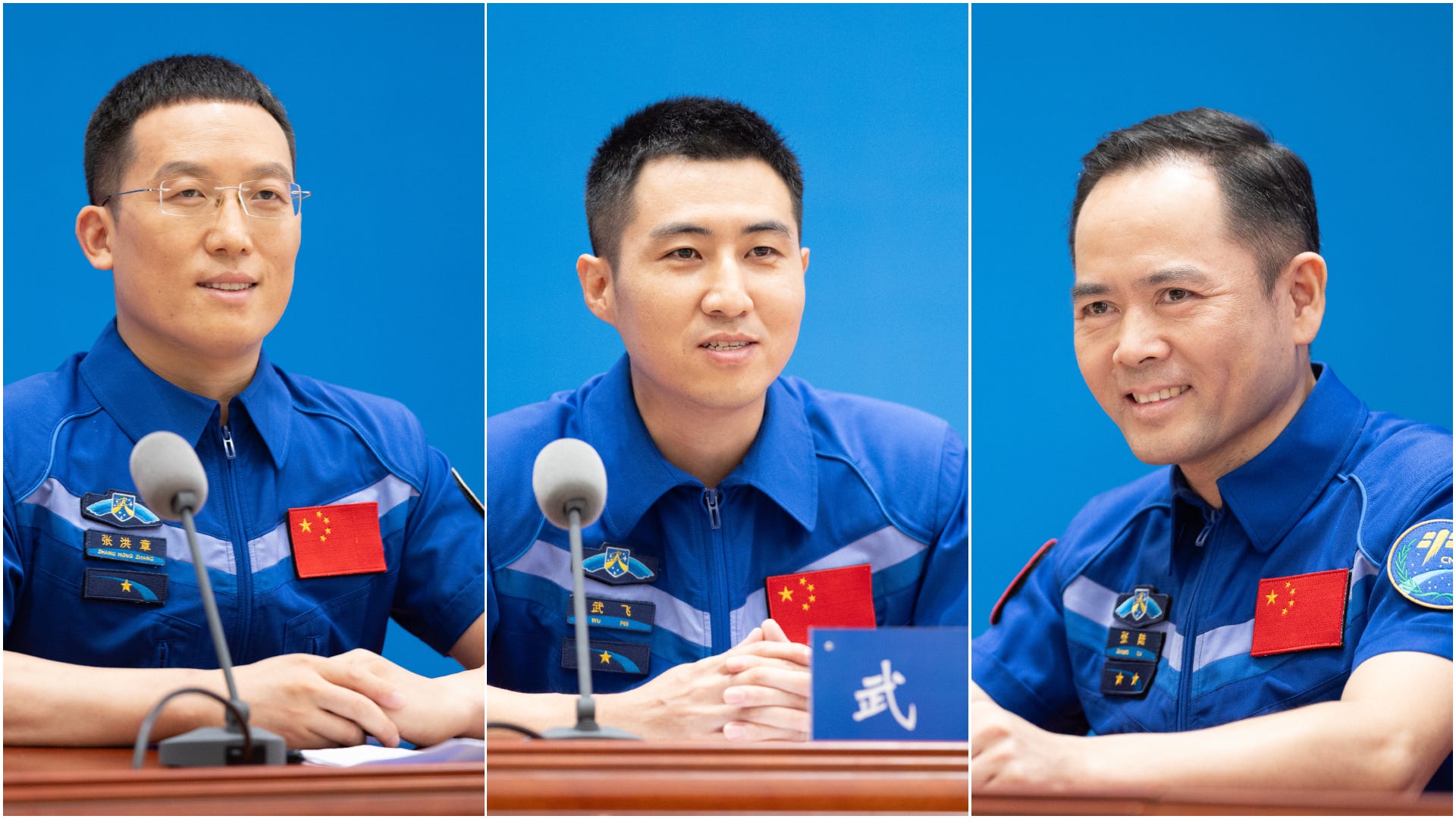
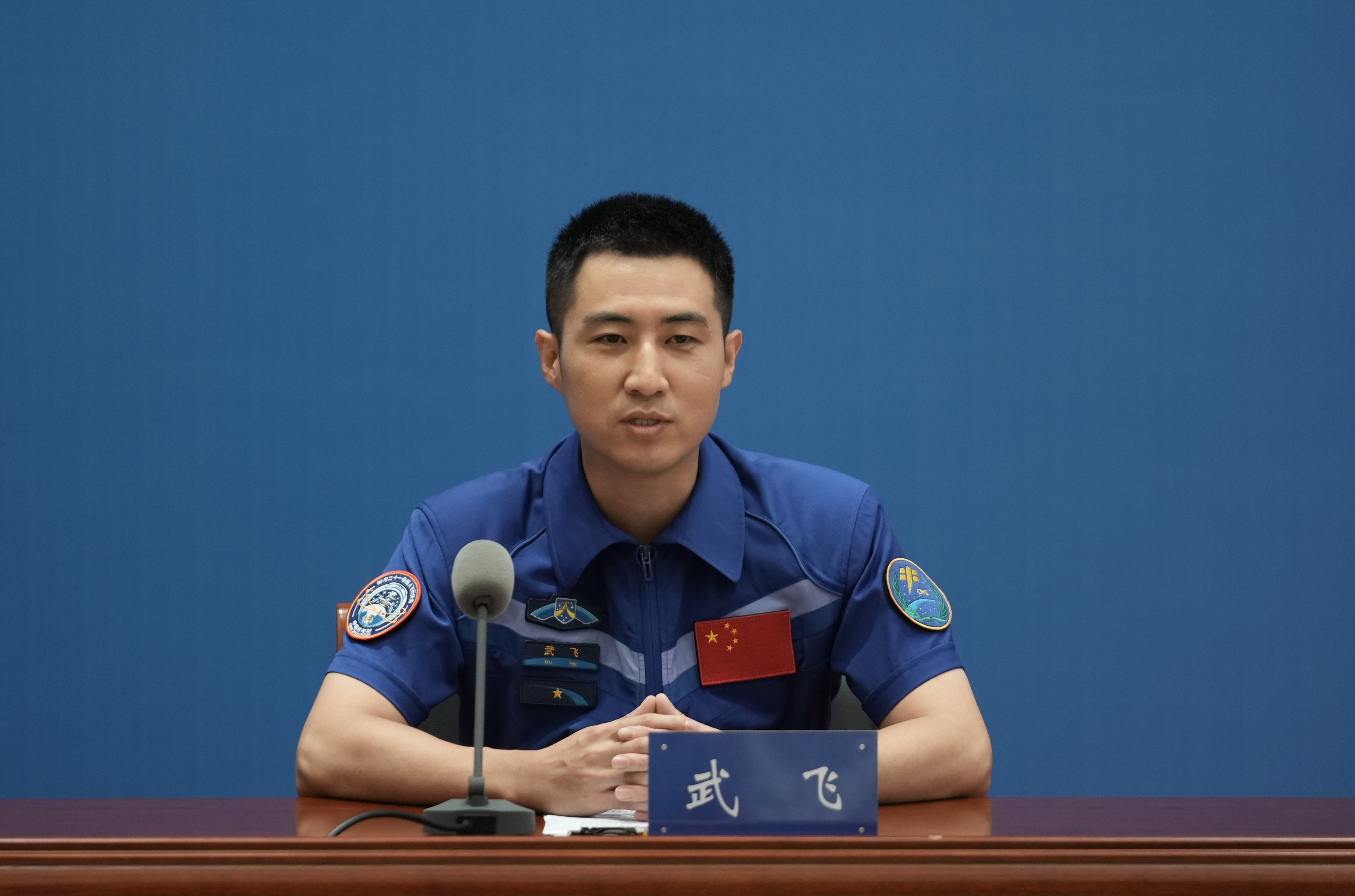
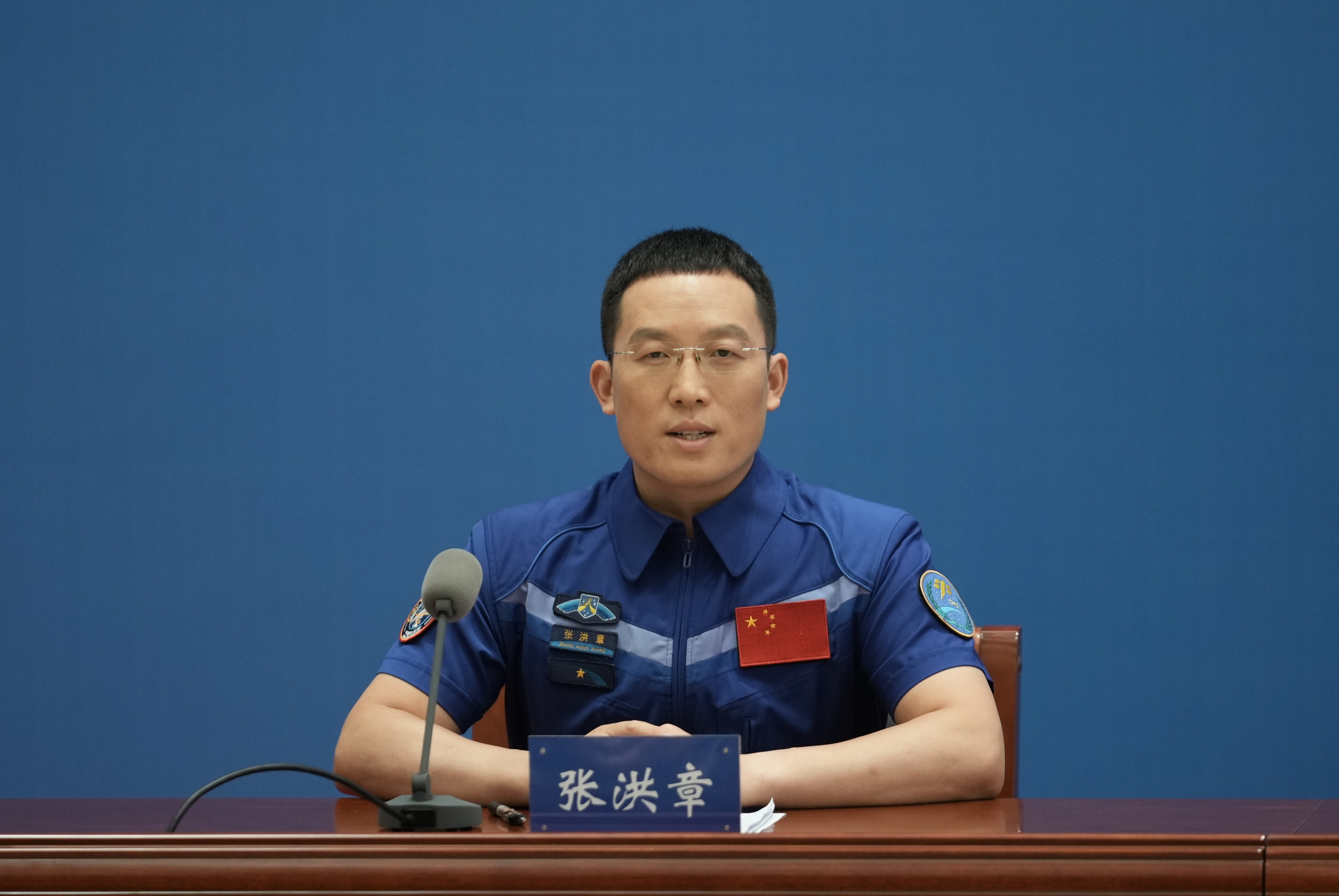
After passing post-flight medical checks and exams in their two months since returning to Earth in May, Shenzhou-21’s Zhang Lu (张陆)1, Wu Fei (武飞)2, and Zhang Hongzhang (张洪章)3 met the press on August 5th to discuss their 210 days in space, each of them with either a first or second star added to their uniform4. The conference also marks their availability to be assigned to future missions.
In those 210 days, many experiments were supported and participated in onboard the Tiangong Space Station. Three spacewalks to maintain the orbiting laboratory took place as well. Towards the end of their mission, the Tianzhou-10 cargo spacecraft topped up supplies for the remainder of 2026. Some fun was had too with the Chinese New Year and the station’s fifth annual art exhibition.
Their time in space also included handing their undamaged Shenzhou spacecraft to the Shenzhou-20 crew after a debris strike days before returning home. That had them receive the fresh Shenzhou-22 spacecraft uncrewed, loaded with supplies able to extend their mission by a month, alongside performing inspections and repairs to Shenzhou-20 for it to bring some cargo back to Earth.
Questions about all parts of their mission were asked by the press present on August 5th, as shared by the China Manned Space Agency in a transcript. That transcript is solely in Chinese, so attached below is an unofficial translation. Any errors present are my own, if you find any problems with this translation please reach out and correct me. If you are looking to reference any part of the transcript, please refer to the one posted by the China Manned Space Agency.
Transcript of Shenzhou-21 Crew Meeting the Press
Reporters: Commander Zhang Lu, this was your second spaceflight mission. Shortly after entering space, your crew experienced China’s first-ever in-space emergency response during a manned spaceflight. You personally went through in-orbit emergency procedures, a spacecraft transfer, and an extended stay in orbit, before finally returning safely to Earth. What were the greatest challenges and takeaways from this rare emergency experience for you and your crew? And what is your perspective on the country’s human spaceflight emergency response system?
Zhang Lu: Thank you for your question. During the Shenzhou-21 mission, our crew personally experienced and witnessed historic moments in China’s manned space program, including the first time a spacecraft was struck by space debris, leading to a delayed return; the first time an taikonaut crew switched spacecraft for reentry; and the first emergency launch of a spacecraft. We witnessed firsthand how the entire program, from ground control to space, united as one to carry out these emergency operations.
What impressed us most about this space emergency was the confidence of China’s space program. It embodies the values of prioritizing life and success above all else, demonstrates a scientific research ethos characterized by rigor, caution, meticulousness, and a commitment to excellence, and showcases a spirit of collaboration marked by overcoming challenges and working together with a united resolve. This represents yet another successful step in China’s journey from growing to a leader in space exploration.
Less than ten days elapsed from the moment the crack in the porthole was discovered to the crew's return. Just eleven days after the Shenzhou-20 crew safely returned to Earth, the Shenzhou-22 spacecraft was successfully launched. This marked the first emergency launch operation in the history of the country’s human spaceflight program.
The ground-to-space emergency response system of China’s manned space program has withstood the test of real-world operations and stood up to scrutiny by the nation and its people. Whether it was handling the spacecraft’s collision with space debris, dynamically adjusting the mission duration, switching the crew to a different spacecraft for return, or organizing and executing the emergency launch, the entire system operated in a tightly integrated and seamless manner, providing us with effective safety safeguards. We can truly appreciate this firsthand; it instills in us a deep sense of trust and security.
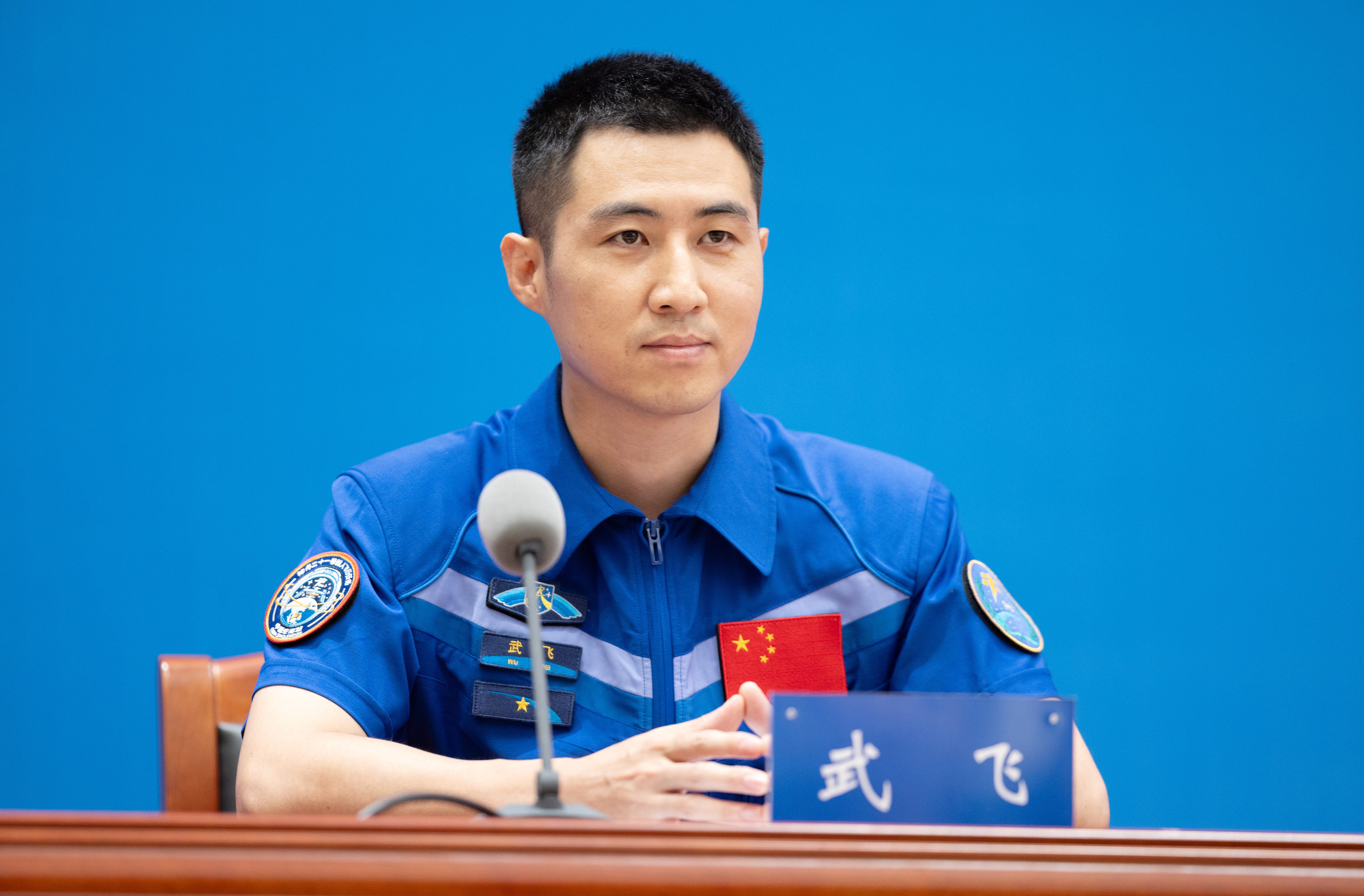
Reporters: Wu Fei, before becoming a taikonaut, you were involved in the development of the Tianhe core module and the Wentian experimental module for China’s space station. Now, you’re personally living in the ‘space home’ that you once helped build from the ground. Having transitioned from an ‘engineer safeguarding the space station’ to a ‘taikonaut living on the space station’, what is it like to operate the equipment you helped design while in space?
Wu Fei: I am grateful for the attention from the media in my hometown and for the concern shown by the people there.
During my mission in space, I often looked through the porthole, searching for the grasslands and the land that nurtured me. I also used my camera to capture the magnificent Yinshan Mountains (阴山山脉) and the winding ‘Great Bend’ of the Yellow River. Gazing at my grassland home from my ‘space home’ was truly a remarkable connection. Equally wondrous was that feeling of coming home when I first stepped into the space station. As an engineer on the ground, my task was to simulate the extreme conditions of space through rigorous vacuum and thermal tests to put every inch of the space station’s ‘skin’ and every ‘blood vessel’ to the test. You could say I was one of the first people to touch and listen to the heartbeat of this ‘space home’ even before it was born. When I boarded the Shenzhou-21 spacecraft and entered the space station, a warm sense of ‘coming home’ and a feeling of security welled up within me.
That feeling became even more profound and vivid when I personally operated the equipment in orbit, gear that had been repeatedly validated on the ground. While maintaining the space station’s Environmental Control and Life Support System, our ‘vital hub’, this transition from theory to practice, from simulation to reality, gave me a deeper insight into the system's operational logic. The seemingly tedious experience I had accumulated on the ground transformed into the confidence and composure I needed for precise operations and steady decision-making in orbit. Of course, this unique sense of ‘coming home’ also instilled in me a deeper reverence for this mission. I know full well that every action I take in space is backed by the tireless efforts of thousands of researchers who have spent countless days and nights running simulations, verifying data, and standing guard; they are our strongest support system.
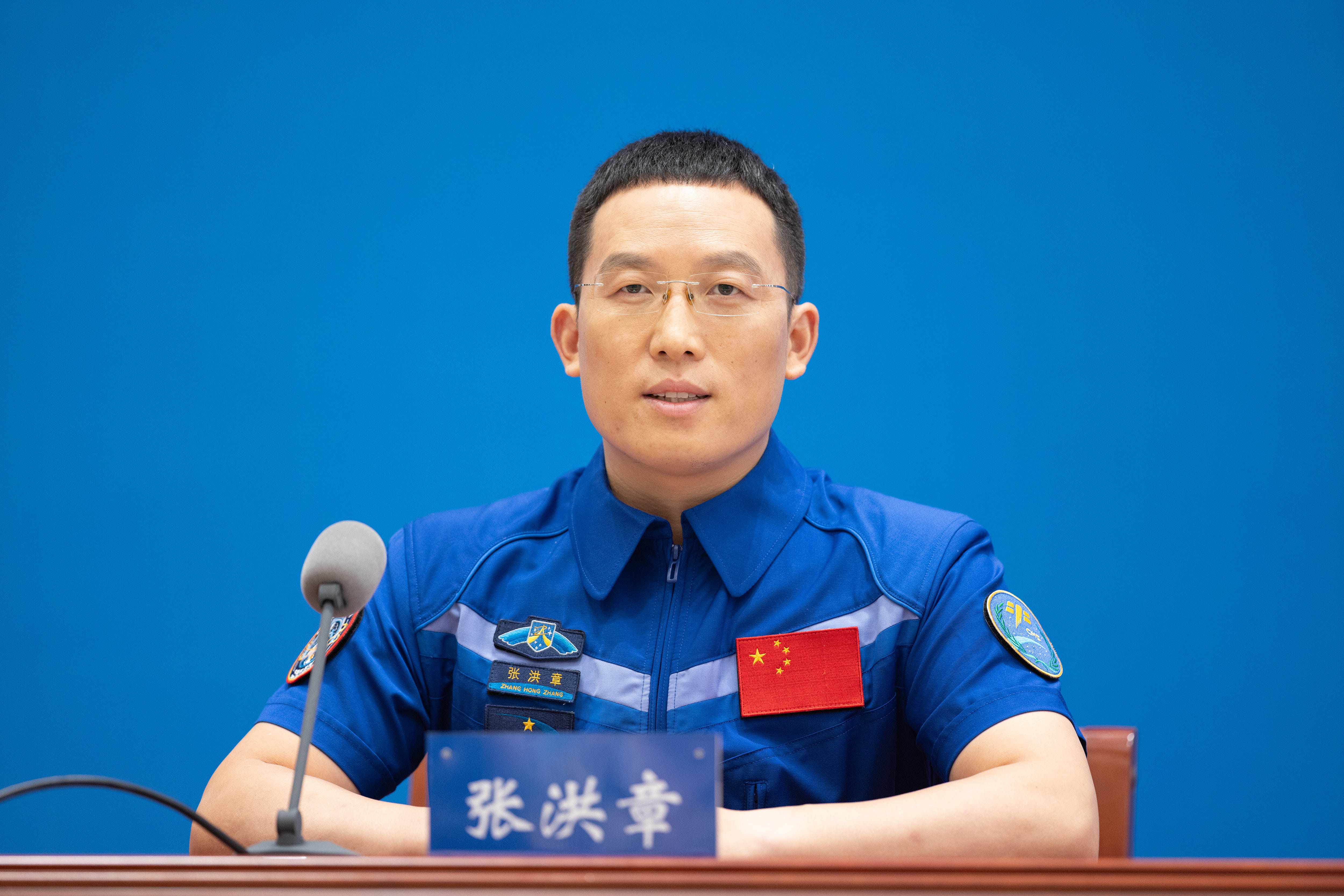
Reporters: Zhang Hongzhang, a large number of experiments in space life sciences, materials science, and in-orbit cultivation were conducted during this mission. What is the biggest difference between conducting experiments in the microgravity environment of space and in a ground-based laboratory? Which experiment left the deepest impression on you?
Zhang Hongzhang: Thank you for your question. The biggest difference is the dramatic contrast between conditions on Earth and in microgravity. On the one hand, density convection, thermal convection, gravitational stress, and buoyancy disappear; on the other hand, intermolecular interactions such as surface tension and interfacial adsorption, as well as molecular thermal motion, become prominent. These changes cause many physical, chemical, and biological processes to unfold in radically different ways. For instance, while dispensing a drop of water from a pipette is simple on Earth, the droplet might cling to the pipette tip in the space station, making it difficult to detach. Similarly, whereas air bubbles in water naturally rise to the surface on Earth, separating gas from liquid in the space station often requires methods like centrifugation. Such phenomena can pose challenges for in-orbit experiments. Therefore, our research team must design experiments meticulously to avoid such situations and prepare contingency plans for potential issues. If unforeseen circumstances arise, we must collaborate with the ground-based research team through space-to-ground coordination to resolve them.
All experiments conducted on the space station embody the wisdom and hard work of countless researchers, leaving a deep impression on us all. For example, China’s first-ever in-orbit aeroponic cultivation of cherry tomatoes and wheat validated technologies such as the efficient utilization of water, nutrients, and light spectra; and China’s first-ever in-orbit rearing of mice in a sealed environment laid a solid technical foundation for future space mammal experiments.
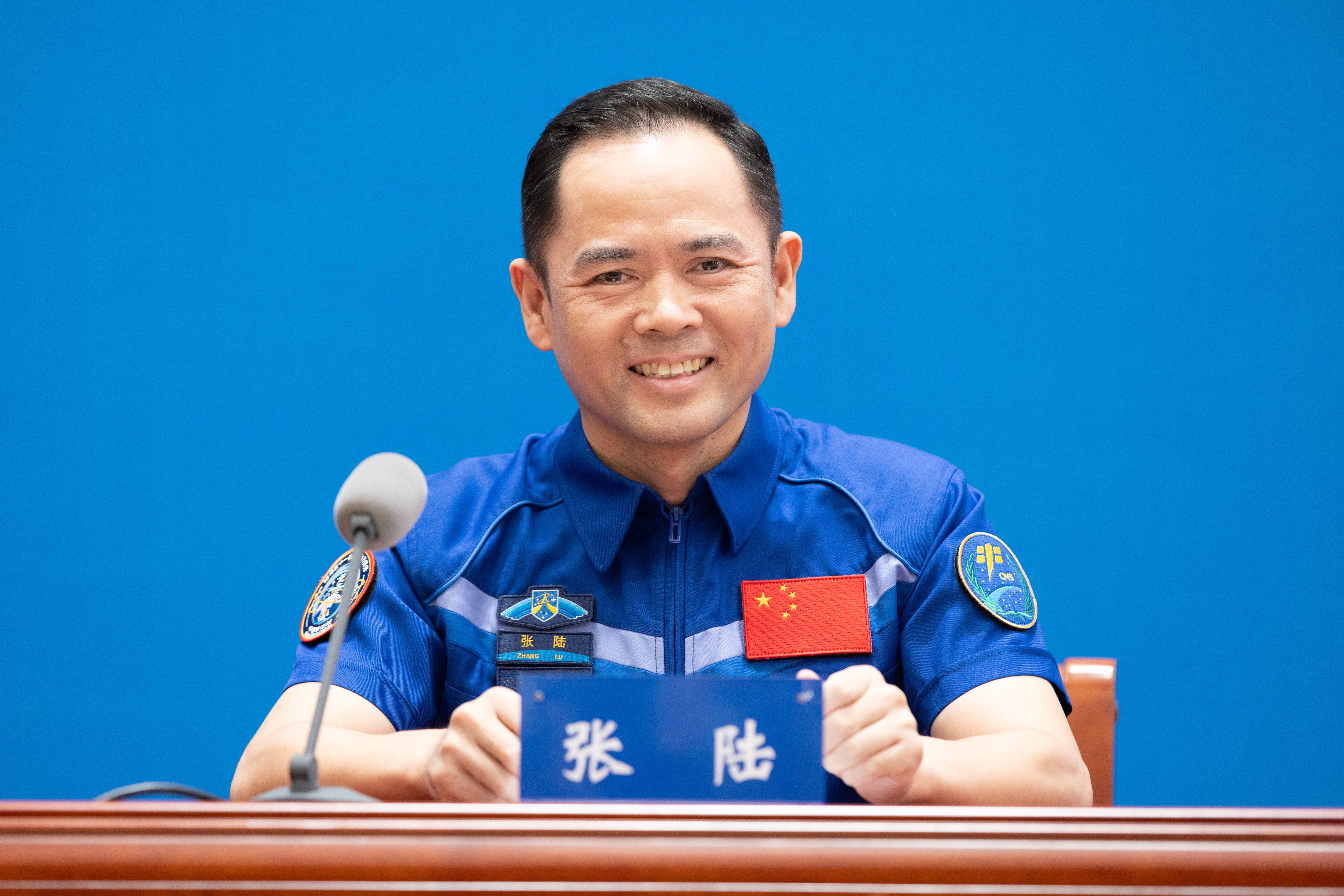
Reporters: Zhang Lu, across the Shenzhou-15 and Shenzhou-21 missions, you have performed a total of seven extravehicular activities, setting a new record for the highest number of individual spacewalks by a taikonaut. What are your deepest reflections on these seven spacewalks?
Zhang Lu: Thank you for your question. Since the start of the space station mission, there have been twenty-six spacewalks to date, seven of which I have personally conducted. These numbers bear witness not only to my personal growth but also to the development of China’s manned space program. I feel very fortunate to be a participant in and witness to this great endeavor.
Behind every spacewalk lies the collective support of countless individuals. Take, for instance, the neutral buoyancy tank, a facility familiar to many; I have personally completed over 40 underwater training sessions there, each lasting five to six hours. Our underwater instructors, carrying heavy oxygen tanks, would hover beside us like swaying aquatic plants, accompanying and safeguarding us throughout the process.
Every spacewalk we undertake also relies on the full support of the ground support team. What viewers see on TV are the spectacular scenes of each spacewalk; what they don’t see is the meticulous preparation, repeated simulations, and extensive coordination the team undergoes to ensure the success of each mission.
Our extravehicular suits were also indispensable. The Shenzhou-20 spacecraft returned with ‘Extravehicular Suit B’, a suit that had supported twenty spacewalk missions over a four-year period; I personally wore it to conduct four EVAs during the Shenzhou-15 mission.
For the Shenzhou-21 mission, we introduced ‘Extravehicular Suit E’. During the first spacewalk of the Shenzhou-21 mission, one of my tasks was to photograph damage to the Shenzhou-20 spacecraft's porthole. The high-definition camera equipped on Suit E allowed me to capture incredibly clear images, providing reliable data for ground-based analysis and repair planning.
Earlier, you asked what my greatest takeaway was from my seven spacewalks. One phrase comes to mind: ‘Tempered through a thousand hammerings’. For me, each spacewalk was a test of my mettle. The more I’m tested, the more resilient I become. That is the greatest lesson I’ve learned from my seven spacewalks.
Reporters: Wu Fei, what was the greatest takeaway from your 210-day space mission? After you and your crew safely returned to Earth aboard the Shenzhou-22 spacecraft, bringing your record-breaking, extended space mission to a close, if you had to sum up this journey in one word, what would it be? How has this experience deepened your understanding of the profession of ‘taikonaut’?
Wu Fei: Thank you for your question. The 210-day mission, a record-breaking, long space assignment, yielded takeaways that were comprehensive, multi-layered, and deeply memorable.
If I were to identify the greatest takeaway, I would say it was, first and foremost, gaining a brand-new perspective and an immense sense of pride. While in space, I frequently floated to the porthole to gaze at our beautiful, azure planet; amidst the vast cosmos, it stands out as the only splash of color teeming with life. Looking down at Earth from space, national borders vanish; what remains is the palpable sense of a beautiful home that all of humanity must safeguard together. Furthermore, the 210-day extended stay itself stands as a powerful testament to the exceptional capabilities of China’s human spaceflight program, a source of pride that accompanied me every single day in orbit.
On a personal level, I also acquired three invaluable ‘space skills’: first, the ability to control my body and perform precision operations in a weightless environment, which significantly honed my physical coordination and control; second, the ability to communicate and coordinate effectively with ground control under high-workload conditions, learning to transmit information and execute commands with precision and efficiency; and third, the ability to rapidly troubleshoot issues while in orbit, integrating ground-based engineering logic with the realities of the space environment to ensure every task proceeded smoothly.
If I had to sum up this journey in one word, I would choose ‘refinement’.
It refined our team, forging the three of us into a collective united in thought and coordinated in action; it refined my personal abilities, thoroughly fusing ground-based engineering knowledge with spaceflight skills; and it refined my mindset and willpower, giving me a deeper understanding of mission, responsibility, and the value of life.
This mission has also given me a deeper understanding of the profession of ‘taikonaut’. We are the ‘hands of scientists’, tasked with transforming the intellectual blueprints of scientists on Earth into tangible achievements in space; we are the ‘eyes of engineers’ and the ‘on-board doctors’ of the space station, using our professional expertise to identify and resolve problems; and we are, above all, the ‘feet of pioneers’, taking the exploratory steps toward future crewed lunar landings and even more distant deep-space exploration. I am deeply honored to be a part of this great relay.
Reporters: A question for Zhang Hongzhang, mission Commander Zhang Lu once joked that you’ve turned the space station into the most poetic ‘Peach Blossom Spring’ in the entire universe, conducting experiments while growing vegetables, tending to flowers, reciting poetry, and practicing martial arts. During this long and high-pressure 210-day mission, how did these beautiful moments, filled with Chinese-style romance spirit, serve as a ‘spiritual recharge station’ for you to restore your physical and mental well-being and maintain inner peace?
Zhang Hongzhang: Thank you for your question. After a busy day’s work, our crew would carefully tend to our space garden, watering the plants, applying fertilizer, pruning dead leaves, and recording their growth. We successfully grew crops such as wheat, buckwheat, carrots, tomatoes, sweet potatoes, mint, sunflowers, and lettuce while in orbit. Watching these crops grow from sprouting and leafing out to flowering and ripening not only validated and refined our in-orbit cultivation techniques but also added a great deal of joy to our high-intensity life in space.
People often ask me how I managed to maintain such high energy levels during such a long mission. I believe the answer lies in a combination of factors: ground support provided the foundation, mutual assistance among the crew was key, and self-adjustment was the secret. China’s fine traditional culture is profound and offers unique insights into physical and mental well-being. Late at night, as I prepared to rest, I would often recite classical poetry and practice Tai Chi. This interplay of stillness and movement allowed me to quickly soothe nerves that had been taut all day, adjust my physical and mental state, and ensure I was fully energized to tackle the work ahead the next day.
Reporters: Zhang Lu, your remarks upon returning to Earth on both occasions were truly memorable. When returning from the Shenzhou-15 mission, you said, ‘With the stars and the vast ocean in my eyes, and a heart filled with unwavering loyalty’. Upon returning from the Shenzhou-21 mission, you said, ‘One person's journey to the stars and the vast ocean; a collective's unwavering loyalty’. Could you share what these two different statements reveal about your inner journey?
Zhang Lu: Thank you to the reporter from my hometown. In my remarks after both missions, I mentioned ‘the stars and the vast ocean’ and ‘unwavering loyalty’. These words reflect the relentless pursuit of and longing for our dreams shared by all of us in the space sector, as well as our boundless love for and loyalty to our motherland.
The first statement. ‘With the stars and the vast ocean in my eyes, and a heart filled with unwavering loyalty’, represented my pursuit of a dream. I recall saying at the press conference for the Shenzhou-15 mission: ‘To realize my personal dream of spaceflight, I persevered for 12 years. Throughout those 12 years, one conviction constantly resonated in my heart: to fly, to fly for my personal dream, and to fly for the dream of the nation’.
The second statement, ‘One person's journey to the stars and the vast ocean; a collective's unwavering loyalty‘, was my tribute to everyone in the space program. Our dream of spaceflight would not be possible without the care of our families and colleagues, the support of the entire engineering team, and, above all, the backing of our motherland and its people. Our journey to the stars and the vast ocean has never been a solo expedition; it is a long march undertaken by a collective. They are ‘Shuguang (曙光)’5, ‘Tiangong’, ‘Beijing’, ‘Yinhe’, ‘Great Wall’, ‘Shenzhou’, ‘Tianzhou’, ‘Dongfeng’, and so many others... These heroic teams have paved a smooth path for us to reach the stars and the vast ocean.
Reporters: Wu Fei, before your mission, you brought along a small sunflower because its name is related to your daughter’s nickname, ‘Xiao Kui (小葵)’, and it symbolizes ‘staying positive and turning toward the sun’. During your 210-day stay in orbit, how did this sunflower keep you company? And how did it become a source of comfort that helped you feel the warmth of home amidst the vast expanse of space?
Wu Fei: Thank you for your interest. I did indeed take this mini-sunflower into space because my daughter’s nickname is ‘Xiao Kui’; I hoped she would grow up like a sunflower, always positive, optimistic, and facing the light. Yet, during that extended 210-day mission, the sunflower came to mean far more than just a father’s love and hopes for his daughter.
First, it was a symbol of the vitality of life. Life on the space station is a highly regimented, rational world defined by metal and data, making that touch of vibrant green a truly striking presence. Watching the sunflower sprout new leaves each day, in the moments between tasks, became a source of relaxation and joy. Its vigorous life force, striving to reach the light and stretch upward in a weightless environment, offered me immense comfort and strength.
Second, it serves as a poetic measure of time. In space, the sun rises and sets 16 times a day, blurring our sense of time. Yet the growth of the little sunflower, from breaking through the soil to sprouting, then growing new leaves, and finally blooming, every subtle change marks the time we’ve spent in space, making our long stay tangible and real.
Finally, and most importantly, it is a ray of ‘home’s warmth’ that spans heaven and earth. Every week during video calls with my family, I show them just how tall this ‘little space sunflower’ has grown. This ‘home’s warmth’ has also warmed our entire crew, reminding us of where we came from and where our roots lie.
In short, this miniature sunflower has lit a lamp for me in the vast sea of stars, allowing me to carry out the sacred mission entrusted to me by my country and its people with greater composure, filled with love and concern.
Reporters: Zhang Hongzhang, before you set out on your mission, you declared with conviction, ‘The nation’s greatest interests are close to my heart!’ From Wangjing Village (望京村) in Zouping (邹平市), Shandong (山东), to the vast expanse of the stars and the ocean, you hoped to change your destiny through knowledge and strengthen the motherland through science and technology. Now that you’ve returned triumphantly, if you could say one thing to your younger self, what would it be? What insights and advice would you like to share with the young students in your hometown and across the nation through the story of your journey in pursuing your dreams?
Zhang Hongzhang: Thank you for your question, and thank you to the people of my hometown for their care and support.
I am a scientist and one of the countless ordinary workers. I am grateful to our great motherland for helping me realize my dream of flying into space.
On the day of my triumphant return, my father told me, ‘If you ever have the chance, tell the people back home that knowledge truly can change one’s destiny’. Looking back on my journey through education, scientific research, and spaceflight, if I had the chance to say one thing to my younger self, I would tell him: Don’t worry about coming from humble beginnings; don’t be afraid of the hardships ahead. Stay true to your original aspirations, work diligently and deeply in your field, and strive toward the starry sky you admire; all your efforts will eventually bear fruit.
With this year's college entrance examination just concluded, countless young students stand at a new crossroads in life. I would like to share my experience of pursuing the space dream with young people who aspire to serve the country through scientific research. The path of learning inevitably involves setbacks, bottlenecks, and hardships; never let yourself become disheartened. You must keep studying and constantly expand the boundaries of your knowledge. Only then will you have the confidence and capability to solve difficult problems.
In the future, whether you pursue scientific research or other fields, whether you love what you do and then pursue it, or do what you do and then come to love it, you must closely align your personal development with the needs of the nation, find your proper place, and set reasonable long-term and short-term goals. The path of scientific research requires the courage to innovate, diligence in practice, a knack for collaboration, and the patience to accumulate knowledge steadily over time. Our nation’s aerospace industry and various cutting-edge scientific fields are always in need of young talents who are willing to endure hardships, sit through the long, quiet years of research, and possess a deep sense of patriotism. As long as you keep the ‘greater good of the nation’ in mind and continuously hone your skills, you will ultimately forge your own broad path, one that allows you to serve your country and shine brightly in your chosen field.
Reporters: Zhang Lu, when you returned from space, you brought back an apple with you. At the time, we felt that this was your blessing to scientists and aerospace workers. Some netizens also commented, ‘You went to all that trouble to take an apple into space, only to bring it back again’. I imagine this apple must hold special significance for you; could you tell us more about it?
Zhang Lu: Thank you for your question. When it comes to apples, there are many stories worth sharing with everyone. After all, apples are the fruit that has spent the most time with us on the space station.
I remember that during the Shenzhou-15 mission, the apples brought us a sense of sweetness more than anything else. At that time, we carried a total of 72 apples, with each of us receiving 24. We’d only share them on important holidays, anniversaries, or after spacewalks; most of the time, we’d keep the apples in the sleeping quarters, reluctant to eat them, because that way we could enjoy their fragrance for longer.
During the Shenzhou-15 mission, the apples accompanied us for five months. By the final month of the mission, each of us had just one apple left. One evening, Deng Qingming came out of the bathroom, and I called out, ‘02’. He turned around. I tossed an apple his way. Holding the apple, he asked me in surprise, ‘It’s not apple-distribution day today, is it?’ I replied, ‘Happy birthday’.
For the Shenzhou-21 mission, the apple took on a different meaning: safety and well-being.
I remember that on the day of the launch, ground personnel gave us an apple to wish us a safe and smooth mission. I knew that our safety was their greatest wish.
When the Shenzhou-20 spacecraft returned, we wrote a message on the reentry module: ‘May the journey home be smooth’.
Upon concluding the Shenzhou-21 mission and leaving the space station, we brought back an apple inscribed with the characters for ‘Safety (平安)’. This represents the shared sentiment of all of us in the space industry. We hope our space program will thrive, and we wish for every launch to proceed safely and smoothly.
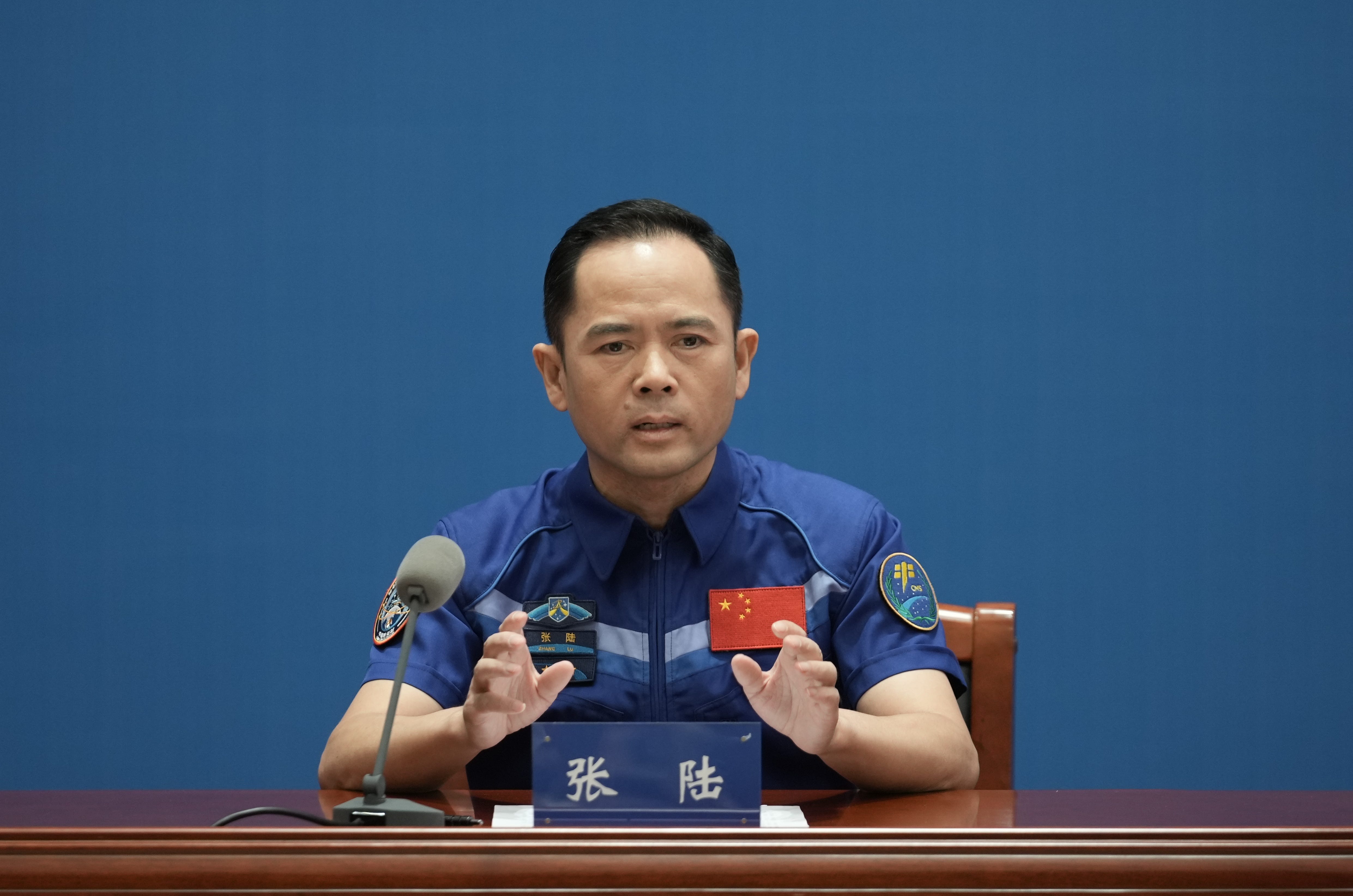
He was the Commander and Pilot of the mission for his second spaceflight, having flown for the Shenzhou-15 mission between November 2022 and June 2023. He is from Hanshou County (汉寿县), Hunan (湖南) province, and was selected as part of China’s second taikonaut group in 2010, also being considered a ‘post-70s’ taikonaut having been born in November 1976.
Before becoming a taikonaut, Zhang served in the People’s Liberation Army Air Force and achieved the rank of Senior Colonel. He also joined the Communist Party of China in April 1999. After the Shenzhou-15 mission, Zhang was awarded the Spaceflight Merit Medal (Third Class) along with the honorary title of hero taikonaut.
He served as the Flight Engineer for the mission, which will be his first trip into space. He is from Baotou (包头市 / ᠪᠤᠭᠤᠲᠤᠬᠣᠲᠠ), in the Inner Mongolia Autonomous Region (内蒙古自治区 / ᠥᠪᠥᠷ ᠮᠣᠩᠭᠣᠯ ᠤᠨ ᠤᠨᠥᠪᠡᠷᠲᠡᠭᠨ ᠵᠠᠰᠠᠬᠤ ᠣᠷᠣᠨ), and was selected as part of the third taikonaut group in October 2020, while being considered a ‘post-90s’ taikonaut having been born in 1993.
Before his selection as a taikonaut, Wu was an engineer at the China Aerospace Science and Technology Corporation. He also joined the Communist Party of China in 2015.
He flew as the Payload Expert for the mission, with it being his first trip to space. He is from Binzhou (滨州市), Shandong (山东) province, and was also selected as part of the third taikonaut group in October 2020, while being considered a ‘post-80s’ taikonaut having been born in 1986.
Prior to being selected as a taikonaut, Zhang was a researcher at the Dalian Institute of Chemical Physics, Chinese Academy of Sciences (中国科学院大连化学物理研究所), where he explored new materials and technology for batteries. He also joined the Communist Party of China in 2004.
Under the name tag on the left side (if looking at them) of their uniforms. Those stars represent missions completed.
Possibly a reference to the Shuguang spacecraft and ‘Project 714’, China’s original program for human spaceflight. The program never left the ground during the time it was under research between 1967 and 1972. If flown, its missions would have been similar to those of the American Project Gemini.