

Third Earth Observation Satellite Pair Deployed via Taiyuan Launch Mission [Long March 2D Y105]
The two satellites were carried into space by a modified Long March 2D, equipped with a new 4.2-meter fairing.

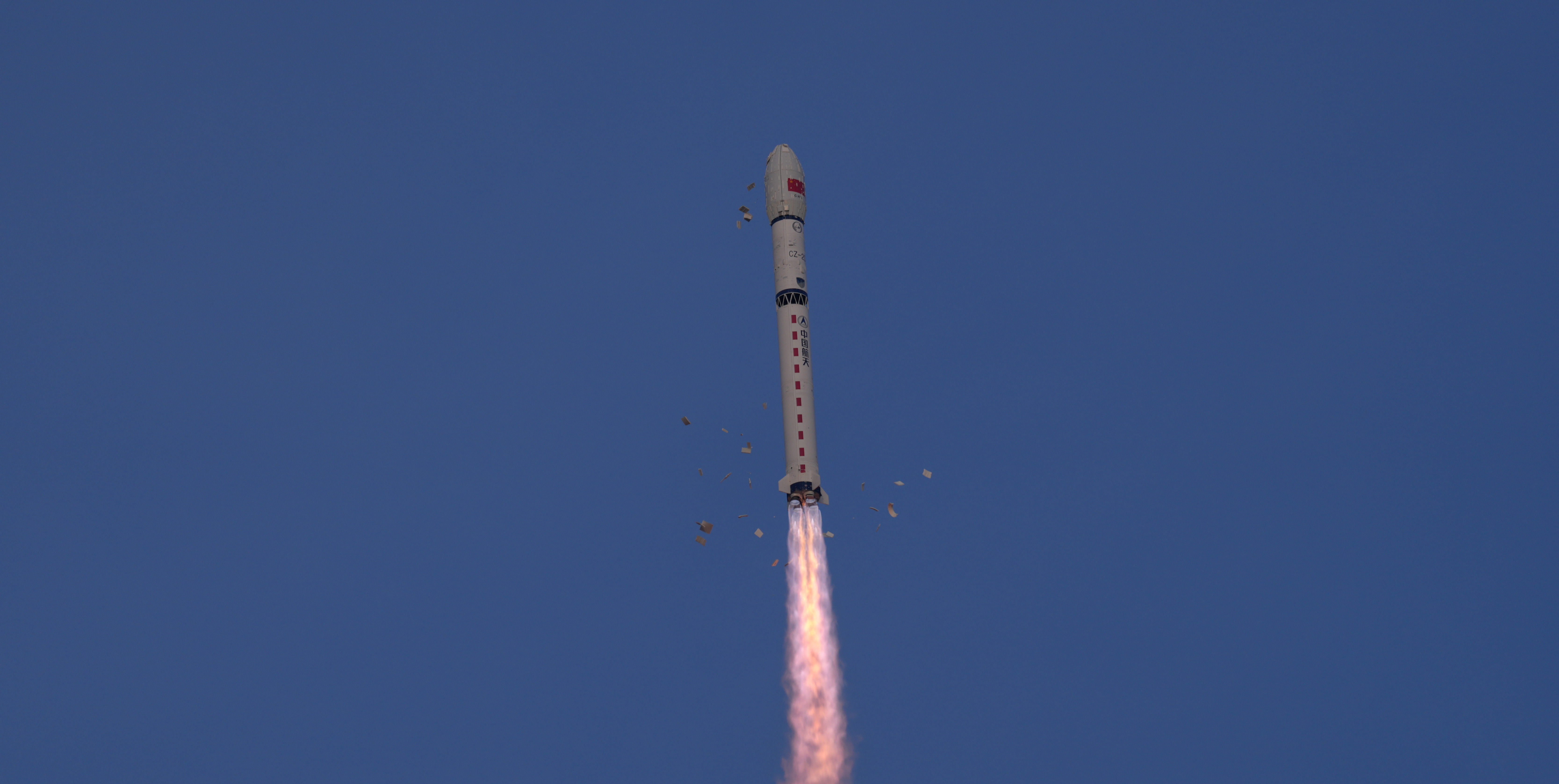
A Long March 2D departed from Launch Complex 9 at the Taiyuan Satellite Launch Center at 06:51 am China Standard Time on March 26th (22:51 pm Universal Coordinated Time on March 25th), flying south-southwest toward sun-synchronous orbit with two imaging satellites onboard.
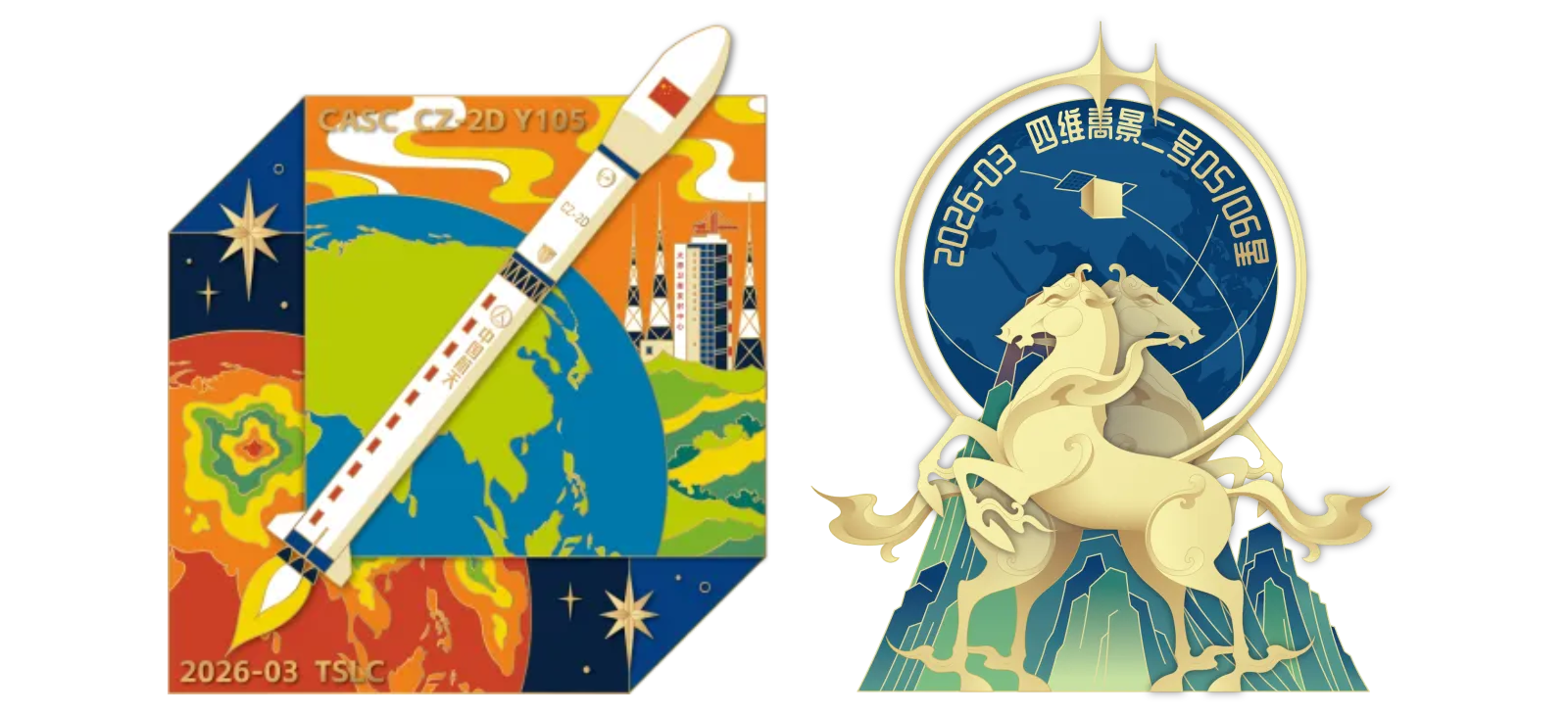
Atop of the rocket were Siwei Gaojing-2-05 (四维高景二号05) and Siwei Gaojing-2-06 (四维高景二号06), also referred to as SuperView Neo-2-05 and SuperView Neo-2-06, for China Siwei Survey and Mapping Technology (中国四维测绘技术有限公司). China Great Wall Industry Corporation procured the launch on behalf of China Siwei while having the Shanghai Academy of Spaceflight Technology support satellite development1.
After a commissioning period, the two satellites will fly as a pair, keeping about two hundred meters apart, before jointly beginning their all-day, all-weather, high-resolution (under one meter resolution) synthetic aperture radar Earth observation tasks. Those tasks include generating twenty-five-thousandth-scale digital models of image areas, developing three-dimensional topographical maps, and supporting the creation of other mapping products. Data collected by the satellites will also be used for natural resources surveying, urban management, emergency planning and response, as well as marine environment monitoring.
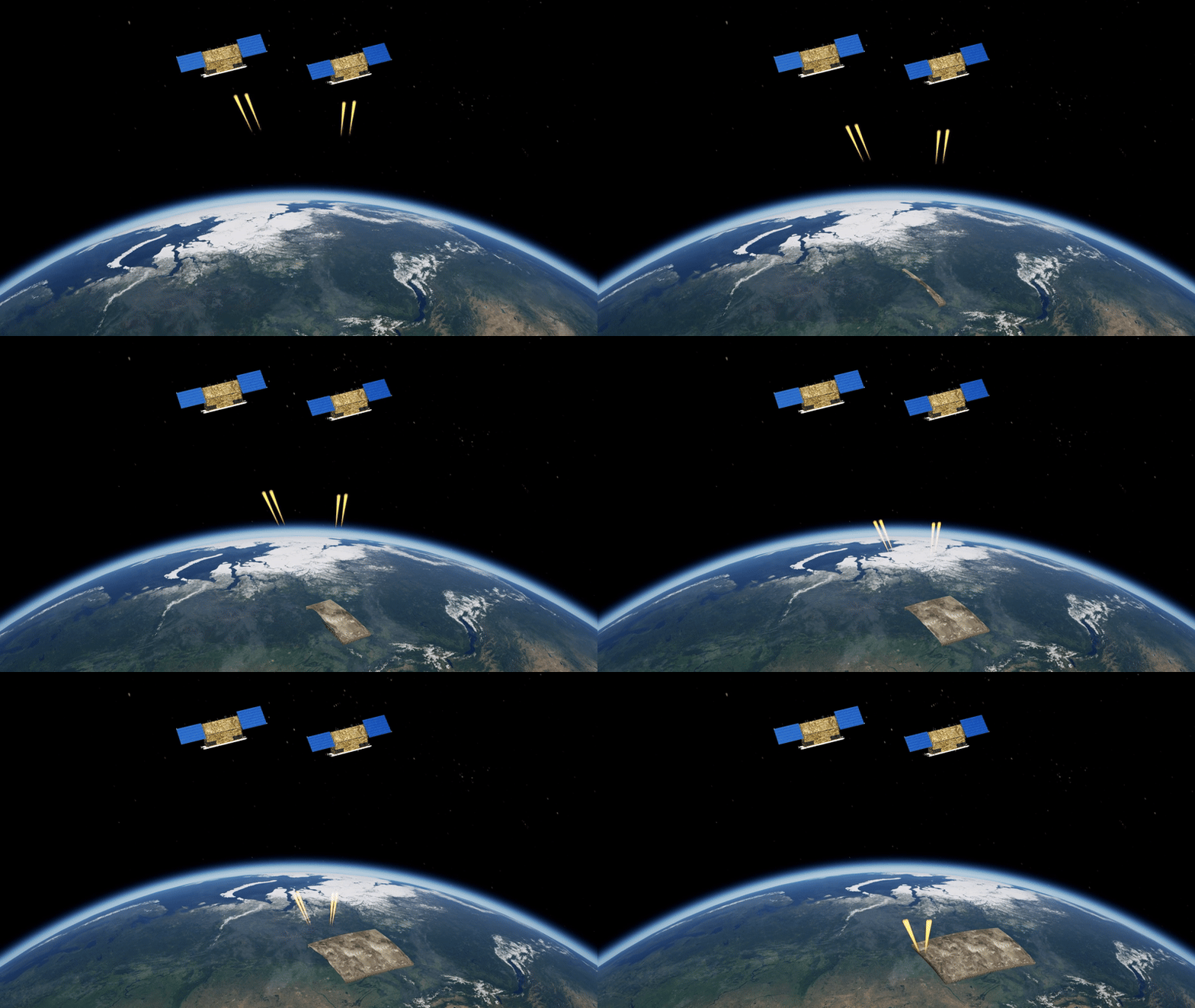
The two new satellites join a pair deployed in November 2024 and the first duo launched in July 2022. Other satellites operated by China Siwei will also complement them, and vice versa when needed, for international and domestic customers.
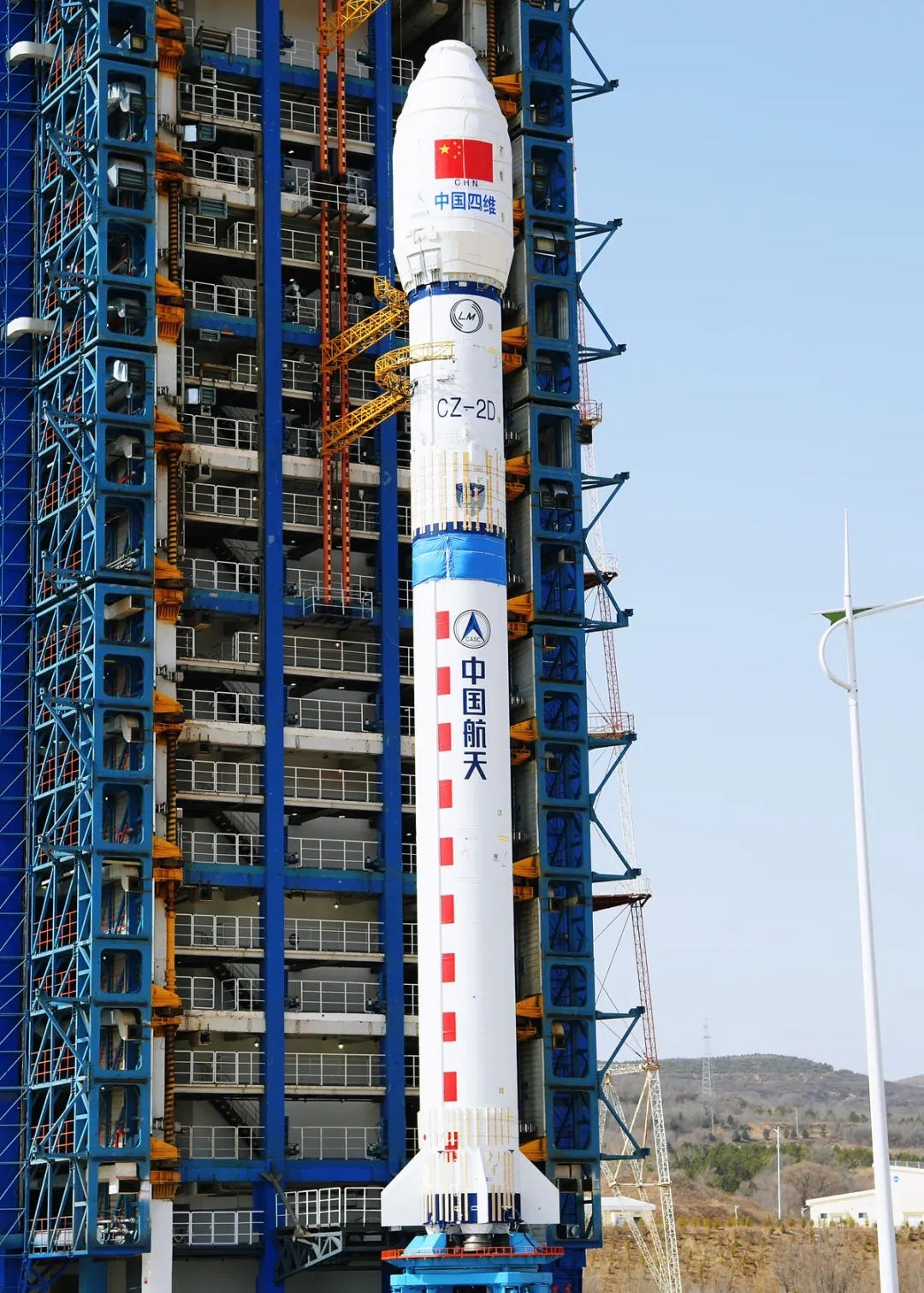
For today’s Long March 2D mission, the Shanghai Academy of Spaceflight Technology shared that a new 4.2-meter-diameter composite fairing was in use for the first time. To ensure its successful first use, the fairing underwent extensive mechanical testing at development facilities, then arrived very early in the launch campaign to guarantee it could be properly installed onto the payload adapter and the launch vehicle with the equipment at Taiyuan.
Today’s launch was the 103rd mission for the Long March 2D, the 261st Long March vehicle launch from the Shanghai Academy of Spaceflight Technology, and the 634th launch of the Long March launch vehicle series. This was also the 16th launch from China in 2026.
Liftoff video via 我们的太空 on WeChat and Cosmic Penguin on Bluesky.
Check out the previous Long March 2D launch
Two Experimental Earth Observation Satellites Delivered From Xichang [Long March 2D Y95]
![Two Experimental Earth Observation Satellites Delivered From Xichang [Long March 2D Y95]](https://substackcdn.com/image/fetch/$s_!t-FK!,w_1300,h_650,c_fill,f_webp,q_auto:good,fl_progressive:steep,g_auto/https%3A%2F%2Fsubstack-post-media.s3.amazonaws.com%2Fpublic%2Fimages%2F7cf9b3de-0a93-4168-a173-66be0b0af694_6000x3108.jpeg)
From a pre-dawn Xichang Satellite Launch Center, a Long March 2D blasted off from Launch Complex 3 at 06:33 am China Standard Time on March 13th (22:33 pm Universal Coordinated Time on March 12th) and flew into low Earth orbit, de…
What is the Long March 2D?
This section is for those less familiar with China’s Long March series of launch vehicles.
The Long March 2D is also one of the oldest launch vehicles from China, performing missions regularly to low Earth and sun-synchronous orbits by the Shanghai Academy of Spaceflight Technology, as a two-stage version of the Long March 4 vehicles. The two stages of the launch vehicle both burn Dinitrogen Tetroxide and Unsymmetrical Dimethylhydrazine.
The payload capacity of the launch vehicle is currently as follows:
3,500 kilograms to low Earth orbit
1,300 kilograms to a sun-synchronous orbit
The first-stage is powered by four YF-21C engines, which generate 302 tons of thrust burning Dinitrogen Tetroxide and Unsymmetrical Dimethylhydrazine. The second-stage is powered by a single YF-22C engine and four YF-23C verniers that generate 80 tons of thrust while also burning Dinitrogen Tetroxide and Unsymmetrical Dimethylhydrazine.
On the launch pad, the Long March 2D is 41.05 meters tall and weighs 232,250 kilograms when fully fuelled. The first and second stages have a diameter of 3.35 meters, with the fairing having a diameter of either 3.35, 3.8, 4, or 4.2 meters.
So far, the Long March 2D has flown from all three inland launch sites, the Jiuquan Satellite Launch Center, the Taiyuan Satellite Launch Center, and the Xichang Satellite Launch Center.


All three are owned by the China Aerospace Science and Technology Corporation, the nation’s dominant state-owned space contractor.