

Uncrewed Shenzhou-20 Spacecraft Returns to Earth Following Debris Damage
In space, three taikonauts continue to work on Tiangong near the halfway point of their mission.

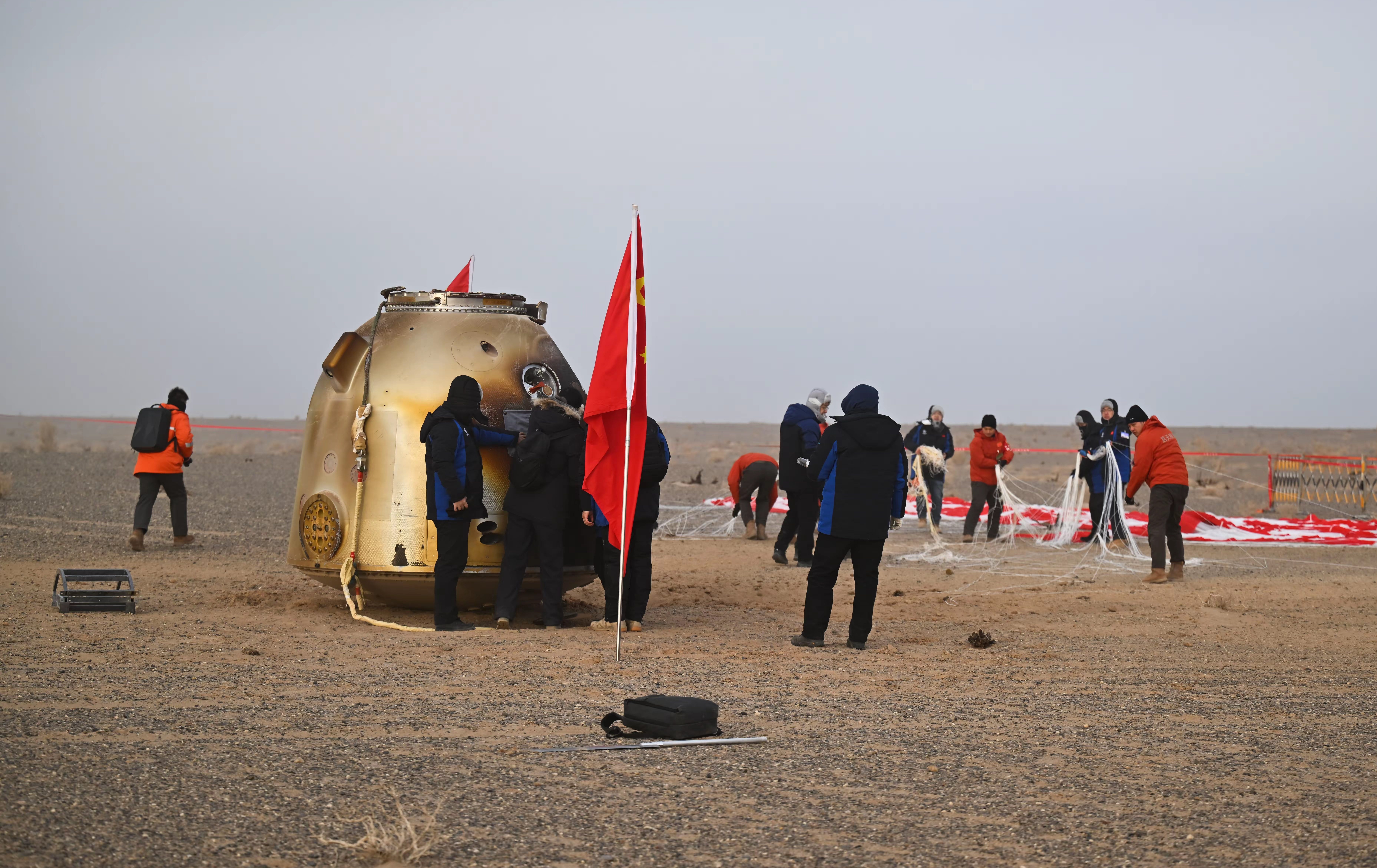
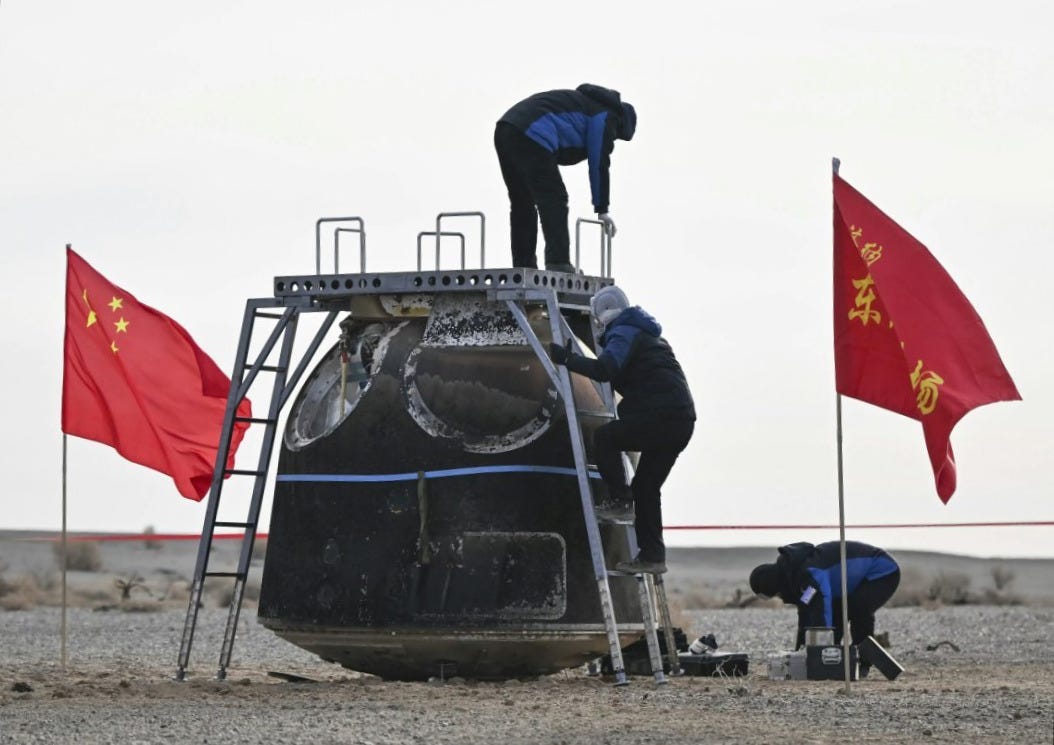
After spending 270-days docked to the Tiangong Space Station’s Earth-facing docking port, the Shenzhou-20 spacecraft returned to Earth on January 19th, uncrewed and carrying cargo onboard.
Undocking from Tiangong occurred at 00:23 am China Standard Time (16:23 pm Universal Coordinated Time, January 18th), with the separation of the orbital module, a deorbit burn, and separation of the service module occurring as planned. The uncrewed reentry module then reentered the atmosphere, touching down several minutes later at 09:34 am China Standard Time (01:34 am Universal Coordinated Time).
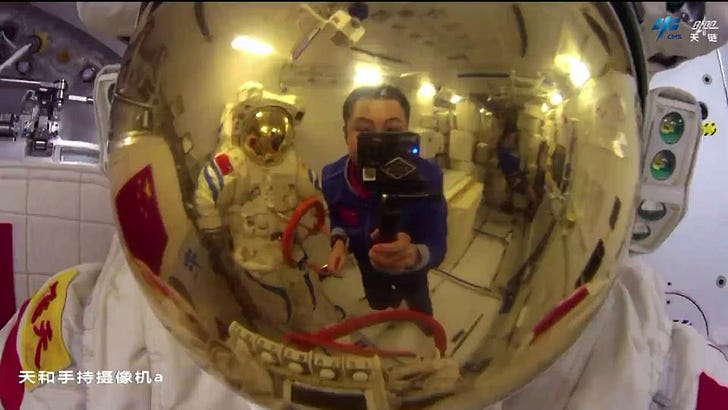
As no taikonauts were onboard, additional cargo was inside Shenzhou-20’s reentry module. Items returned include the usual completed science experiments, personal items for the crews, and a Feitian (飞天航天服) spacesuit. To fit into the module, the suit was partially disassembled and secured to the seats. The particular one returned was of an older generation that underwent a design life extension, last used in August 2025, and was identifiable by its blue stripes (not to be confused with an improved suit with the same stripe color).
Shenzhou-20’s delayed return was caused by a debris strike to one of its windows in the days before its original return date, with its crew taking Shenzhou-21 home in November 2025. That resulted in the uncrewed launch of the Shenzhou-22 spacecraft, carrying items to fix Shenzhou-20 for a cargo-carrying return, for the Shenzhou-21 taikonauts. Regarding that fix, the China Manned Space Agency detailed:
“To mitigate risks associated with the return of the Shenzhou-20 spacecraft, on December 9th 2025, the Shenzhou-21 crew utilized a spacewalk opportunity to conduct close-range photography of the Shenzhou-20 reentry capsule’s portholes using high-definition cameras. This further confirmed the status of the cracks in the reentry capsule’s portholes. Additionally, in preparation for the emergency launch of Shenzhou-22, a window crack repair device was expedited for development and installed inside the Shenzhou-20 spacecraft by the taikonauts. This enhancement significantly improved the spacecraft’s thermal protection and sealing capabilities during reentry.”
The China Academy of Space Technology added that the return of the spacecraft was as expected, but the parachutes were cut by recovery teams instead of by Shenzhou-20 due to a lack of taikonauts inside to send the parachute-cutting command. After touchdown, recovery teams covered the damaged window to prevent any objects from the landing site from entering the window cracks, ahead of a full analysis to decide what modifications need to be made for reinforcing future spacecraft windows.
With the damage to Shenzhou-20, the return to Earth of Shenzhou-21, and the uncrewed launch of Shenzhou-22, the deliveries of the Shenzhou-23 and Shenzhou-24 spacecraft, along with their Long March 2F/G launch vehicles, have been moved up by six months in the event of an emergency in space requiring a new spacecraft. According to the China Manned Space Agency, the Shenzhou-23 spacecraft is at the Jiuquan Satellite Launch Center, with its launch vehicle set to arrive soon, and is prepared to be on standby until its planned mission in April.
Shenzhou-21 crew continues to support experiments
Meanwhile, still in space and nearly three months into their mission, the Shenzhou-21 crew of Zhang Lu (张陆)1, Wu Fei (武飞)2, and Zhang Hongzhang (张洪章)3 have continued to support scientific experiments and technology research onboard the Tiangong Space Station, including having the robot crewmate Xiao Hang (小航) back online. Via a new episode of ‘Tiangong TV’, the crews activies of the past week were detailed.
Attached below is a translated transcript of the episode:
Multiple on-orbit tasks are progressing steadily within the National Space Laboratory. Let’s take a look at what experiments the Shenzhou-21 crew conducted last week.
The three taikonauts engaged in close interaction with their old friend aboard the space station, the robot Xiao Hang, conducting multiple tests, including touch interaction and autonomous flight. They collected relevant data to optimize subsequent methods for planning robotic motion behaviors in orbit.
In the field of space medicine experiments, the crew used a space-based Raman spectrometer to detect metabolic components in urine samples. The collected information will be used to further revise and improve the relevant characteristic metabolite indicator system and evaluation criteria. Additionally, the crew collected saliva samples primarily for research into taikonauts’ impact on the space station environment and microbial populations. These samples will undergo centralized testing upon return.
The left and right hands of a person cannot be identical, yet they achieve symmetry through mirroring. In nature, certain chemical molecules also possess a similar bilateral symmetry. Last week, the crew completed sample collection and storage for a research project investigating the relationship between the origin of the genetic code and chirality in the space environment. This project aims to explore the rules governing the chiral combinations of amino acids and nucleosides.
In the field of microgravity physics, in-situ electrochemical and optical research on lithium-ion batteries for space applications is ongoing. In addition, the crew completed tasks such as replacing the sampling cover inside the combustion science experimental cabinet, disassembling and assembling experimental modules inside the fluid physics experimental cabinet, and replacing experimental samples.
Last week, the station-wide pressure emergency drill was conducted as scheduled. The exercise simulated the entire process of the Shenzhou-21 crew responding to an internal depressurization event aboard the space station, consolidating and further enhancing the taikonauts’ emergency response capabilities as well as ground-space coordination skills.
During the week, the crew carried out tasks including organizing station supplies, cleaning the environment, and inspecting and maintaining equipment, continuing to safeguard their space home. In addition to that, medical examinations such as hearing tests proceeded as scheduled, while physical exercises like running remained a regular part of their routine.
The station is operating normally in orbit, the crew is feeling well in space, and the three crew members are working together effectively. To find out what happens next, see you next week!
If there are any problems with this translation please reach out and correct me.
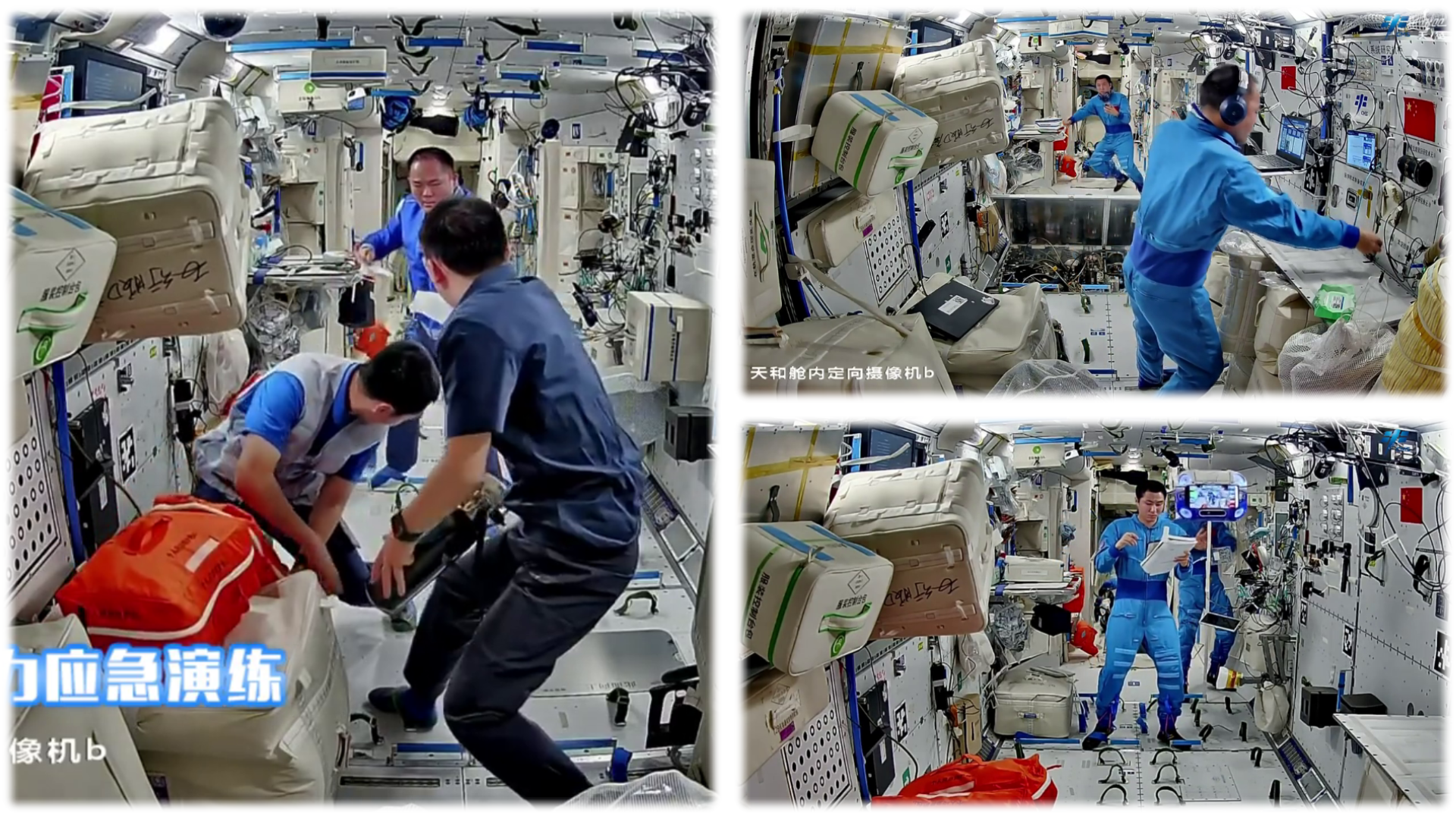
Tiangong TV Episode January 18th 2026 originally from the China Manned Space Agency, cloned to YouTube for archival.
Zhang Lu is the Commander and Pilot of the mission for his second spaceflight, having flown for the Shenzhou-15 mission between November 2022 and June 2023. He is from Hanshou County (汉寿县), Hunan (湖南) province, and was selected as part of China’s second taikonaut group in 2010, also being considered a ‘post-70s’ taikonaut having been born in November 1976.
Before becoming a taikonaut, Zhang served in the People’s Liberation Army Air Force and achieved the rank of Senior Colonel. He also joined the Communist Party of China in April 1999. After the Shenzhou-15 mission, Zhang was awarded the Spaceflight Merit Medal (Third Class) along with the honorary title of hero taikonaut.
Wu Fei is the Flight Engineer for this mission, which will be his first trip into space. He is from Baotou (包头市 / ᠪᠤᠭᠤᠲᠤᠬᠣᠲᠠ), in the Inner Mongolia Autonomous Region (内蒙古自治区 / ᠥᠪᠥᠷ ᠮᠣᠩᠭᠣᠯ ᠤᠨ ᠤᠨᠥᠪᠡᠷᠲᠡᠭᠨ ᠵᠠᠰᠠᠬᠤ ᠣᠷᠣᠨ), and was selected as part of the third taikonaut group in October 2020, while being considered a ‘post-90s’ taikonaut having been born in 1993.
Before his selection as a taikonaut, Wu was an engineer at the China Aerospace Science and Technology Corporation. He also joined the Communist Party of China in 2015.
Zhang Hongzhang is the Payload Expert for this mission, with it being his first trip to space. He is from Binzhou (滨州市), Shandong (山东) province, and was also selected as part of the third taikonaut group in October 2020, while being considered a ‘post-80s’ taikonaut having been born in 1986.
Prior to being selected as a taikonaut, Zhang was a researcher at the Dalian Institute of Chemical Physics, Chinese Academy of Sciences (中国科学院大连化学物理研究所), where he explored new materials and technology for batteries. He also joined the Communist Party of China in 2004.