Wenchang Commercial Launch Site Plans to Complete New Facilities in 2026
Available launch pads at the site are set to double in 2026, and then double again in a few years.

Just over twelve months after supporting its first launch, the Wenchang Commercial Space Launch Site has recently supported its eighth mission into orbit. So far those missions have taken place from just two launch pads, the Long March 8 series dedicated Commercial Launch Pad 1 and the ‘universal’1 Commercial Launch Pad 2.
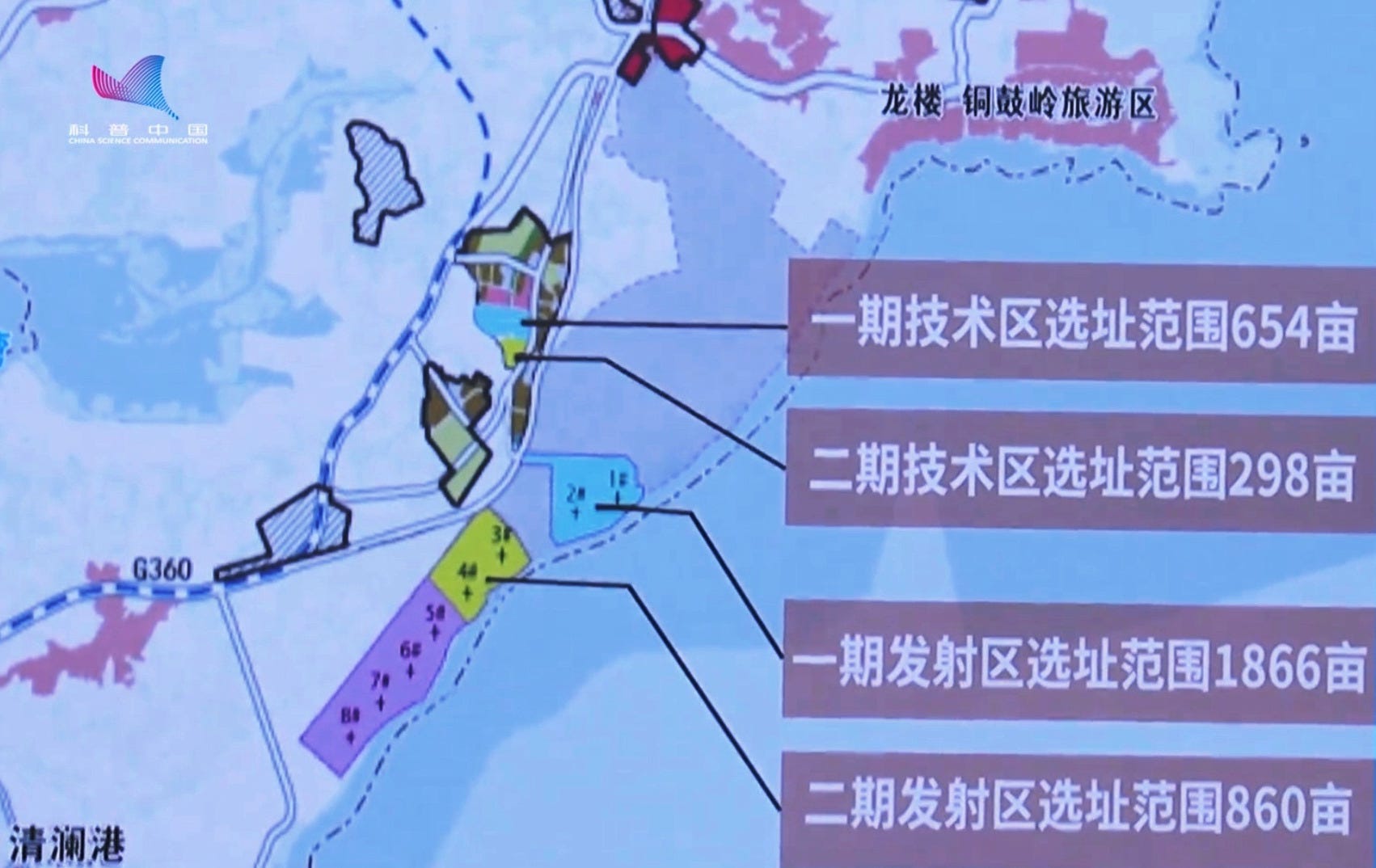
For further missions over the coming years, Hainan International Commercial Aerospace Launch Co Ltd (海南国际商业航天发射有限公司), the launch sites operator, is expanding the launch site with two more ‘universal’ pads, Commercial Launch Pad 3 and Commercial Launch Pad 4, to the southwest of the existing pads. Work on those pads began in January, with excavation completed in September.
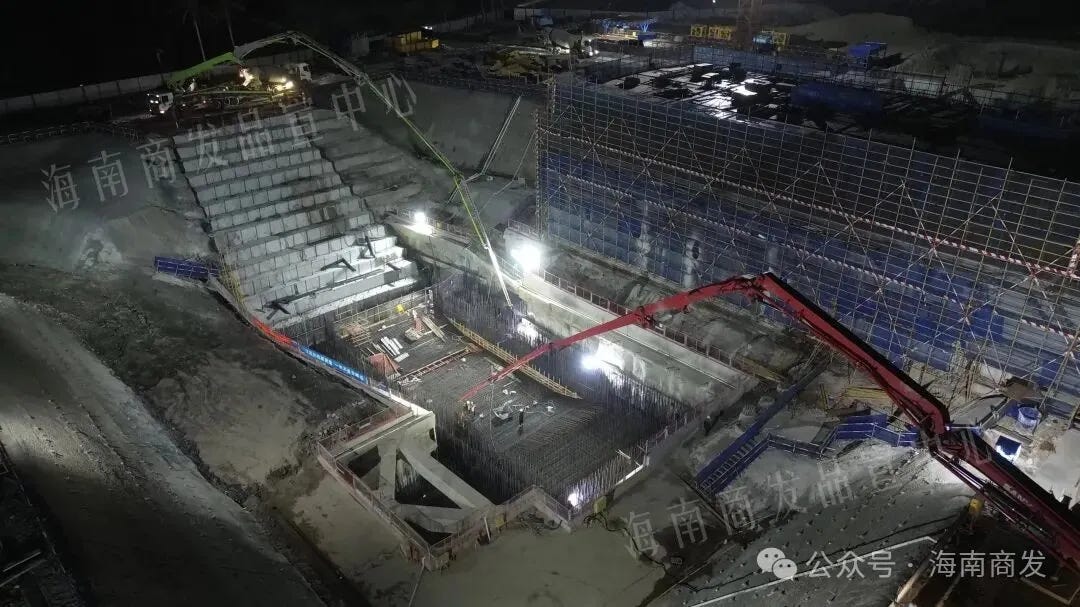
Since then, the build-out of the two pads flame trenches has been underway with preparations for reinforced concrete pouring. On November 12th, concrete pouring began at Commercial Launch Pad 4 for a reinforced base, with rotating shifts monitoring progress over twenty-four hours. A similar process took place at Commercial Launch Pad 3 two weeks later for the base of its flame trench.
Next to the two flame trenches, plumbing for the water deluge system, to protect ground-side infrastructure and launch vehicles from the sound of their engines, as well as the propellant loading systems have had work started. That includes foundations for a launch service-water tank tower2 that will stand next to vehicles preparing to fly.
At the moment, launch site officials expect that the flame trenches will be completed before the end of December, allowing work to continue on systems above and around them throughout the first half of 2026. By the end of June 2026, it is planned that Commercial Launch Pad 3 and Commercial Launch Pad 4 will be completed for commissioning and testing efforts, ready to support missions no earlier than December 2026.
Simultaneously, a new launch vehicle tracking and control station is under construction to support campaigns from the new launch pads. On November 21st, equipment for the facility was delivered to the launch site for installation.
Ahead of commissioning the new launch pads and control station, the operations of the overall launch site have been integrated with a newly approved ‘Intelligent Launch Site System’ to support daily operations and general management currently, following training on data from previous launches from the site. It is planned that the system will eventually have responsibilities including launch vehicle testing support, launch mission information management, and equipment status diagnostics.
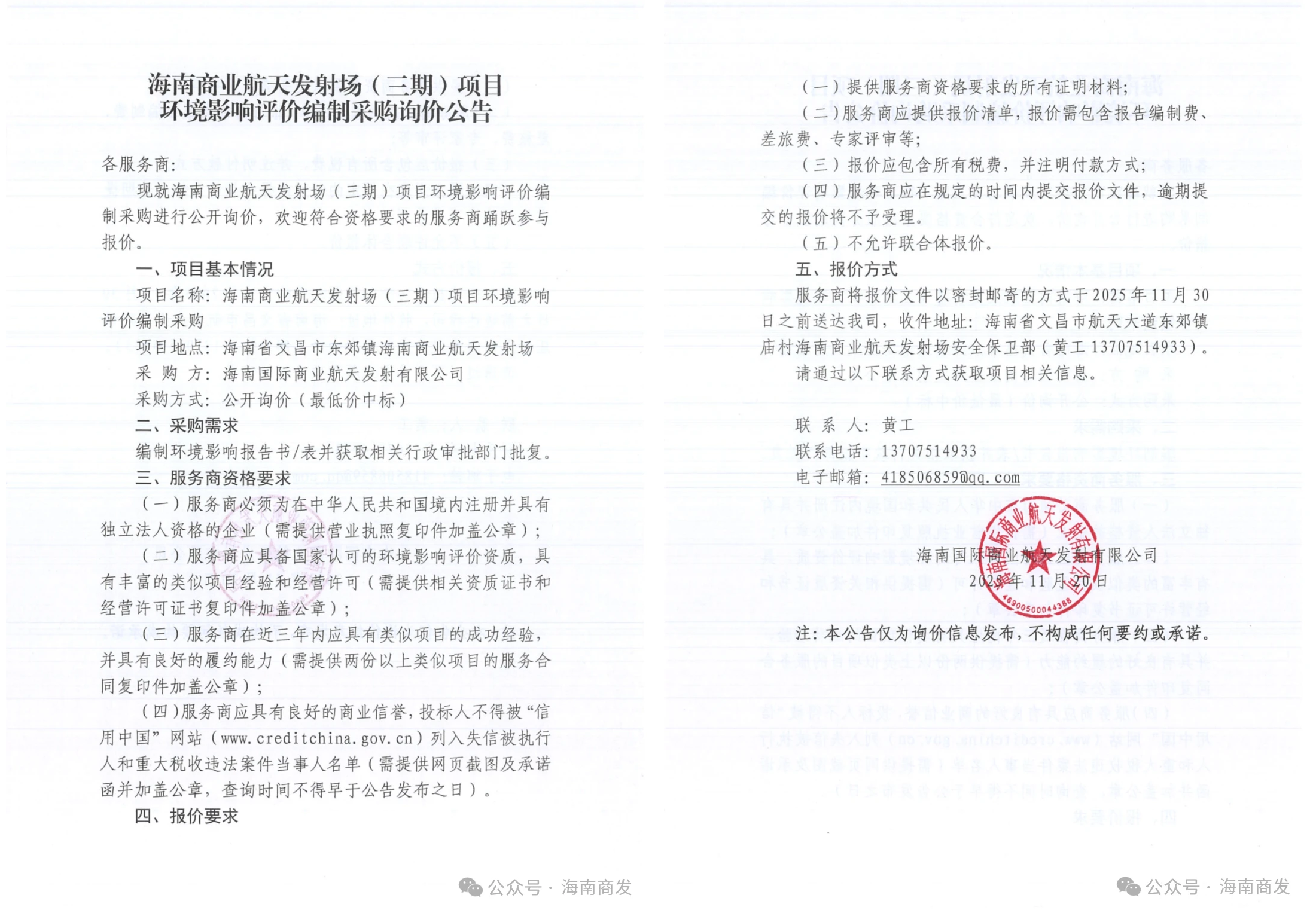
The ‘Intelligent Launch Site System’ may become increasingly important to the site’s continued operations, as there are plans to have four more launch pads for a total of eight before the 2030s. Quite recently, documents were shared online announcing that an environmental assessment for ‘Phase Three’ of expansion is being prepared. It is expected that this phase will see the construction of Commercial Launch Pad 5 through to Commercial Launch Pad 8, all being ‘universal’ pads3.
Hainan International Commercial Aerospace Launch Co Ltd is also interested in operating a fleet of marine assets to support the recovery and reuse of first-stage boosters of launch vehicles flying from its ‘universal’ pads, sharing on November 21st that they are looking to have a company-owned landing platform, a Wenchang-based externally-owned landing platform, and support vessels delivered by the end of 2026. An externally-owned platform may already be heading for Hainan as iSpace is basing its reusable launch vehicle operations out of the launch site, and has recently launched its ‘Qinglan (清澜)’ for recovering boosters. Meanwhile, a launch site-owned platform could be sourced as fast as the China Academy of Launch Vehicle Technology’s ‘Linghangzhe (领航者)’.
While launch operations are scaling up, satellite manufacturing plans are preparing to begin next door to the launch site in the form of a satellite ‘super factory’. Work began on the factory in late 2024 and has been progressing with limited news since. Recently, on December 7th, CGTN shared that the ‘super factory’ is near operational to produce 1,000 satellites each year. According to CGTN, the factory will have facilities to produce entire spacecraft, complete testing, and integrate them into a launch vehicle’s payload fairings, ready for launch in days.
For liquid propellant rockets with a diameter between three and five meters.
At the Wenchang launch sites, propellant loading is handled by launch platforms or transporter erectors (with the exception of Commercial Launch Pad 1) while the towers next to them have vehicle access platforms and the water tanks for a deluge system. This differs from launch sites in the United States, where the two systems are fairly separated, with water deluge tanks a few hundred meters away.
Attached below is a diagram shown to the press to illustrate expansion plans for the Wenchang Commercial Space Launch Site.