

With a Prolonged Pause, Where Are China's Launches?
Holidays, failures, and politics are all parts of the answer.

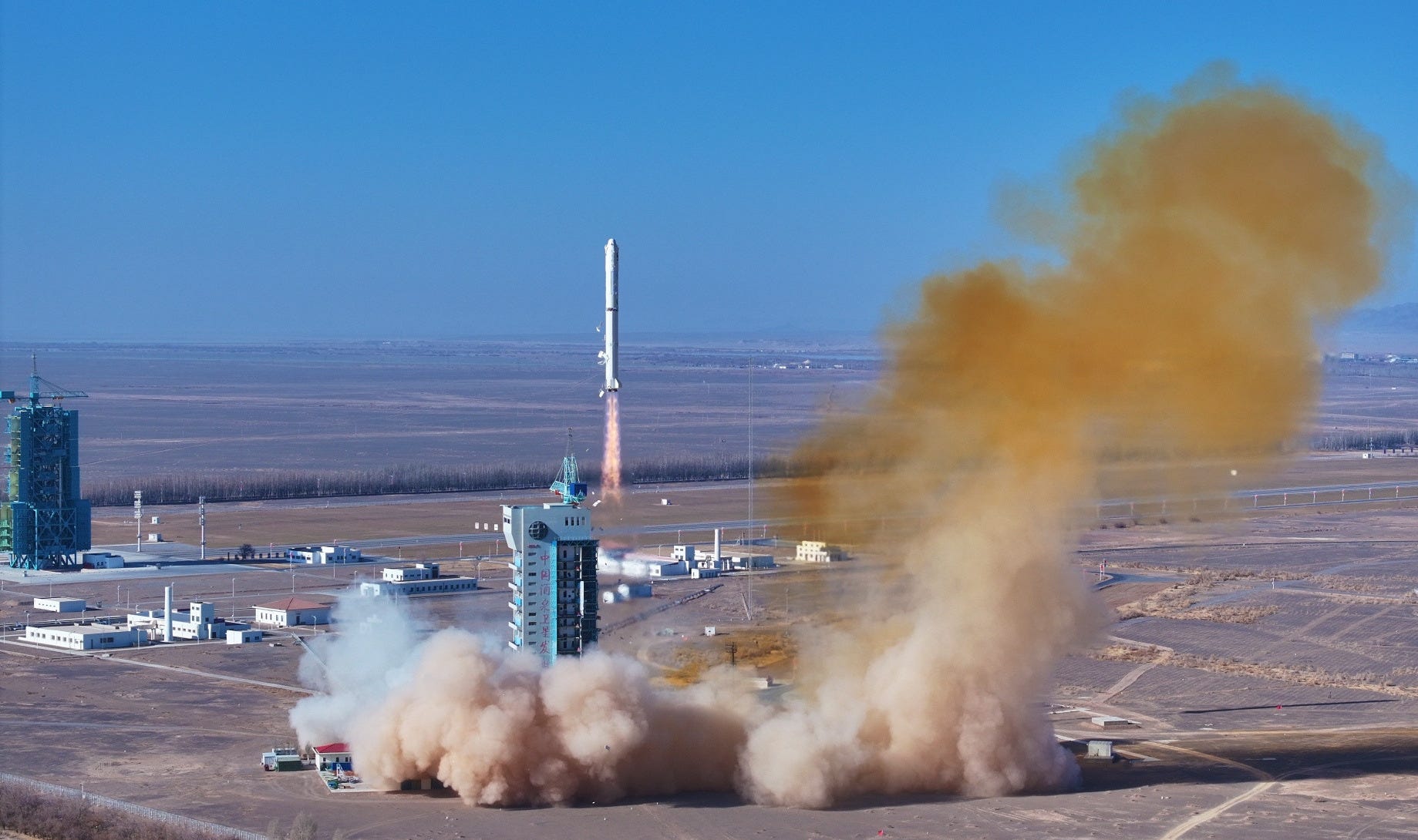
Over three weeks ago, a Jielong-3 departed the South China Sea and deployed seven satellites into orbit for a handful of domestic and international customers. Since then, there has been a prolonged pause in orbital launches from China, leading some to ask where the launch vehicles are.
The first cause of a pause, which occurs every year, was the Spring Festival (春节), running from February 15th to 23rd, and officially a national holiday. For eight days, China slows down to celebrate the festival, marked by family reunions and impressive firework shows. The space sector also slows down, halting launch campaigns and reducing production of hardware, driven by a smaller workforce during the holiday. Those who do stay at work during the Spring Festival are legally entitled to 300 percent pay.
Extending the pause for a handful of launch vehicles was the January 17th failure of a Long March 3B/E with Shijian-32 (实践三十二号卫星). That failure occurred during third-stage flight, a stage shared with the Long March 3A, Long March 3C, Long March 7A, and Long March 8. Consequently, the failure halts launch campaigns for those vehicles until a thorough investigation can be completed. Last time the Long March 3B/E suffered a third-stage issue, it took only seventy-six days to return to flight.
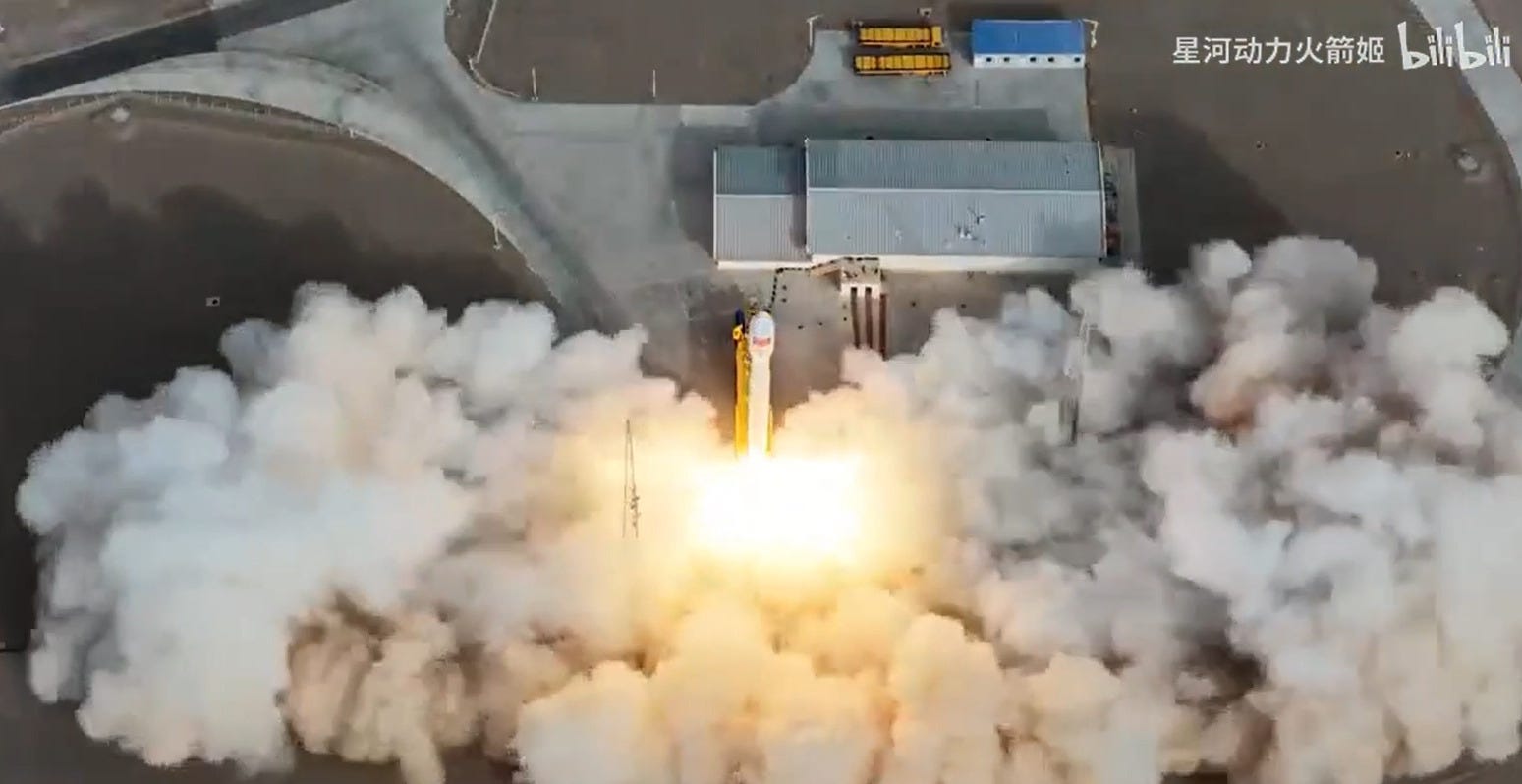
Another failure adding to the pause, which also occurred on January 17th, was that of Galactic Energy’s first Ceres-2. Ceres-2’s failure took place early into flight and was said to have concluded fairly energetically. A current repeated rumour is that the launch vehicle’s flight termination system, used across many other commerical vehicle’s, failed to sufficiently destroy Ceres-2 when commanded. As such, many launch vehicles ready to fly may be grounded for an unknown period.
Meanwhile in Beijing (北京), the Two Sessions (两会) is taking place from March 5th to 12th, with thousands of government officials from the Chinese People’s Political Consultative Conference (中国人民政治协商会议) and National People’s Congress (中华人民共和国全国人民代表大会) meeting to deliberate on policy and national plans. Policies and plans decided at the session will guide China’s state-owned space enterprises for the coming year, as well as signalling government direction in space for the country’s commercial space sector.
This year’s Two Sessions is additionally important, as the 15th Five-Year Plan (for 2026 to 2030) will be finalized during the meetings, with space expected to be a larger part than in previous years. Therefore, slowing down space activity for a little longer before new initial guidance for the current Five-Year Plan period will allow for a more timely response.
Regarding when launches may resume from the current prolonged pause, local and tourism agency chatter points towards the middle of March. In recent days, the Wenchang Commercial Space Launch Site shared that they are preparing for a launch mission in the coming weeks with the Long March 8A. Looking to the rest of the month, a handful of launch vehicles from all of China’s launch sites may liftoff within a few days of each other, based on rumoured preparations.
Compared to where China was in launches in 2025, this year has so far kept pace. As of March 1st 2025, the country had attempted ten launches, a number reached on February 12th this year. January 2026 has also seen two more launches (eight) than January 2025 (six), while February 2026 had one less launch (two) than February 2025 (three).
I am a bit suspicious that there is pause in launches due to some glitches or spring festival holidays or meeting of CPC . I am a little bit afraid that may by , may be, the problem in recent Chinese launches could be due to foreign adversaries cyber or space attacks on China's space industries leading to China to halt those launches and analyze the situation and threat analysis deeply. This is just my gut feeling and nothing that I can forsee or analyze from some open datasets or open sources or news.