

China Moves to Manage Space-Based Computing Efforts
Two technical and working groups have recently been set up under the Ministry of Industry and Information Technology to direct the future of space-based compute in China.

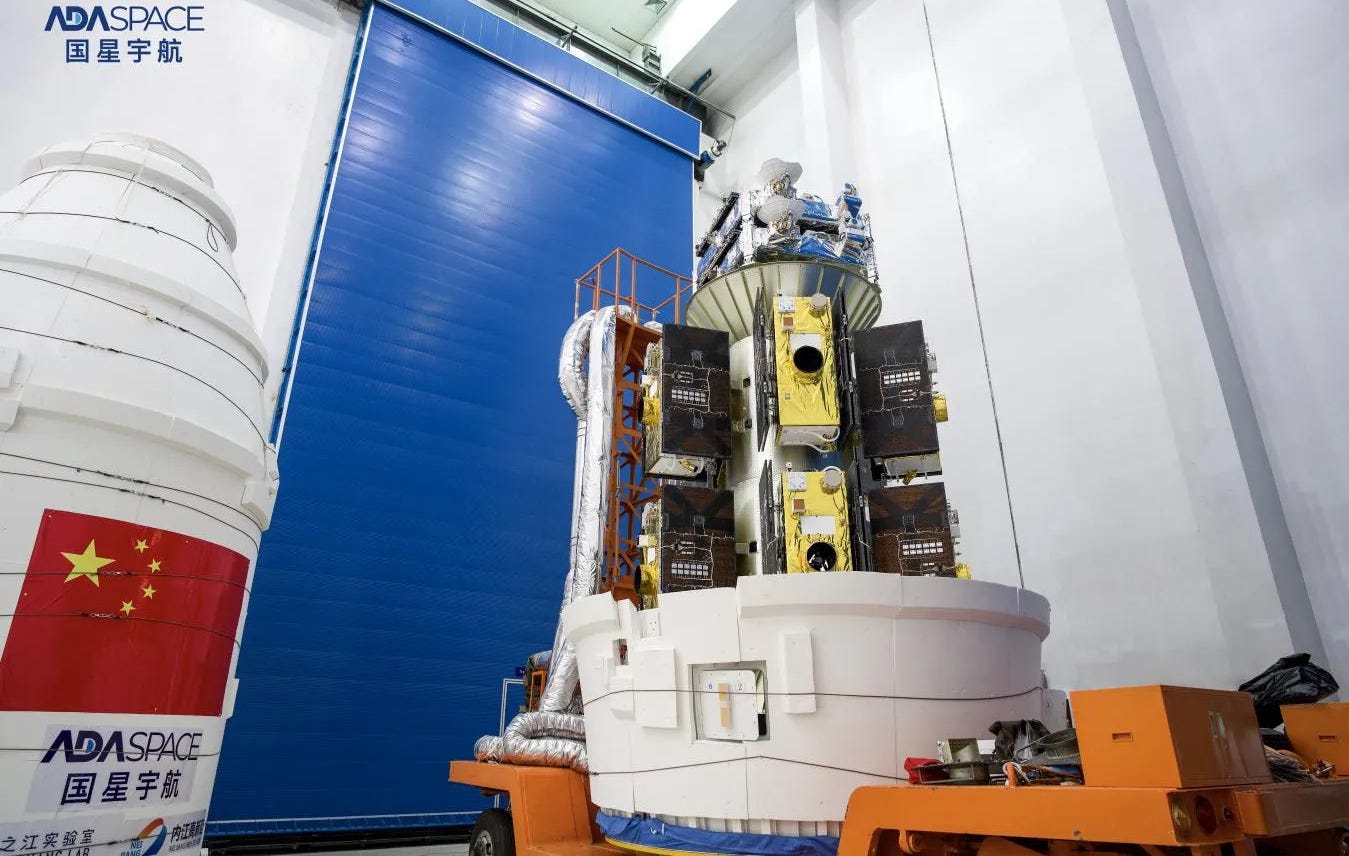
Presently being the global leader of space-based computing efforts, China's space industry, of state-owned and commercial enterprises, is moving to maintain its current momentum and coordinate various efforts as a result of meetings in recent weeks.
Back at the start of April, many enterprises gathered for the 2026 Space Computing Industry Conference (2026太空算力产业大会) to understand the state of several efforts in deploying the service into orbit. Several government officials at the central government and municipal levels attended the conference.
A result of the conference was the establishment of the ‘Space Computing Technical Group (太空算力专业委员会)’ under the China Academy of Information and Communications Technology (中国信息通信研究院) at the Ministry of Industry and Information Technology (中华人民共和国工业和信息化部), with leading enterprises, research institiutions, and academics being members. The primary focus of the technical group is to further relevant research efforts, explore novel applications, and encourage collaboration within China and internationally.
Also announced was a collaborative innovation center to make key innovations for the mentioned focus areas, while a funding grant challenge has been established to support potential breakthroughs for space-based computing, for ten projects per year receiving 10 million Yuan (1.47 million United States Dollars, as of June 5th) each.
Three weeks ago, on June 3rd, the ‘Space Computing Working Group (太空计算工作委员会)’1 was established at another industry meeting, attended by academics, computing chip manufacturers, satellite developers, spacecraft systems producers, and launch providers. This working group is under the China Computer Industry Association (中国计算机行业协会), which is also under the Ministry of Industry and Information Technology.
Those in attendance recognised the infancy of space-based computing as a business and set out to promote coordinated development during the 15th Five-Year Plan period (2026-2030), with a focus on the national industrial layout and integration among enterprises. Over one hundred enterprises are reportedly interested in the Working Group, with those actively working on radiation-resistant chips, orbital computing systems, space power management, communications throughput, and constellation management.
In reporting on April’s conference, Xinhua learned from LandSpace, of the Zhuque launch vehicles, that its experts expect space-based computing efforts alongside other satellite deployments to require five hundred launchers per year2. Reusable launch vehicles will make all of the needed orbital deployments significantly cheaper.
Both the ‘Space Computing Technical Group’ and the ‘Space Computing Working Group’ are being managed by separate departments of the Ministry of Industry and Information Technology, as one is focused on software innovation and the other on hardware breakthroughs. In managing the space-based compute groups in separate departments at the same government ministry, China is following its proven method of supporting new and emerging parts of industries with a mixture of state direction and patronage to select enterprises. That is also a part of early policy outlining and eventual regulation.3
Last month, Orbital Chenguang (轨道辰光), an incubator for Beijing Astro-Future Institute of Space Technology (北京星辰未来空间技术研究院), secured 57.7 billion Yuan (8.5 billion United States Dollars) in strategic credit from several major Chinese banks to support its step-by-step space-based computing efforts over the next decade. Meanwhile, ADA Space (国星宇航) and Zhejiang Laboratory (之江实验室) are actively developing the Three-Body Computing Constellation, and the China Aerospace Science and Technology Corporation is aiming to establish a gigawatt worth of space-based compute, among others.
A demand for space-based computing, mainly in the United States and China, has come primarily from the AI sector as a means of avoiding limitations with existing power grids and skipping environmental review processes for terrestrial data centers. Zhao Ce (赵策), Deputy Head of the Department of Information and Communication Technology Development at the Ministry of Industry and Information Technology, spoke to China Daily in April to outline other advantages of space-based compute:
“Space computing offers advantages such as real-time in-orbit processing, low-cost energy, and wide-area coverage. These capabilities help improve the efficiency of space-based data processing, enhance space energy development, strengthen global coverage and anti-jamming capabilities, and expand the boundaries of network applications.”
Full name China Computer Industry Association Space Computing Working Group (中国计算机行业协会太空计算工作委员会).
Using medium-lift launch vehicles, those able to carry 2,000 to 20,000 kilograms, and others with greater lift capabilities.
Pages 352-355 and 396-397 discuss this in the Mercator Institute for China Studies’ 2015 book ‘China’s Political System’. ISBN: 978-1-4422-7735-9.