

ExPace Rocket Disappears After Liftoff From Jiuquan [Kuaizhou-11 Y13]
Having made its smaller launch vehicle vanish last year, the company has repeated the feat for several hours.

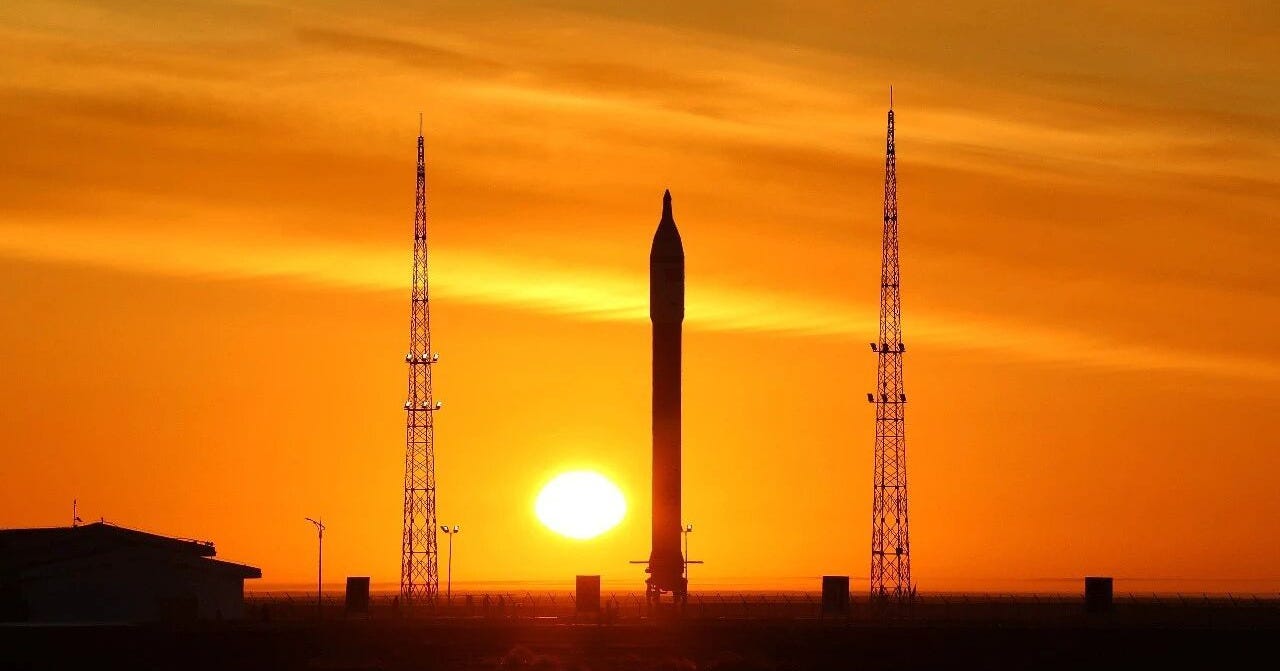
On the morning of June 17th, at 11:58 am China Standard Time (03:58 am Universal Coordinated Time) at the Jiuquan Satellite Launch Center, ExPace’s Kuaizhou-11 launch vehicle began its latest trek into orbit with a handful of customer satellites onboard.
However in the hours after launch, which was witnessed by visitors to the site, no announcement of the mission’s conclusion was made by ExPace or Jiuquan’s media team. The launch vehicle definitely made it through several minutes of flight successfully, as spent stages were found within established hazard zones.
As for what happened later in flight is unknown. Some sources say that Kuaizhou-11 failed late into its flight, possibly in a shallower orbit than planned, while others say it made it to a customer’s desired orbit before at least one of the satellites began to have a major issue.
Unlike launch providers in the West, Chinese enterprises prefer to announce mission success after all customer payloads are verified to be healthy and communicative.
Whether orbit or satellite deployments were achieved during the launch attempt will be disclosed by orbital object tracking organisations. ExPace could also provide an update on the flight tomorrow morning in China.
Update1: Tracking data from the U.S. Space Force suggests that Kuaizhou-11 achieved orbit and deployed eight satellites, then performed a deorbit burn. Based on the orbital inclination, 55 degrees2, and source chatter, those satellites likely belong to Future Navigation’s (未来导航)3 positioning service, being its third deployment of them.
Update4: ExPace and Jiuquan have confirmed the completion of the launch mission to deploy Future Navigations CentiSpace Group-05 (将微厘空间05组卫星), its third overall. The phrasing of complete success is lacking from both statements, possibly meaning an eighth satellite was launched but failed to separate5. Emposat (航天驭星) also added that they provided communications and tracking support for the deployments.
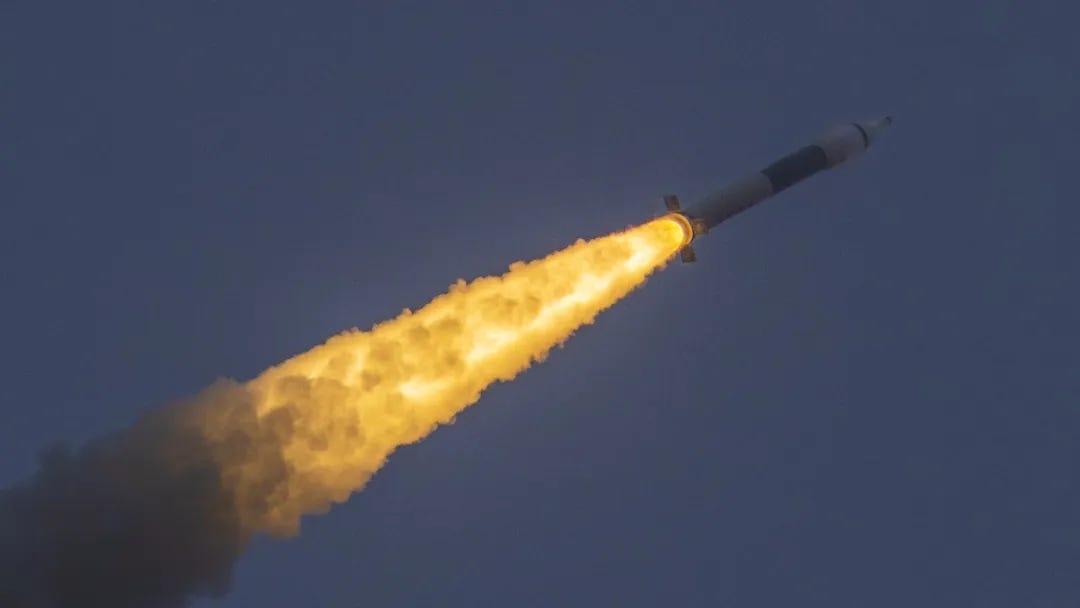
Complicating things is that ExPace’s previous launch failure, with its smaller Kuaizhou-1A fifteen months ago, was not acknowledged. A return to flight mission made no mention of the process of doing so, rather focusing on upgrades to many systems.
Going into today, Kuaizhou-11 has only had one failure, which occurred during its July 2020 debut flight. A return to space for the vehicle took over two years, occurring in December 2022, before going on hiatus until May 2024. Since then, ExPace has sought to pick up the cadence and increase the capabilities of the solid propellant launch vehicle, adding a wider fairing option and optimizing costs.
Today’s launch was the 6th Kuaizhou-11 mission, and the 40th flight of the Kuaizhou series. This was also the 43rd launch attempt from China in 2026.
Liftoff video via 大漠问天 on WeChat.
Check out the previous Kuaizhou launch
Orbital Refueling Test, AI Earth Observation Demo Satellites Delivered by Rideshare Launch [Kuaizhou-11 Y7]
![Orbital Refueling Test, AI Earth Observation Demo Satellites Delivered by Rideshare Launch [Kuaizhou-11 Y7]](https://substackcdn.com/image/fetch/$s_!feDC!,w_1300,h_650,c_fill,f_webp,q_auto:good,fl_progressive:steep,g_auto/https%3A%2F%2Fsubstack-post-media.s3.amazonaws.com%2Fpublic%2Fimages%2Fc50fec26-1814-4916-b888-59c3135a86f6_2235x1251.jpeg)
From the Jiuquan Satellite Launch Center’s Launch Site 95, ExPace’s Kuaizhou-11 soared skyward at 12:12 pm China Standard Time (04:12 am Universal Coordinated Time) on March 16th, carrying eight customer satellites towards a sun-syn…
What is Kuaizhou-11?
This section is for those less familiar with China’s various commercial launch vehicles.
Kuaizhou-11 is a larger commercial launch vehicle from China, developed by the China Aerospace Science and Industry Corporation and manufactured by ExPace. The vehicle consists of three 2.2-meter-diameter solid-fueled stages, burning an unspecified solid propellant with a liquid-fuelled fourth-stage for orbital insertion. There are also options of a 2.2-meter inline fairing and a wider 2.65-meter-diameter fairing.
The payload capacity of the launch vehicle is currently as follows:
1,500 kilograms to low Earth orbit
1,000 kilograms to a sun-synchronous orbit
On the launch pad, Kuaizhou-11 is 25 meters tall with a fairing diameter of 2.2 meters. Once prepared to fly, the rocket weighs around 78,000 kilograms. The first-stage features four grid fins for flight control low in the atmosphere, while thrusters at the top maintain control afterward.
So far, the Kuaizhou-11 has only flown from the Jiuquan Satellite Launch Center.
As of 20:45 pm Universal Coordinated Time.
Full name Beijing Future Navigation Technology Co Ltd (北京未来导航科技有限公司).
As of 10:30 am Universal Coordinated Time on June 18th 2026.
A possibility as only seven satellites and the fourth-stage are tracked.