

Uzbek, Indonesian Satellites Launched and Made by China [Jielong-3 Y12]
Two AI-equipped hyperspectral remote sensing spacecraft produced by STAR.VISION are now in space for their international clients.

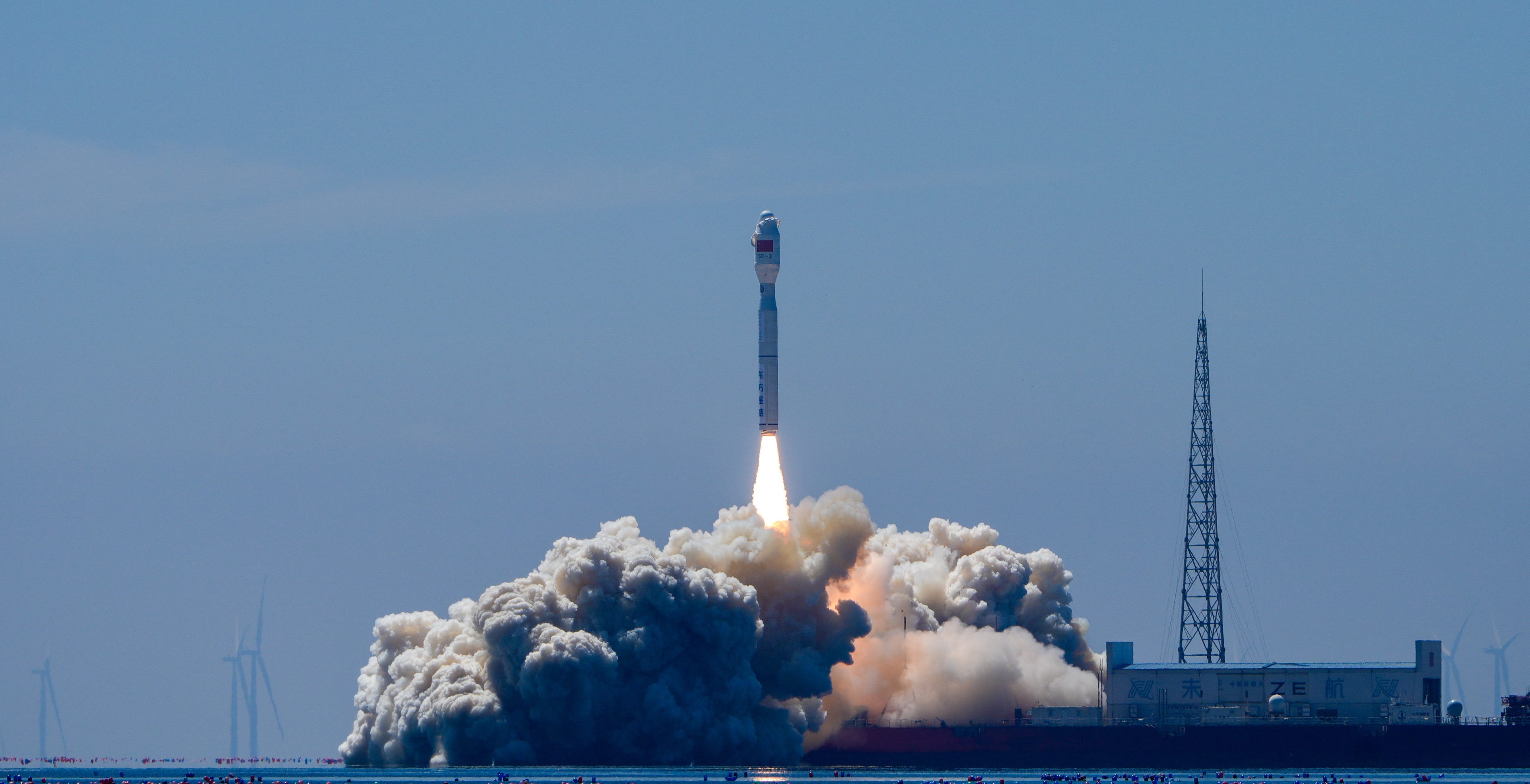
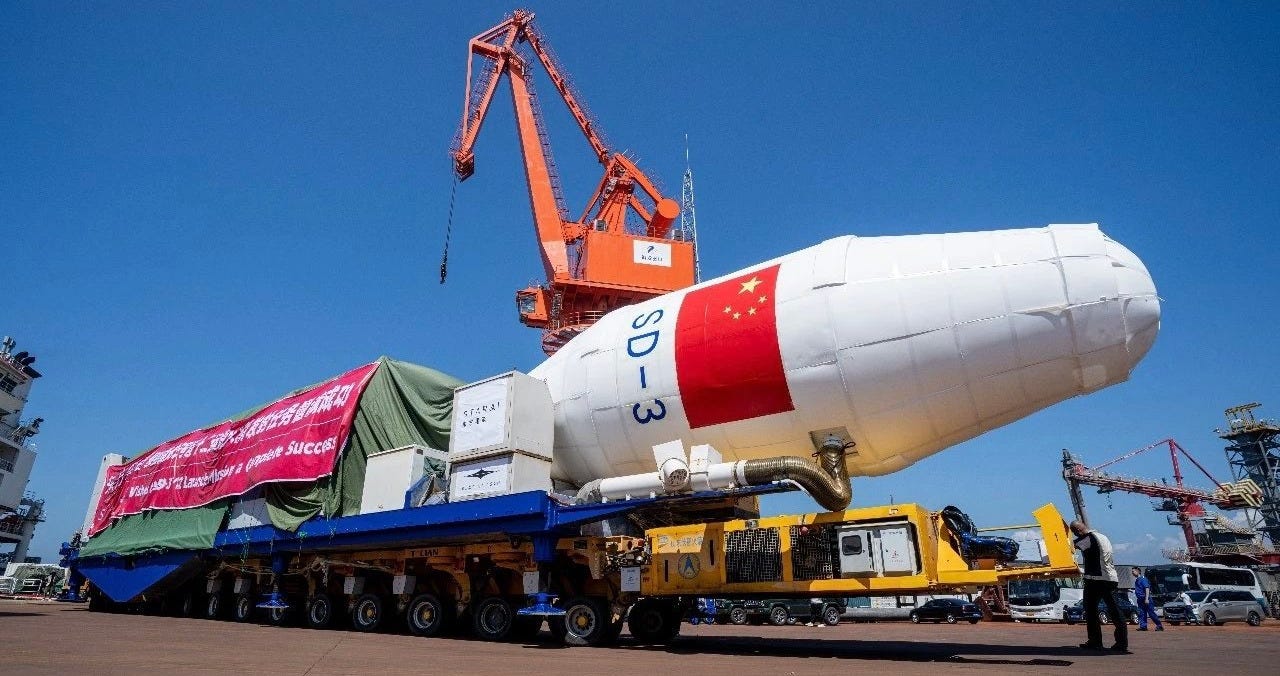
Blasting off from the Yellow Sea near Haiyang (海阳市), Shandong (山东) province, a Jielong-3 ascended at 10:38 am China Standard Time (02:38 am Universal Coordinated Time) on August 5th, flying an island-avoiding path toward a sun-synchronous orbit for two international customers.
Those customers were Indonesia’s National Research and Innovation Agency and Uzbekistan's space research agency, Uzcosmos, both having bought hyperspectral remote sensing spacecraft from commercial satellite maker STAR.VISION Aerospace (地卫二空间技术).
Indonesia’s satellite is dubbed Lampung-1 and is mainly tasked with supporting the nation’s growth of its marine economy, monitoring environmental changes in support of eco-governance, and providing insights into agricultural challenges. An agreement for the satellite was completed fourteen months ago in May 2025.
Known as Samarqand-2028, Uzbekistan plans to use its spacecraft for supporting the agricultural sector, ecological monitoring efforts across the nation and Central Asia, alongside unspecified technology innovation. Uzcosmos came to an agreement with STAR.VISION in November 2025, about nine months prior to launch.
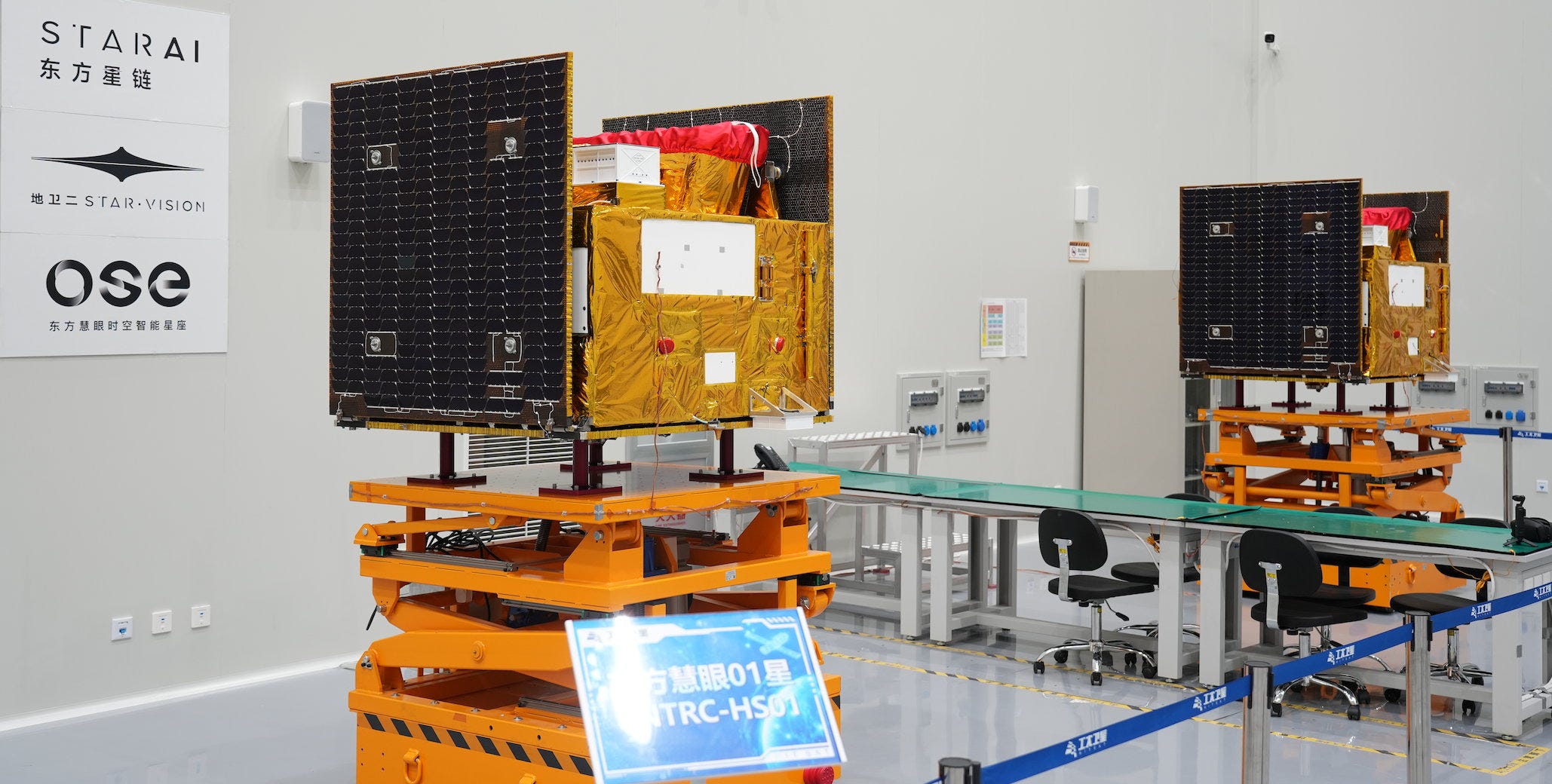
While being bought many months apart, the Indonesian and Uzbek spacecraft are twins that mass 300 kilograms. Both can collect images at a resolution of 5 meters in a 300-kilometer-wide swath while revisiting locations every five days. Supporting that, they are equipped with local artificial intelligence systems to pre-process collected data, kept within 10 terabytes of onboard storage. Both satellites also carry the designations Oriental Star Satellite-05 and 06 (东方星链05/06星)1 as part of STAR.VISION’s Oriental Smart Eye Intelligence Network (东方慧眼时空智能星座).2
The flight of Jielong-3 today comes after an almost three-month break between missions, with the last having occurred in April that ended a trio of launches, due to its launch vessel being used elsewhere. In a brief post-launch blog post from the China Academy of Launch Vehicle Technology, the break was not mentioned, instead with focus on stated efforts to increase flight cadence through optimized pre-flight processes and greater production cadence, while maintaining Jielong-3’s perfect reliability record.
In a milestone for the cadence of missions from the Haiyang Oriental Spaceport (海阳东方航天港), the launch vessel ‘Dongfang Hangtiangang (东方航天港)’ was converted from supporting the third flight of OrienSpace’s Gravity-1 to Jielong-3 in two weeks. That includes sailing back to Haiyang from the East China Sea near Shanghai (上海市), to removing Gravity-1’s large launch platform, and installing Jielong-3’s support garage and uprighting system. The large flame diverter in the middle of the vessel was bolted shut, and the smaller one off the back of it was opened up as part of that conversion.3
Today’s launch was the 12th mission for the Jielong-3 launch vehicle. This was also the 55th launch from China in 2026.
Liftoff video via 我们的太空 on WeChat, China航天 and 如你青涩 on Weibo.
Launch livestream via International Rocket Launches on YouTube.
Check out the previous Jielong-3 launch
GuoWang Test Satellite Launched by High-Flying South China Sea Mission [Jielong-3]
![GuoWang Test Satellite Launched by High-Flying South China Sea Mission [Jielong-3]](https://substackcdn.com/image/fetch/$s_!nz27!,w_1300,h_650,c_fill,f_webp,q_auto:good,fl_progressive:steep,g_auto/https%3A%2F%2Fsubstack-post-media.s3.amazonaws.com%2Fpublic%2Fimages%2F8bbfa5e7-0231-498a-9e2c-b52ee746f455_3718x1976.jpeg)
Near Yangjiang (阳江市), Guangdong (广东) province, a Jielong-3 blasted off from a dedicated launch ship from the South China Sea at 19:32 pm China St…
What is Jielong-3?
This section is for those less familiar with China’s various commercial launch vehicles.
Jielong-3, also referred to as Smart Dragon-3, is a four-stage solid-fueled launch vehicle manufactured by the China Academy of Launch Vehicle Technology. The vehicle is operated commercially via a wholly-owned subsidiary of the China Academy of Launch Vehicle Technology called China Rocket. All four stages are believed to burn an unspecified solid propellant, with the first-stage generating 200 tons of thrust.
The payload capacity of the launch vehicle is currently as follows:
1,600 kilograms to a 500-kilometer sun-synchronus orbit.
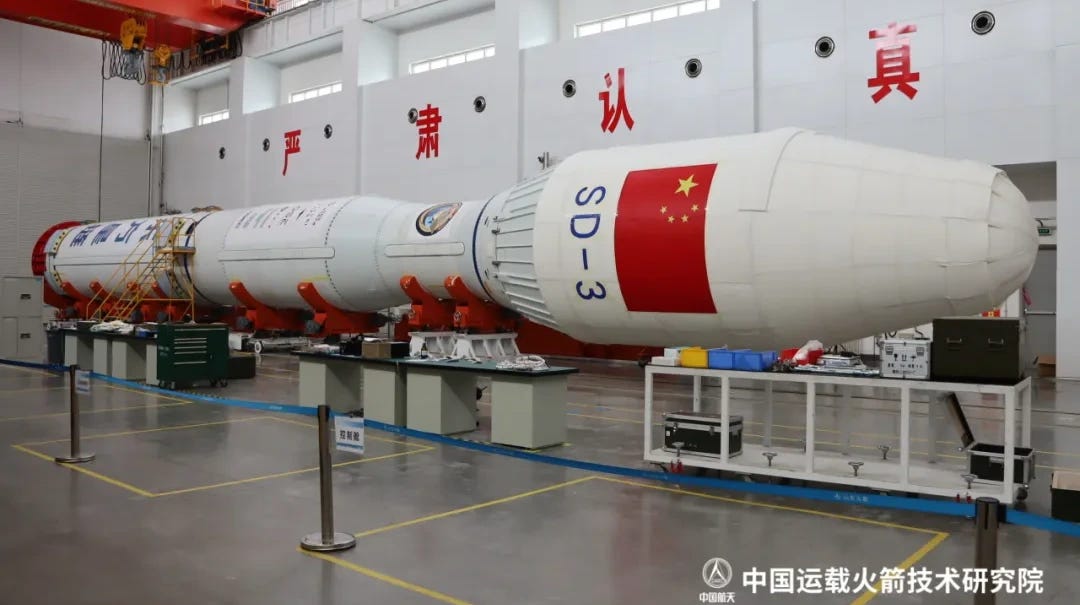
On a launch platform, Jielong-3 is believed to be 31 meters tall. Details about the four stages of the vehicle are scarce but the first two stages have a diameter of 2.64 meters, with the fairing having a diameter of 3.35 meters. When prepared for launch Jielong-3 weighs a believed 145,000 kilograms.
So far Jielong-3 has flown from sea launch platforms in the East China Sea, South China Sea, and Yellow Sea.
As well as the sub-designations Oriental Intelligence Hyperspectral Satellite-01 and 02 (东方慧眼高光谱01/02星)
Which is made up of the company’s own satellites and those from international partners, like an Oman-bought satellite launched in November 2024.
Conversions between launch-supporting hardware can be undone, and none are permanent.