

Wenchang Launch Begins GuoWang Deployments in 2026 [Long March 8A Y7]
Nine GuoWang satellites have been added to the constellation in low Earth orbit, with many more planned to follow this year.

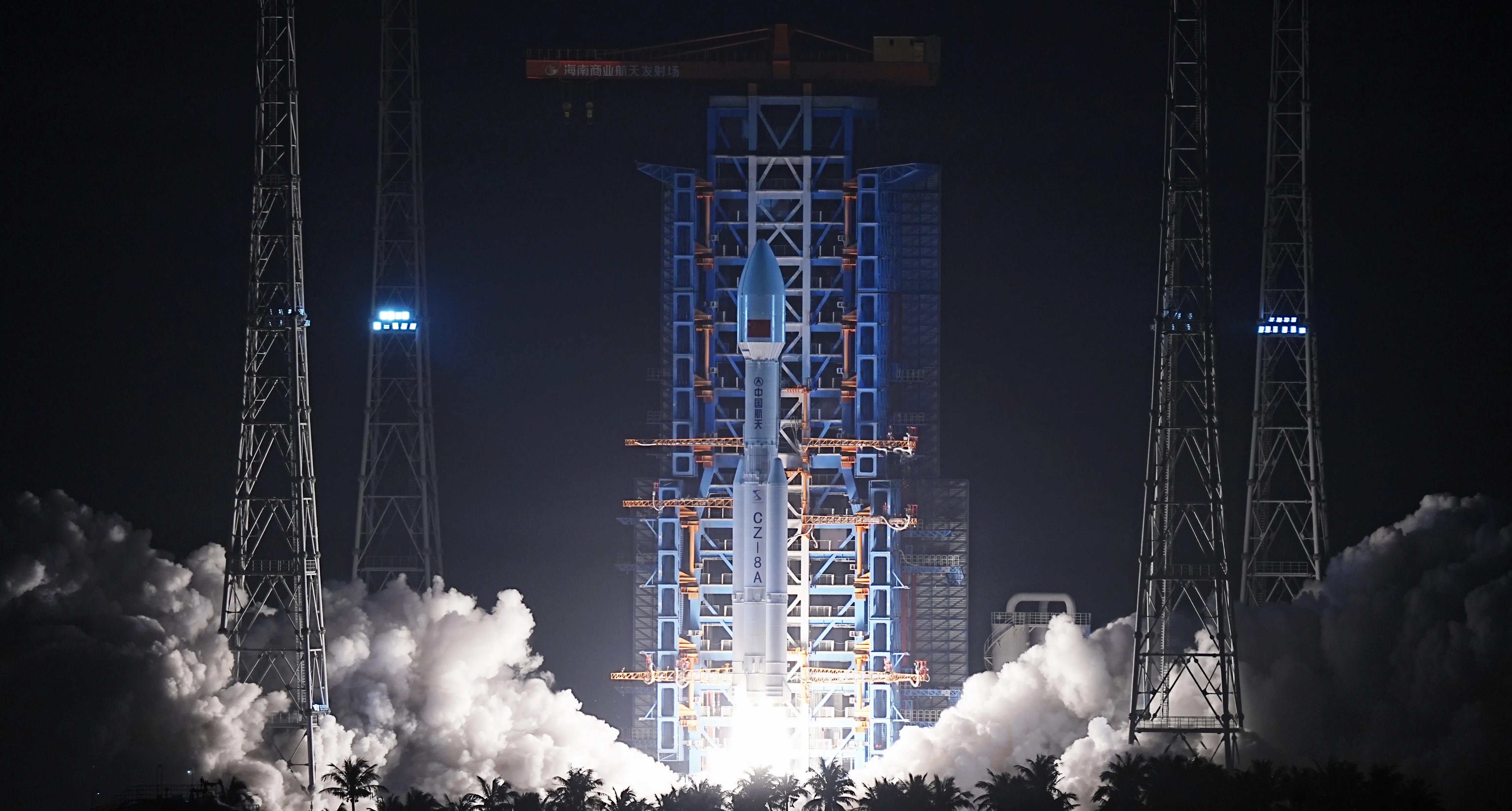
At 23:25 pm China Standard Time (15:25 pm Universal Coordinated Time) on January 13th, a Long March 8A lifted off from Commercial Launch Pad 1 at the Wenchang Commercial Space Launch Site, heading into low Earth orbit with a group of satellites.
Atop the rocket was the eighteenth group of GuoWang satellites, with nine being deployed from the second-stage1. This group for the constellation was developed by the China Academy of Space Technology, also bringing the academy to over 600 spacecraft launched since 1970.
The GuoWang (国网) constellation is operated by China Satellite Network Group, a state-owned enterprise and wholly backed by the Chinese government. China Satellite Network Group plans to provide worldwide internet services; for now, China-focused services are the immediate priority.
After today’s launch, 145 GuoWang spacecraft are in orbit, functioning in and heading up to their operational orbits. This year, it is planned that 310 satellites2 will be deployed, followed by 900 in 2027, and 3,600 every year beginning in 2028 to sustain and grow the constellation. In the 2030s, up to 13,000 satellites could be in operational orbit.
Two different satellite variants are believed to be in use for the GuoWang constellation, a larger version used on vehicles like the Long March 5B, while smaller ones are used when launched atop rockets such as the Long March 12 or Long March 6A. An electric propulsion system is used due to operational orbits above 1000 kilometers on the trapezoidal-shaped satellites, which feature two solar panels for power.
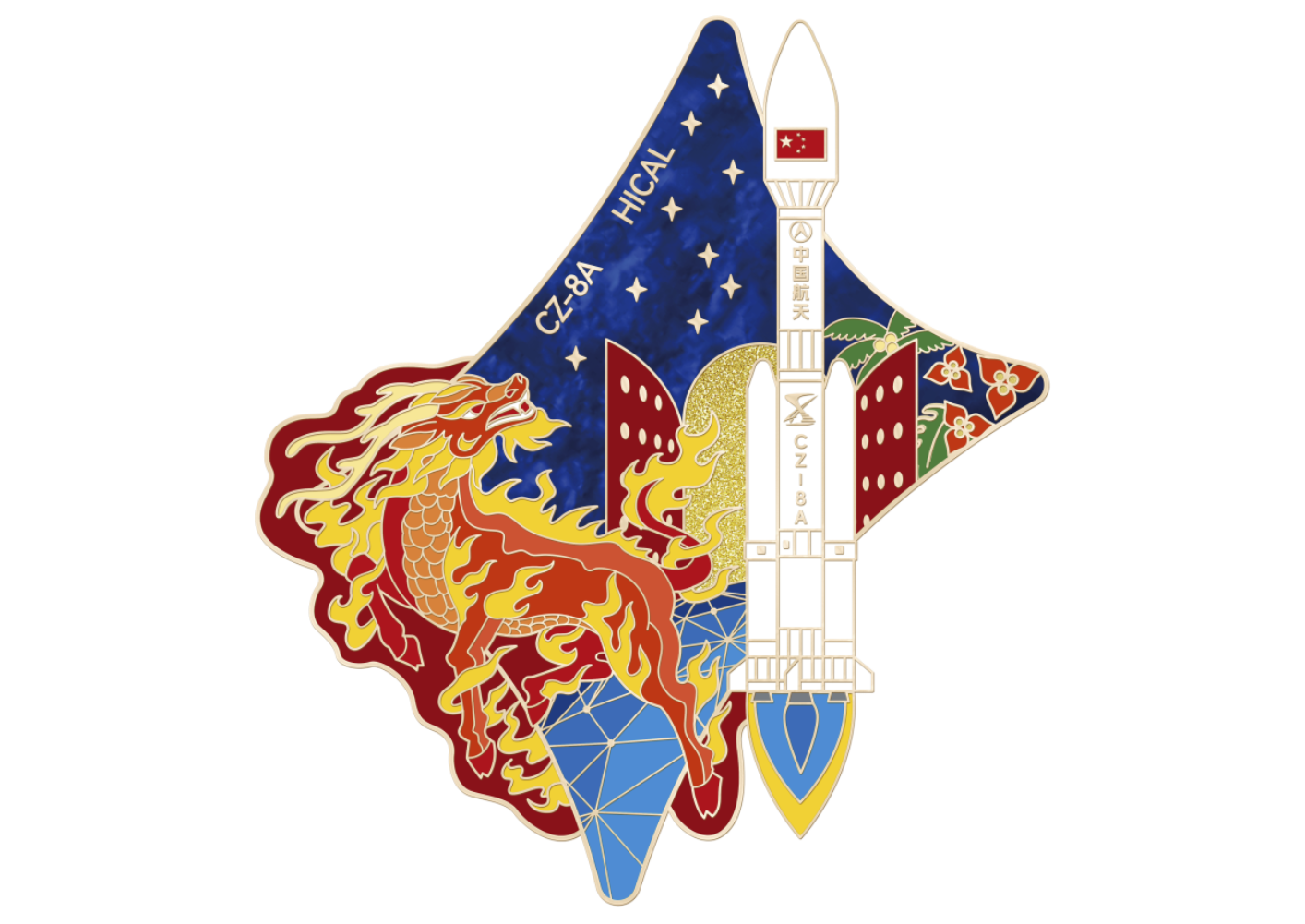
In their post-launch blog post, the China Academy of Launch Vehicle Technology noted that this Long March 8A mission, for the first of 2026, took place only eighteen days after the previous one, thanks to continued launch preparation optimization and compression. Hainan International Commercial Aerospace Launch Co Ltd (海南国际商业航天发射有限公司), operator of the launch site, added that for today's mission, the launch vehicle was on the launch pad for five days, instead of ten, for testing and preparations.
It was also shared by the Launch Vehicle Academy that the Long March 8A will fly a ‘higher density’ of missions than was performed in 2025 (six between February and December). At most, the Long March 8A could fly fifteen more times this year, with aims for at least ten in 2026.
This mission was the 7th launch of a Long March 8A vehicle, the 11th launch of the Long March 8 series, and the 625th launch of the Long March launch vehicle series. This was also the 2nd launch from China in 2026.
Liftoff footage via 海南商发 on WeChat.
Launch livestream via ThatSpaceDogeGuy on YouTube.
Check out the previous Long March 8A launch
Long March 8A Completes Debut Year With GuoWang Mission [Long March 8A Y6]
![Long March 8A Completes Debut Year With GuoWang Mission [Long March 8A Y6]](https://substackcdn.com/image/fetch/$s_!Xkfd!,w_1300,h_650,c_fill,f_webp,q_auto:good,fl_progressive:steep,g_auto/https%3A%2F%2Fsubstack-post-media.s3.amazonaws.com%2Fpublic%2Fimages%2Fbd1c3be6-aad1-484b-a0e2-590b1c8934d5_2282x1046.jpeg)
A Long March 8A soared into the early morning sky over Commercial Launch Pad 1 at the Wenchang Commercial Space Launch Site on December 26th at 07:26 am China Standard Time (December 25th at 23:26 pm Universal Coo…
What is the Long March 8A?
This section is for those less familiar with China’s Long March series of launch vehicles.
The Long March 8A is an improved and more cost-efficient upgrade of the Long March 8 and the future workhorse of its developer, the China Academy of Launch Vehicle Technology. The vehicle utilizes a two-and-a-half-stage design and is fuelled by rocket-grade kerosene and liquid oxygen in its first-stage and boosters along with liquid hydrogen and liquid oxygen in the second-stage.
The payload capacity of the launch vehicle is currently as follows:
9,800 kilograms to low Earth orbit
7,000 kilograms to a 700-kilometer sun-synchronous orbit
6,800 kilograms to a 900-kilometer sun-synchronous orbit
3,500 kilograms to geostationary transfer orbit
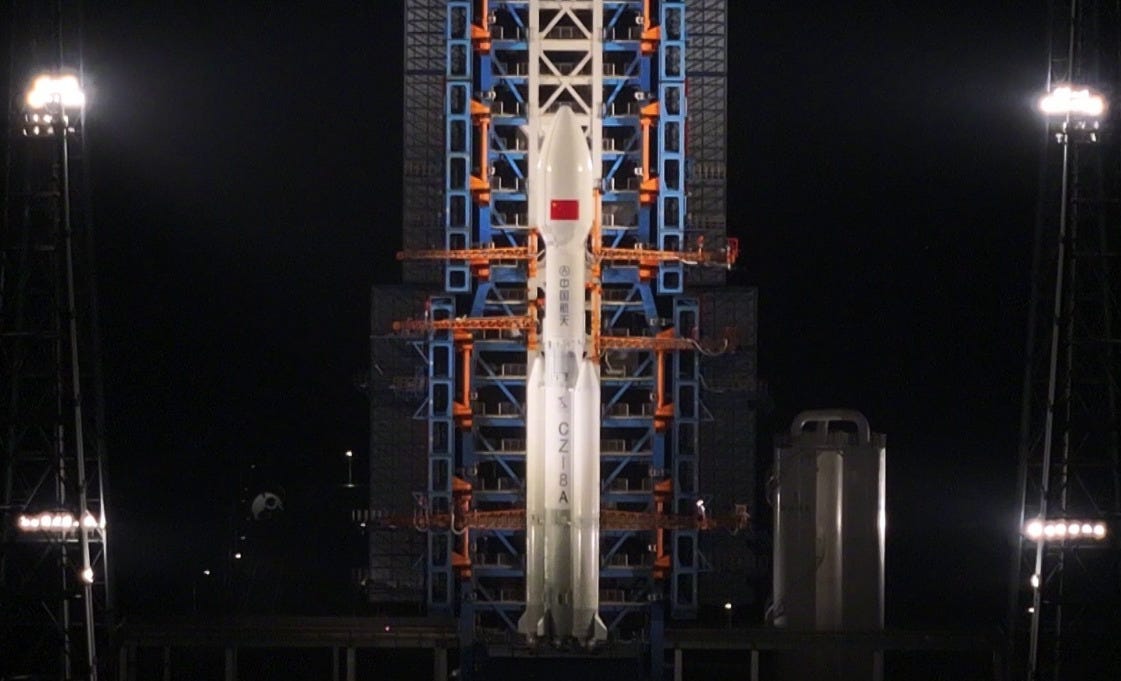
The Long March 8A’s boosters and first-stage are powered by YF-100 engines, with two engines on the first stage and one on each of the two boosters, generating a combined thrust of 490 tons at liftoff. The second-stage is equipped with two YF-75DA engines, which produce 20 tons of thrust.
On the launchpad, the core alone Long March 8A stands at 50.5 meters tall and weighs 371,000 kilograms when fully fuelled. The first and second-stage have a diameter of 3.35 meters, the two boosters have a diameter of 2.25 meters, while the fairing has a diameter of 4.2 or 5.2 meters.
Currently, the Long March 8A is flown from the Wenchang Space Launch Site and the Wenchang Commercial Space Launch Site, both on the east coast of Hainan province.


Every Long March 8A launch has carried nine GuoWang satellites:
So far, 9 out of 310.
CAST just launched 600 spacecrafts since 600 so that means just close to 10 spacecrafts per year and that is very alarming. CAST has extremely high talented people and their spacecrafts tally should reach now more than 10,000 . To cover this CAST should significantly increase her spacecraft deployment frequency otherwise giants like SpaceX , BlueOrigin and RocketLab will seize every strategic orbit from China in coming years.