

What Nations Are Going to the Moon via Chang'e 7?
Seven international partners will venture to lunar space next month with China to perform many scientific tasks.

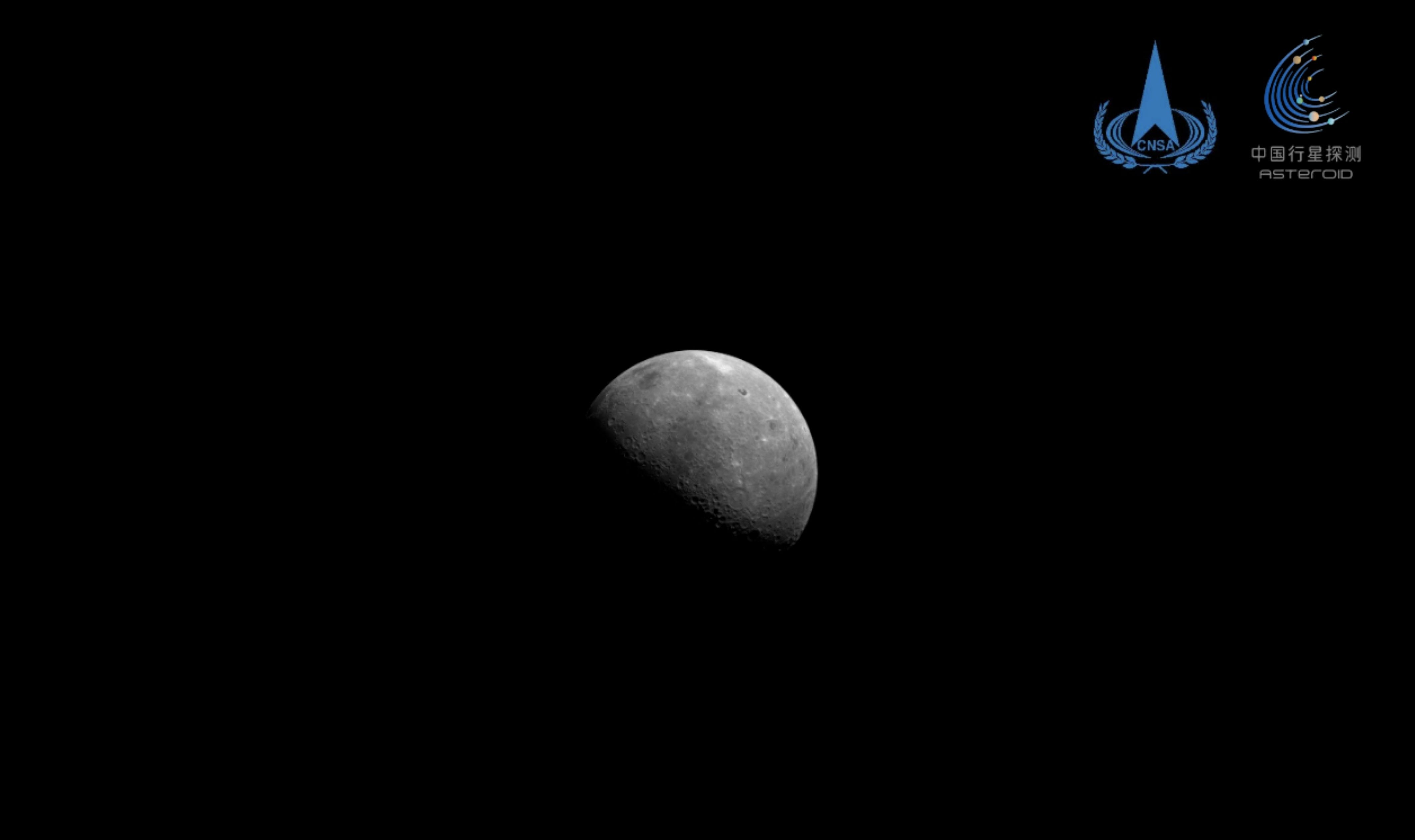
As early as August 24th, China will begin its Chang’e 7 robotic Moon mission to search for lunar water ice at our closest celestial neighbour’s south pole. In preparation for it, the Long March 5 launch vehicle for delivering it towards a ninety-day polar lunar orbit is undergoing preparations at the Wenchang Space Launch Site, and the spacecraft itself is well into final tests.
As part of late work to prepare for the mission’s scientific task, Chang’e 7’s two dozen instruments have been installed across its orbiter, lander, rover, and hopper. A handful of those are from seven nations and international partners to support the water ice search, explore other questions about the Moon, and fulfill technology development goals.
So, which countries are on board, and to do what?
Heading to the surface
The only non-nation-state member as an instrument provider for Chang’e 7 is the International Lunar Observatory Association, who have its ILO-C. Work on the instrument was jointly led by the Hawaii-headquartered organization and the University of Hong Kong’s (香港大学 / 香港大學) Laboratory for Space Research, with additional efforts from across the U.S., China, Thailand and Indonesia.
ILO-C, as one of the leading organizations name suggests, is a small astronomical observatory equipped with a Sony IMX253 sCMOS sensor. Once brought to the lunar surface, the instrument will begin capturing images of the celestial sky in the visible and ultraviolet wavelengths every three seconds. Expected imaging targets include parts of the Milky Way galaxy and surrounding parts of the universe, available as the Moon rotates. Observations with ILO-C are expected to take place for about a lunar day, which is up to two Earth weeks.
Alongside the observatory is the Russian Academy of Sciences’ ‘PmL-Ch7’ suite, consisting of a lunar dust detector and a Langmuir probe. Through being installed on the lander, the instruments are set to investigate the Moon’s thin exosphere particles of plasma and dust, along with its interaction with solar winds and radiation. The dust detector will determine the size and speed of exosphere material when they hit specially-configured sensors, while the Langmuir probe picks up the temperature and density of nearby plasma. ‘PmL-Ch7’ is an improved version of a failed instrument that was onboard the failed Luna-25, and may be a part of further lunar exosphere research performed by the proposed Luna-27 pair.
The last instrument being brought to the surface is a laser retroreflector array made by Italy’s Laboratori Nazionali di Frascati. That array requires no power from the lander and will remain usable so long as a line of sight to Earth is possible due to it consisting of a set of mirrors designed to bounce light back to our planet for high-precision measurements of distance. Assuming Chang’e 7 touches down successfully, the retroreflector would be the first to be placed in the lunar south pole, following another Italian-made one that was first on the Moon’s far side.


Observing from orbit
While collaborating with China for the Chang’e 7 mission, the Bahrain Space Agency and the Egyptian Space Agency are working together on a camera instrument dubbed ‘LunaHcam’. As the mission’s orbiter loops around the Moon in polar orbit, the instrument aims to capture high-resolution hyperspectral images of the surface, with frequent passes of both of the lunar poles. Those images will then be used to identify surface materials, like water ice, and other minerals that could support long-term exploration.
When ‘LunaHcam’ was selected in 2024, both participating space agencies said it was a testament to their present capabilities while being an opportunity to improve the two nations’ technical and scientific talent, as it is set to be the first scientific instrument in lunar space from the Arab world.
Another first onboard Chang’e 7 is the National Astronomical Research Institute of Thailand’s MATCH (Moon Aiming Thai-Chinese Hodoscope), said by government officials to be the inaugural Thai-made instrument in lunar space for developing the relevant talents locally, via knowledge transfer from various Chinese institutions. Aboard the orbiter, MATCH will measure high-energy particles related to space weather and cosmic radiation emitted from the Sun as well as those influenced by the Moon and Earth. Data collected by the instrument could also support forecasting of space weather.
Finally, from Switzerland’s Physical Meteorological Observatory in Davos, host of the World Radiation Centre, there is the Moon-based Dual-channel Earth Radiation Spectrometer attached to the orbiter. That spectrometer, the first of its kind at lunar distance, will observe radiation going to and from Earth’s climate system as a means to measure it. Swiss selection for Chang’e 7 is likely to be for precisely measuring the amount of radiation, as they are the global reference for solar and infrared radiation.

