

Galactic Energy Says Ceres-2 Debut Failure Caused by Faulty Nozzle
Five months after its flight, the launch vehicle operator is confident they know what went wrong.

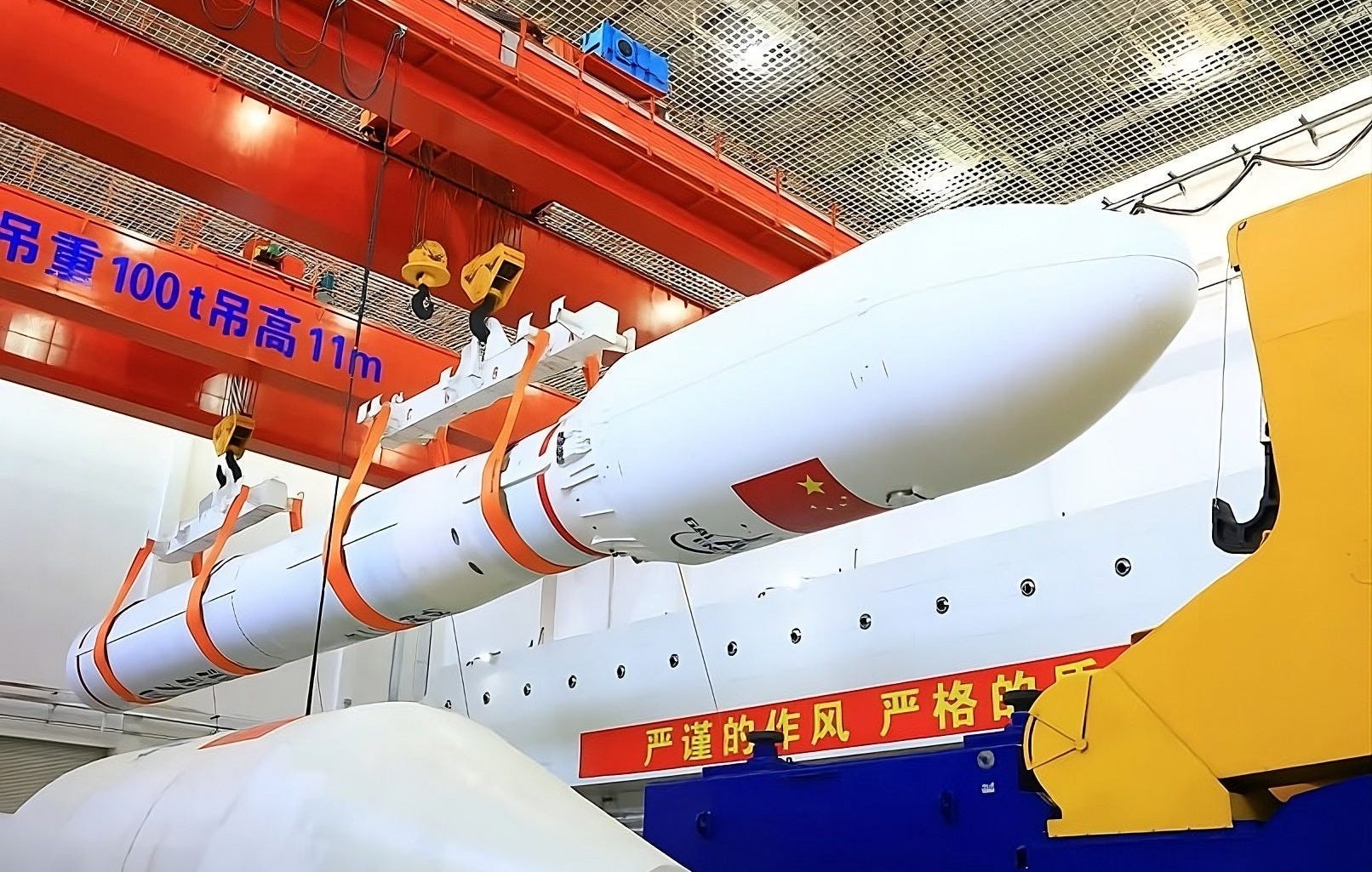
Back at the start of the year, on January 17th, Galactic Energy attempted to debut its four-stage, mostly solid rocket propellant Ceres-2 launch vehicle from the Jiuquan Satellite launch Center. However, that flight did not get very far from the ground before coming to an early end, destroying itself and a few customer satellites.
In the five months since, Galactic Energy has been performing a failure investigation into Ceres-2’s short-lived maiden flight, with it coming to a conclusion this month. On June 17th, the company released its official statement regarding the investigation, with relevant parts stating:
“Recently, Galactic Energy convened a technical review meeting to address the flight failure issue of the first-stage engine of the Ceres-2 launch vehicle. Following deliberation, the review concluded as follows: the cause of the issue has been clearly identified, the underlying mechanism is well understood, the issue has been successfully reproduced, the corrective measures taken have been verified as effective, and lessons learned have been applied to prevent similar issues in the future; therefore, the issue can be considered resolved.”
“On January 17, 2026, the Ceres-2 commercial launch vehicle lifted off from the Jiuquan Satellite Launch Center. However, the rocket experienced an anomaly during flight, resulting in a failed maiden flight test. Following the failure, the company promptly established a root-cause analysis team to conduct a comprehensive and in-depth investigation into the cause of the failure. Through a series of tasks, including reviewing the design and production processes, constructing a fault tree, identifying underlying events, pinpointing problems, and analyzing mechanisms, the cause of the flight failure was ultimately determined. The failure mode was reproduced through ground tests and simulations, and the implemented improvement measures were verified as effective through ground testing.”
“The cause of the flight failure was determined to be insufficient design margin in the support structure of the rear section of the first-stage nozzle throat liner. This led to the displacement of the rear section of the throat liner during operation, creating a gas passage with the front section of the liner. This caused ablation of the rear wall of the throat liner, resulting in structural failure of the liner and damage to the nozzle, which ultimately led to the failure of the flight mission.”
If there are any problems with this translation please reach out and correct me.
In simple language, the first-stage solid rocket motor’s nozzle, used to direct thrust for control during ascent, was improperly supported by mechanisms attaching it to the remainder of the motor. That led to a crack forming and growing in the nozzle, allowing thrust generated to escape, growing the crack until the nozzle failed and thrust could no longer be properly directed.
What Galactic Energy did not comment on is what happened at Jiuquan after the failure destroyed the nozzle. According to footage viewed by China Daily’s staff, Ceres-2 flew for several moments before veering off-course and slamming into the ground. Official footage of the flight, shared in a corporate anniversary post, showed liftoff for a few seconds and nothing further.
With Ceres-2, Galactic Energy intends to compete with proven launch vehicles like the China Academy of Launch Vehicle Technology’s Jielong-3, ExPace’s Kuaizhou-11, and CAS Space’s Kinetica-1, all of which lean on solid rocket motors for similar payload capacities.
Previously, the company has had incredible success with its smaller Ceres-1 launch vehicle, succeeding with twenty-one flights out of twenty-three launch attempts since November 2020. Interestingly, Ceres-1 has not flown since Ceres-2 failed.
A good portion of Ceres-1 flights, seven of them, have been solely in support of Guodian Gaoke’s (国电高科) Tianqi (天启) Internet-of-Things connectivity constellation, which fully utilized the vehicle's capabilities1 most of the time their small satellites were onboard. In recent weeks, the constellation operator announced that it is moving away from the small satellites in favor of larger ones with newer capabilities, which are about seven times heavier. Those bigger satellites seem well-suited to Ceres-2, should it be a reliable launch solution for the long-term partners2.
In terms of the average orbital altitude reached, 850 kilometers, with Tianqi satellites weighing about 50 kilograms each, over 200 kilograms collectively.
Guodian Gaoke trusted Ceres-1 for its debut flight, buying at least six launches since.