

Second Commercially Made GuoWang Group Reaches Orbit [Long March 12 Y5]
The nine satellites ride into space was supported by Wenchang Commercial's recent switch to coal-based propellant.

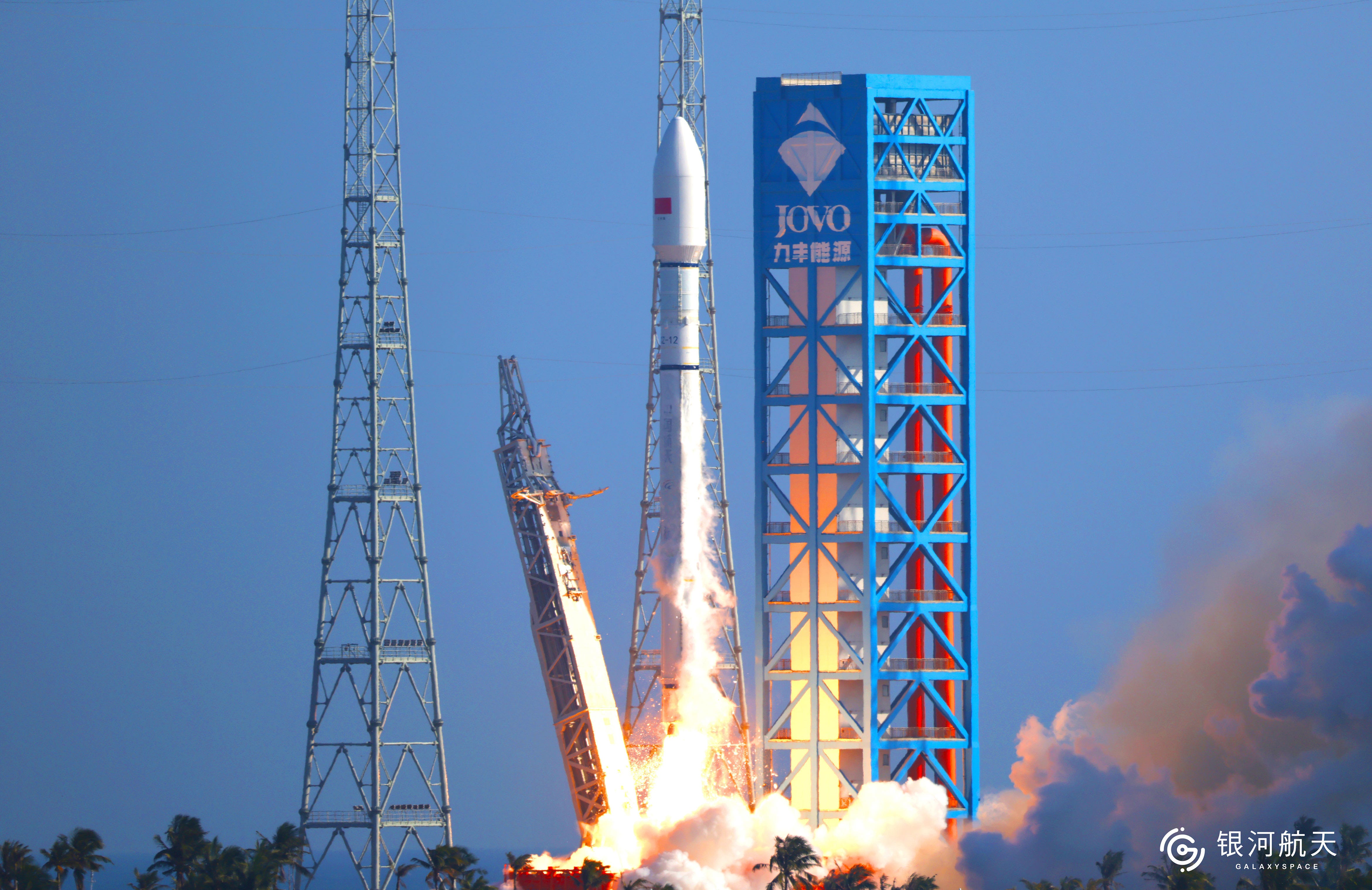
Into a clear mid-day sky, a Long March 12 lifted off from Commercial Launch Pad 2 at the Wenchang Commercial Space Launch Site at 15:48 pm China Standard Time (07:48 am Universal Coordinated Time) on January 19th, heading into low Earth orbit with a group of satellites.
Riding into space was the nineteenth group of GuoWang spacecraft, with another nine being placed into orbit1. Commercial satellite maker GalaxySpace (银河航天) produced the spacecraft onboard today, for their second set after the constellation’s seventh group in August 2025.
After today’s launch, 154 GuoWang spacecraft are in orbit, functioning in and heading up to their operational orbits. This year, it is planned that 310 satellites2 will be deployed, followed by 900 in 2027, and 3,600 every year beginning in 2028 to sustain and grow the constellation. In the 2030s, up to 13,000 satellites could be in operational orbit.
The GuoWang (国网) constellation is operated by China Satellite Network Group, a state-owned enterprise and wholly backed by the Chinese government. China Satellite Network Group plans to provide worldwide internet services; for now, China-focused services are the immediate priority.
Two different satellite variants are believed to be in use for the GuoWang constellation, a larger version used on vehicles like the Long March 5B, while smaller ones are used when launched atop rockets such as the Long March 12 or Long March 6A. An electric propulsion system is used due to operational orbits above 1000 kilometers on the trapezoidal-shaped satellites, which feature two solar panels for power.

After launch, the Shanghai Academy of Spaceflight Technology shared that the Long March 12 has had a small boost to its performance via a weight savings made to structures, electrical and networking cables running the length of the vehicle, as well as various interfaces between systems. The China Aerospace Science and Technology Corporation added in its post-mission blog post that the process of taking the launch vehicle from its assembly building, to testing and preparations on the launch pad, and flight has been shortened to four days.
Starting with this launch mission, Commercial Launch Pad 2’s water tower has been sponsored by energy company Jiangxi Jovo Energy Co Ltd (江西九丰能源股份有限公司), known as Jovo for short. Jovo is believed to be the supplier of the Wenchang Commercial Space Launch Sites’ coal-based rocket-grade kerosene propellant, in use on missions since December 2025 from its two current launch pads, following a sizable investment late last year into the necessary technology. Benefits of the coal-based fuel, which the Long March 12 was designed with in mind, are more frequent deliveries, easier handling during pre-launch processes, and more stable storage.
This mission was the 5th launch of a Long March 12 vehicle, the 258th Long March vehicle launch from the Shanghai Academy of Spaceflight Technology, and the 628th launch of the Long March launch vehicle series. This was also the 7th launch from China in 2026.
Liftoff video via 海南商发 on WeChat.
Launch livestream via International Rocket Launches on YouTube.
Check out the previous Long March 12 launch
Sunrise Launch Delivers More GuoWang Satellites [Long March 12 Y4]
![Sunrise Launch Delivers More GuoWang Satellites [Long March 12 Y4]](https://substackcdn.com/image/fetch/$s_!7OLj!,w_1300,h_650,c_fill,f_webp,q_auto:good,fl_progressive:steep,g_auto/https%3A%2F%2Fsubstack-post-media.s3.amazonaws.com%2Fpublic%2Fimages%2F37d057f9-16db-443f-b324-e8dd1ffeddc7_4305x2373.jpeg)
With sunrise over Commercial Launch Pad 2 at the Wenchang Commercial Space Launch Site, a Long March 12 lifted off at 07:00 am China Standard Time on December 12th (23:00 pm Universal Coordinated Time on December 11…
What is the Long March 12?
This section is for those less familiar with China’s Long March series of launch vehicles.
The Long March 12 is a two-stage launch vehicle from the Shanghai Academy of Spaceflight Technology. Both stages of the launch vehicle burn rocket-grade kerosene and liquid oxygen.
The payload capacity of the launch vehicle is currently as follows:
12,000 kilograms to a low Earth orbit
6,000 kilograms to a 700-kilometer sun-synchronous orbit
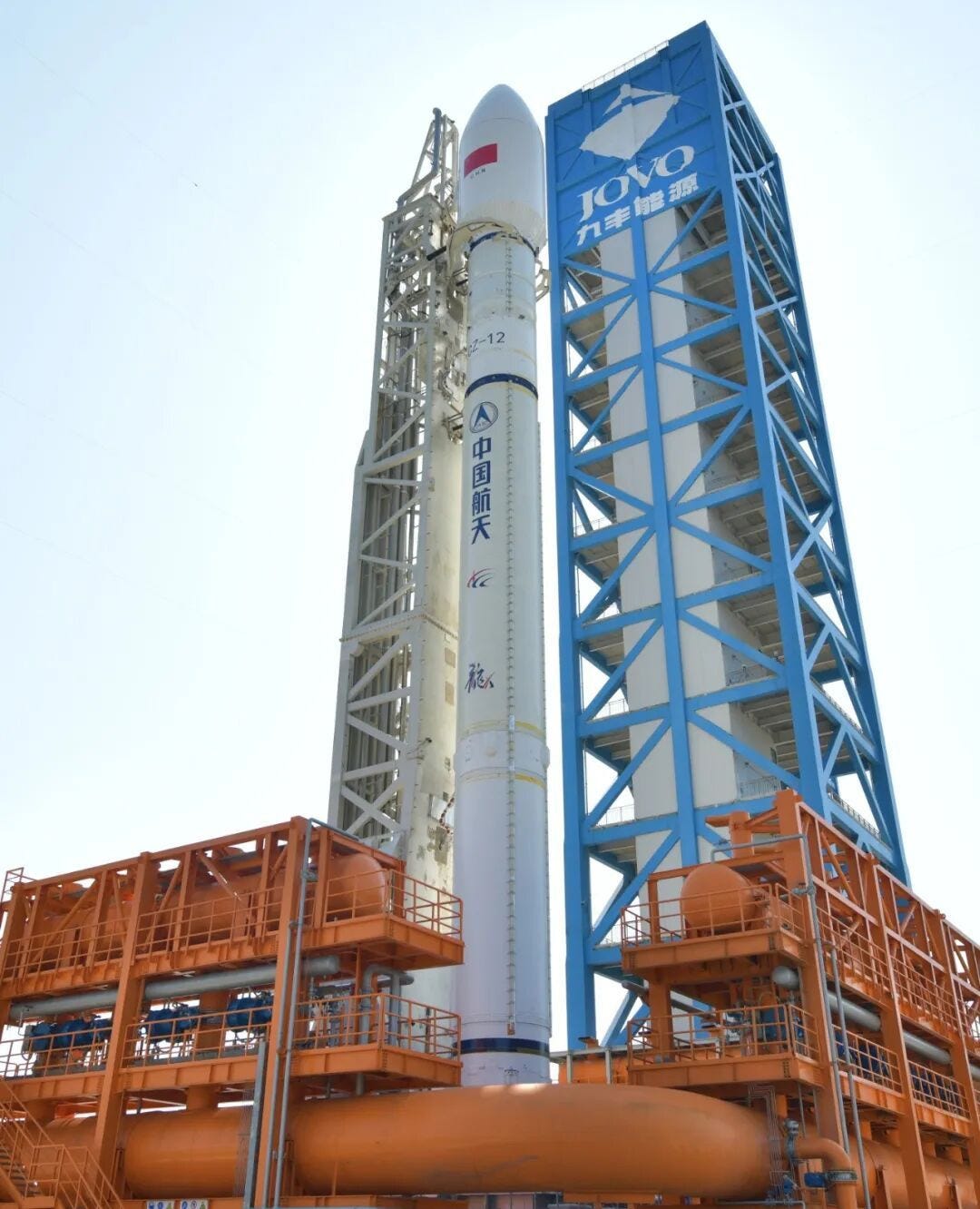
Four YF-100K engines power the first stage, generating a combined thrust of 510 tons while burning liquid oxygen and rocket-grade kerosene. Two YF-115 engines power the second stage, generating 36 tons of thrust while also burning liquid oxygen and rocket-grade kerosene.
On the launchpad, the rocket stands at 62.6 meters in height, while having a first and second stage diameter of 3.8 meters. Fully fuelled the Long March 12 is believed to weigh 433,000 kilograms. The fairing of the Long March 12 is also believed to have options for either a 3.8, 4.2, or 5.2-meter diameter, depending on the needs of the mission.
Currently, the Long March 12 has only flown from the Wenchang Commercial Space Launch Site, on the east coast of Hainan province.


Every time GuoWang has launched on the Long March 12, nine satellites have been onboard:
So far, 18 out of 310.
China's commercial space sector continues to sky-rocket with impressive achievements! The switch to coal-based propellant for the GuoWang constellation is a fascinating development. Excited to see how this influences global launch dynamics.
Long March 12 is such a beautiful and looks so much soothing to eyes and ears when it is moved or being launched . This rocket will become the backbone of Guowang and Qianfen and this is the exact rocket that with the help of CALT and SAST geniuses should be made reusable as soon as possible . Secondly , freqeuncy of Long March 12 should be at least 2/month because I am sure that SAST has mastered producing Long March 12 in mass numbers . The more launches the Long March 12 will have , the more cheaper it will get and the more quick it will go towards reusability.
Regards