

GuoWang Strides Into Orbit Again From Wenchang [Long March 12 Y8]
Four YF-100K engines have supported the deployment of nine new satellites for China's state-backed connectivity constellation.

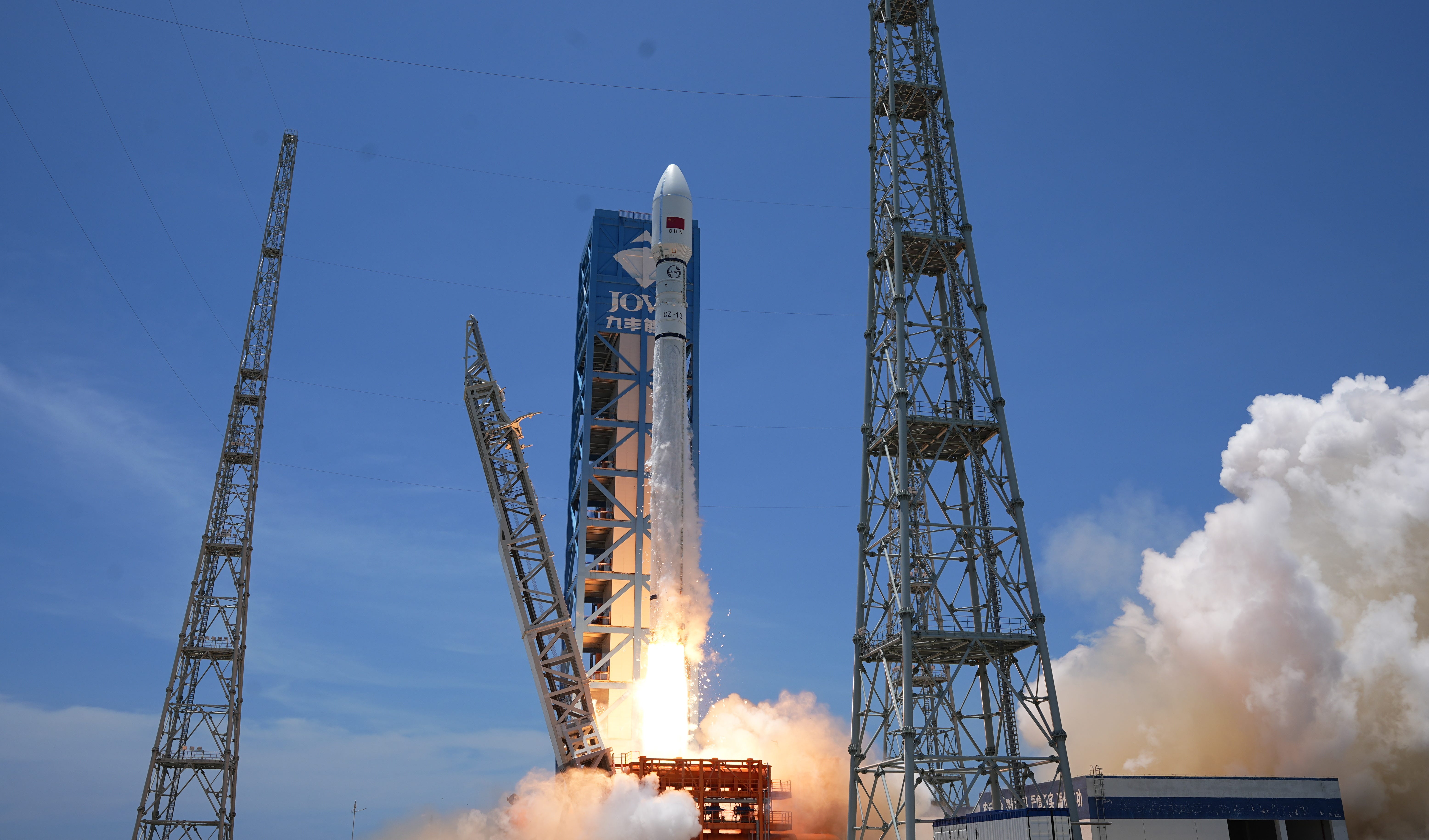
From Commercial Launch Pad 2 at the Wenchang Commercial Space Launch Site, a Long March 12 lifted off at 12:10 pm China Standard Time (04:10 am Universal Coordinated Time) on August 16th to fly into low Earth orbit, carrying a group of connectivity constellation spacecraft.
Being brought into orbit by the launch vehicle was the twenty-fourth group of GuoWang satellites, which is made up of nine spacecraft. Those were made, once again, by the China Academy of Space Technology.
With today’s launch, 195 GuoWang spacecraft are in orbit, functioning in and heading up to their operational orbits. This year, it is planned that 310 satellites1 will be deployed, followed by 900 in 2027, and 3,600 every year beginning in 2028 to sustain and grow the constellation. In the 2030s, up to 13,000 satellites could be in operational orbit.
GuoWang satellites launched atop of the Long March 12 and the Long March 8A use the mega-constellations’ small satellite platform, weighing about 695 kilograms each. A large satellite platform, around thirty percent bigger and weighing up to 1,000 kilograms, is launched via the Long March 5B and Long March 6A. Both platforms utilize electric propulsion systems to maneuver in orbit, powered by two solar panels.
The GuoWang (国网) constellation is operated by China Satellite Network Group, a state-owned enterprise and wholly backed by the Chinese government. China Satellite Network Group plans to provide worldwide internet services; for now, China-focused services are the immediate priority.
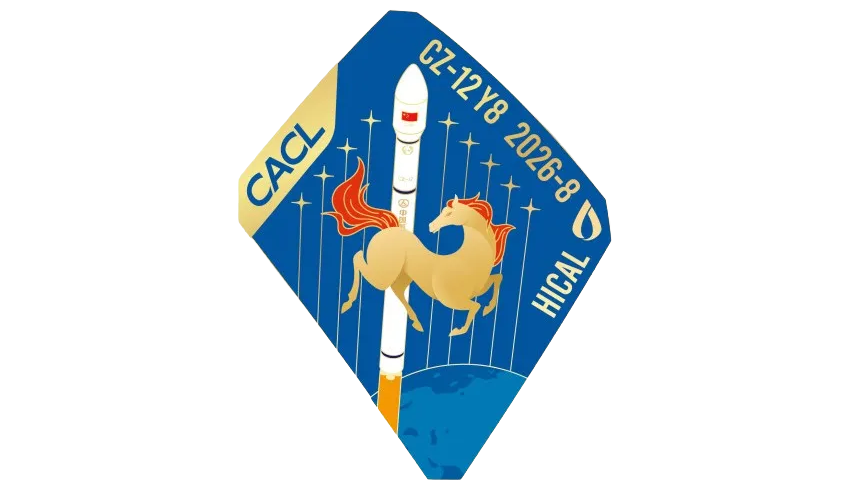
As an important secondary task today, by being powered by four YF-100K engines the Long March 12 clears other members of the modern Long March series to resume flight following the recent failure of the Long March 7A. The YF-100 series engine components had been considered a potential culprit in the early days of an investigation into the failure.
In a post-launch blog post, the Shanghai Academy of Spaceflight Technology noted that they are committed to maintaining quality standards while continuously improving the Long March 12, making a series of adjustments to deal with high humidity in the middle of the year. This was the second time the vehicle flew with its ‘GN-1’ propellant in the second-stage to boost performance too.
Additionally, for the Wenchang Commercial Space Launch Site, its teams have now proven for three months running that a monthly flight cadence from Commercial Launch Pad 2 is possible. Demonstrating that began with June’s Long March 12, followed by July’s Long March 10B, and continued with today’s launch mission. Switching between launch vehicles required closing off unneeded systems, like additional water deluge outlets, for a smaller launch vehicle, adding to the amount of work needing to be completed.
According to Hainan International Commercial Aerospace Launch Co Ltd (海南国际商业航天发射有限公司), operator of the commercial launch site, the Long March 12 launch vehicle only spent two and a half days on the launch pad, arriving August 14th, thanks to its timely completion of work.
On the market side of the launch, the China Aerospace Science and Technology Commercial Launch Vehicle Group Co Ltd (中国航天科技集团商业火箭有限公司) procured the Long March 12 on behalf of China Satellite Network Group as a suitable launch solution for their spacecraft. In July, the Shanghai Academy acquired a majority stake in the Commercial Launch Vehicle Group to better commercialize its launch vehicles.
This mission was the 7th launch of a Long March 12 vehicle, the 9th launch of the Shanghai Academy of Spaceflight Technology-supported Long March 12 series, and the 663rd launch of the Long March launch vehicle series. This was also the 57th launch from China in 2026.
Liftoff video via 我们的太空 and 海南商发 on WeChat.
Launch livestream via International Rocket Launches on YouTube.
Check out the previous Long March 12 launch
GuoWang Adds Nine More Satellites to Earth Orbit Constellation [Long March 12 Y7]
![GuoWang Adds Nine More Satellites to Earth Orbit Constellation [Long March 12 Y7]](https://substackcdn.com/image/fetch/$s_!izeW!,w_1300,h_650,c_fill,f_webp,q_auto:good,fl_progressive:steep,g_auto/https%3A%2F%2Fsubstack-post-media.s3.amazonaws.com%2Fpublic%2Fimages%2F2b350919-196e-43b9-9476-e345c67ecc55_4315x2311.jpeg)
A Long March 12 lifted off from Commercial Launch Pad 2 at an overcast Wenchang Commercial Space Launch Site at 10:44 am China Standard Time (02:44 Universal Coordinated Time) on June 17th, f…
What is the Long March 12?
This section is for those less familiar with China’s Long March series of launch vehicles.
The Long March 12 is a two-stage launch vehicle from the Shanghai Academy of Spaceflight Technology. The first-stage of the launch vehicle burns rocket-grade kerosene and liquid oxygen, while the second-stages uses a mixture called ‘GN-1 (高能-1)’ to boost engine performance.
The payload capacity of the launch vehicle is currently as follows:
12,000 kilograms to a low Earth orbit
6,000 kilograms to a 700-kilometer sun-synchronous orbit
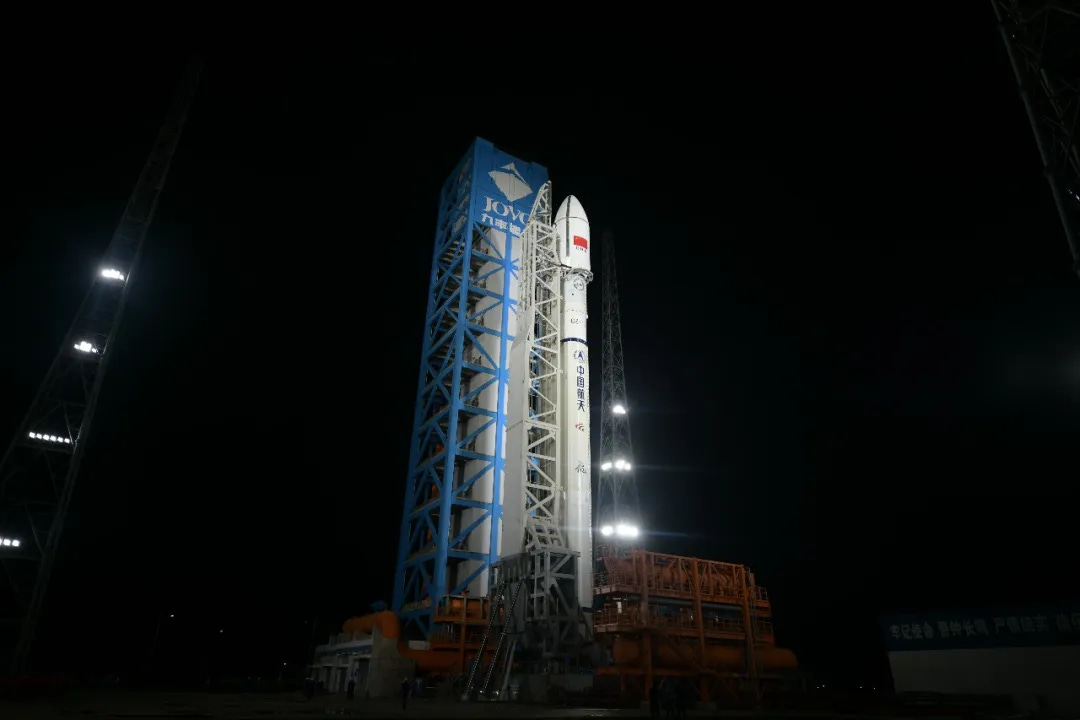
Four YF-100K engines power the first stage, generating a combined thrust of 510 tons while burning liquid oxygen and rocket-grade kerosene. Two YF-115 engines power the second stage, generating 36 tons of thrust while also burning liquid oxygen and rocket-grade kerosene.
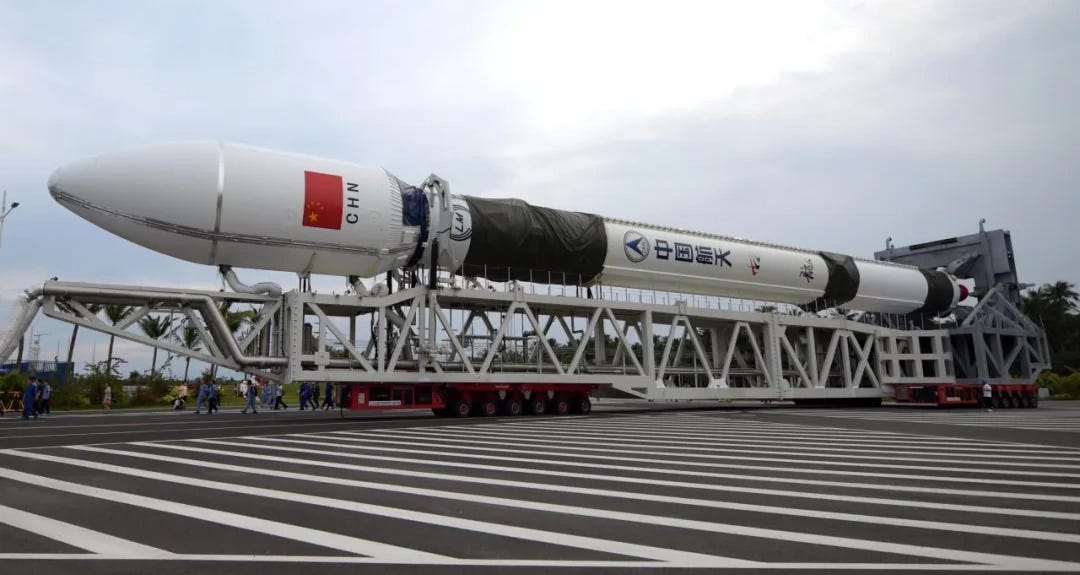
On the launchpad, the rocket stands at 62.6 meters in height, while having a first and second stage diameter of 3.8 meters. Fully fuelled the Long March 12 is believed to weigh 433,000 kilograms. The fairing of the Long March 12 is also believed to have options for either a 3.8, 4.2, or 5.2-meter diameter, depending on the needs of the mission.
Currently, the Long March 12 has only flown from the Wenchang Commercial Space Launch Site, on the east coast of Hainan province.
So far, 59 out of 310.