

Nayuta Space Exploring Using Rockets as Orbital Compute Platforms
Space-based computing has become a hot topic in China, with one of the nation’s newer launch startups considering modifying its second-stages.

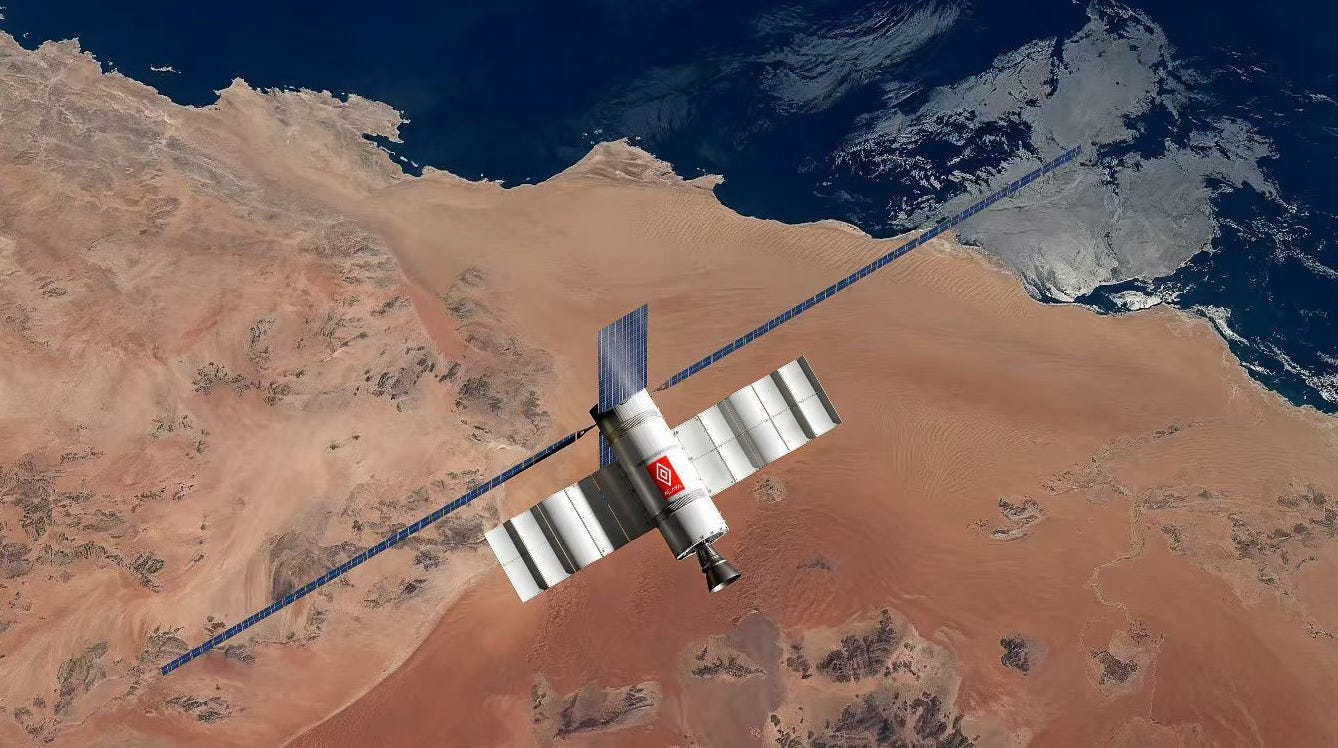
At a space-based computing conference held in China recently, on June 29th and 30th, launch startup Nayuta Space (千亿航天) revealed it is exploring utilizing the second-stages of its partially reusable launch vehicle, Xuanniao-R (玄鸟-R), as a platform for orbital computing. Details about the concept were released during the conference in a lengthy company blog post.
Regarding how the second-stages will be configured as an orbital computing spacecraft, they will be equipped with one hundred square meters of radiators to dissipate heat and four solar arrays 3.5 meters wide and 30 meters long, for a cumulative power generating area of four hundred square meters, to generate 80 kilowatts of electrical power. That power will be used by an unspecified amount of compute onboard.
Nayuta Space did not disclose details about how or if the stage will be modified to maintain attitude and deorbit at the end of useful life. It was noted that Xuanniao-R’s first-stage will still be reusable while deploying the spacecraft, allowing for up to 17,000 kilograms of modifications to the second-stage.
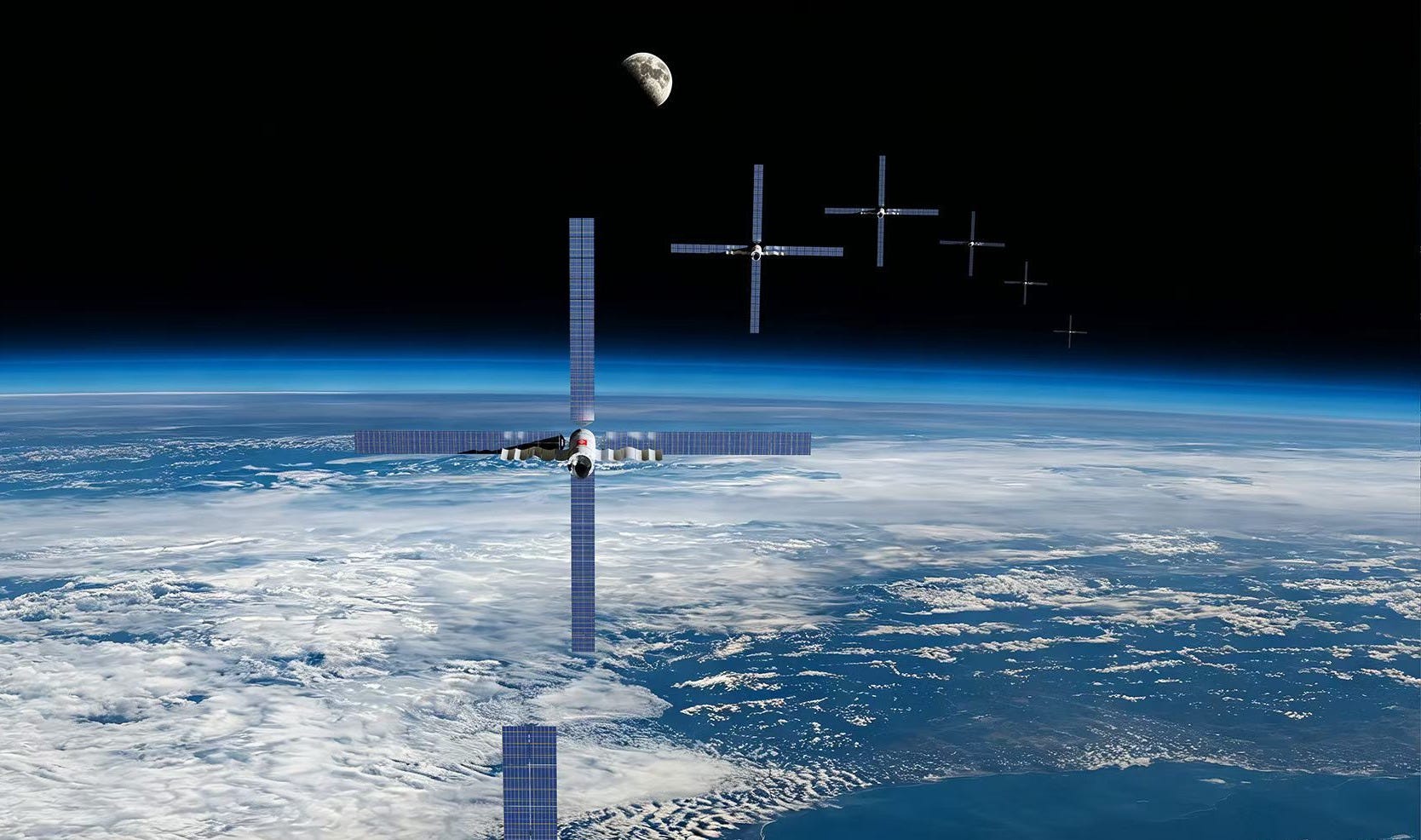
The computing spacecraft are desired to be in sun-synchronous orbit, to generate solar power at all points in their orbit, between 600 and 700 kilometers in altitude, with up to 12,500 of them possibly being deployed. At present, no filings for the thousands of spacecraft have been handed to national or international regulators.
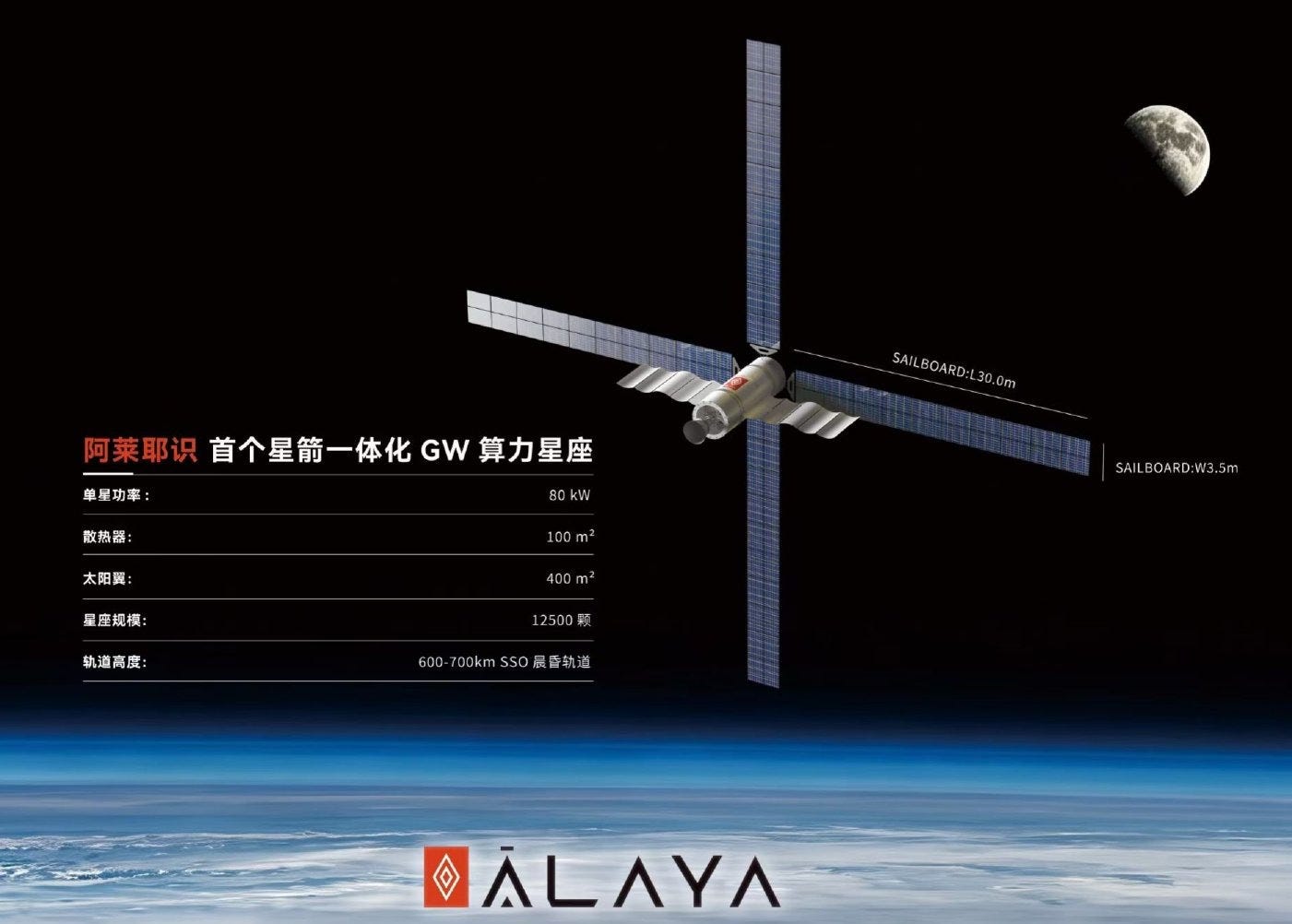
Before those computing spacecraft are placed into orbit, Nayuta Space wants to have two technology demonstration satellites in orbit by the first half of 2027, launched via its first orbital Xuanniao-R launch vehicle. The year following at least one second-stage converted computing spacecraft is hoped to be in orbit and performing tasks for customers. Starting in the 2030s, the company believes hundreds of spacecraft can be deployed each year.
As for Nayuta Space’s rationale for exploring the development of computing spacecraft, they expect that demand for compute will continue to rise linearly as AI adoption grows across various industries. Li Rui (李锐), Founder and Chief Executive Officer, sees the spacecraft as a way to grow flight cadence, stating:
“The deployment of mega-constellations must be completed within a limited timeframe to ensure commercial viability. In the future, rocket launches will need to reach a frequency of dozens or even several dozen per day, which will require comprehensive innovations and breakthroughs in mass production launch models, recovery and reusability technologies, and integrated satellite-launcher design.”
If there are any problems with this translation please reach out and correct me.
Some confidence has also come from massive amounts of financing being secured for other efforts, interest from state-owned enterprises, and industry working groups. It helps that China is also leading global efforts.
The blog post also detailed that a newly established affiliated enterprise called Ālaya Beijing Space Technology Co Ltd (阿莱耶识(北京)空间科技有限公司), or Ālaya (阿莱耶识) in short, will manage hardware research and development, as well as related risks. According to publicly available data, the enterprise was founded in early June and has about 5 million Yuan (736,400 United States Dollars, as of June 29th) in current capital, with top talent attracted from state-owned enterprises under the China Aerospace Science and Technology Corporation.
Should dozens to hundreds of computing spacecraft be deployed, Ālaya is also the name of the overall constellation of them from Nayuta Space. The name is said to be inspired by the idea of Ālayavijñāna, fundamental knowledge, in Buddhism, practiced in the Xizang Autonomous Region (西藏自治区 / བོད་རང་སྐྱོང་ལྗོངས).
Xuanniao-R is still in development
Before any of the above plans can take place, Nayuta Space needs to proceed with and complete the development of Xuanniao-R, which began in May 2025. A year on from that, a full-scale model of the launch vehicle was completed, demonstrating the movement of the flaps which will be used for its ‘bellyflop’ recovery, ahead of integration checks with test and launch sites. Propellant tanks and structures to be used during tests, like static fires, have been produced too.
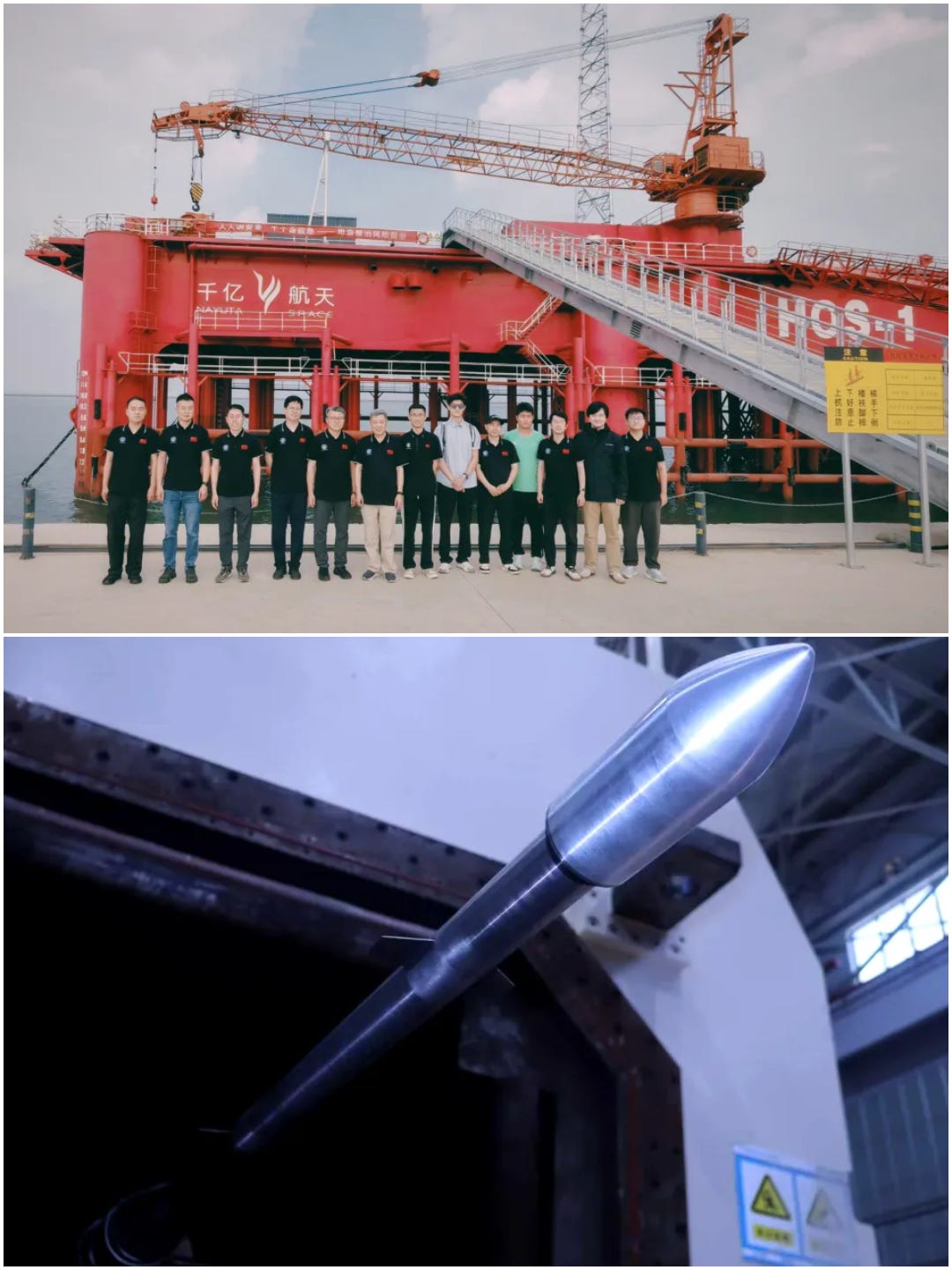
While continuing development work in the background, Nayuta Space has been courting the coastal Haiyang Oriental Spaceport (海阳东方航天港), in Shandong (山东) province, in recent weeks to make use of its existing facilities. Those will be used for pre-flight tests, as a handful of other enterprises have, and for operational missions, according to the company. Models of Xuanniao-R have also been placed into wind tunnels to characterize and verify expected aerodynamic interactions with the launch vehicle during ascent.
Once developed, Xuanniao-R will be 70 meters tall, 3.8 meters in diameter, utilizing a 5.2-meter diameter fairing, and burning liquid methane and liquid oxygen in two stages once complete. The reusable first-stage is set to be powered by thirteen engines, each generating 70 tons of thrust, while the second-stage has one vacuum-optimized engine, generating around 80 tons of thrust.